
Mind-Blowing Strength Capabilities of ABS 3D Printer Filament
May 13, 2026
Custom-Made Corporate Giveaways That Strengthen Brand Recall
May 15, 2026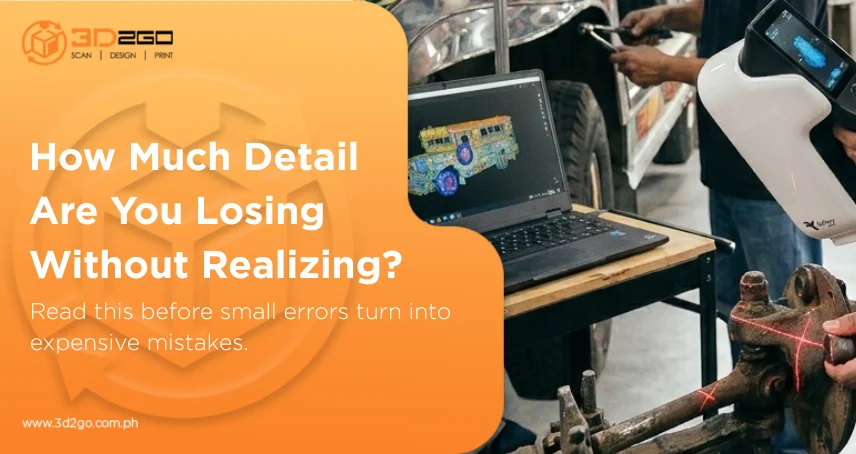
Across engineering, automotive work, and product development, there’s a clear shift happening in how physical objects are measured and recreated. Teams are moving away from purely manual methods and leaning into workflows that prioritize speed, accuracy, and repeatability.
This is where professional 3D scanning solutions are reshaping how industries operate. Instead of estimating dimensions or rebuilding models from scratch, businesses are now using tools like a 3d laser scanning device to capture real-world objects as precise digital data.
Even in product customization and branding, industries are exploring solutions like 3D-printed corporate giveaways, where detailed, one-of-a-kind outputs are becoming more valuable than mass-produced items.
But one of the most impactful applications today is the use of a 3D laser-scanning device to turn full-scale vehicles into accurate digital replicas that support engineering, restoration, and design work. What once required long hours of manual measurement can now be captured with far greater precision and consistency.
What a 3D Laser Scanning Device Actually Does
A 3d laser scanning device works by projecting laser beams onto a surface and measuring how they reflect back. Each measurement becomes a data point, and together, these points build a full digital representation of the object.
This collection of points is called a point cloud.
Unlike traditional measurement methods, a 3d laser scanning device doesn’t rely on interpretation. It records geometry exactly as it exists, including subtle curves, worn edges, and surface variations that are often missed in manual processes.
That level of detail is what makes it valuable in industries where precision directly affects outcomes.
Why Digital Replicas Are Becoming Industry Standard
A digital replica is more than just a visual model. It serves as a working foundation for engineering, simulation, and production decisions.
Using a 3d laser scanning device, teams can:
- Recreate damaged or missing components
- Reverse engineer parts without original blueprints
- Test design adjustments before production
- Digitally preserve vehicles or physical assets
According to a study on advanced manufacturing, companies using digital engineering tools can improve efficiency in certain production workflows. That level of improvement explains why a 3D laser-scanning device is becoming more common in modern operations.
The Process: From Physical Vehicle to Digital Model
Turning a real vehicle into a digital replica follows a structured workflow.
Step 1: Preparation
The vehicle is positioned and prepared to ensure full surface visibility and clean data capture conditions.
Step 2: Scanning
A 3d laser scanning device captures millions of surface points in real time by scanning the entire object.
Step 3: Point Cloud Creation
All collected data form a point cloud, representing the vehicle’s raw structure in digital form.
Step 4: Mesh Processing
The point cloud is converted into a mesh, giving the scanned data structure and shape.
Step 5: Refinement
The final model is cleaned and optimized for use in CAD, engineering, or simulation workflows.
Every step depends on the accuracy of the 3d laser scanning device, since errors in capture affect everything that follows.
Where This Technology Is Used
Although vehicles are a common example, applications go far beyond automotive use.
Manufacturing and engineering
Used for reverse engineering, inspection, and quality control.
Architecture and construction
Helps document buildings for renovation and structural planning.
Product development
Speeds up prototyping and customization.
Restoration and preservation
Used to digitally archive historical or fragile objects.
Across all these industries, a 3d laser scanning device acts as a bridge between physical reality and digital workflows.
Practical Benefits in Real Operations
The value of a 3d laser scanning device shows up in everyday execution, not just technical capability.
Key benefits include:
- More accurate measurement data
- Faster production and design cycles
- Reduced rework and corrections
- Better cross-team collaboration
- More consistent project outcomes
Instead of working with assumptions, teams work with real-world captured geometry.
Challenges to Keep in Mind
While powerful, a 3d laser scanning device still comes with practical considerations:
- Equipment or service investment
- Training and technical expertise
- Large data file handling
- Software integration requirements
Because of this, many businesses choose to work with scanning service providers rather than manage the process internally.
Why Precision Has Become a Business Requirement
In modern production environments, even small measurement errors can lead to delays, wasted materials, or redesign work.
This is why reliance on a 3d laser scanning device continues to grow. It reduces uncertainty and provides a reliable foundation for decision-making across design and manufacturing workflows.
As industries shift further toward digital-first operations, precision tools are no longer optional—they’re becoming standard practice.
Turning Real-World Objects Into Reliable Digital Assets
A 3d laser scanning device has become a practical tool for industries that rely on accuracy, speed, and consistency. From automotive modeling to engineering and restoration, it allows physical objects to be translated into usable digital data with far greater precision than traditional methods.
As demand for efficiency and accuracy continues to grow, businesses that adopt this approach early tend to operate with fewer errors and more scalable workflows.
For companies looking to integrate scanning into their projects without the complexity of building internal systems, working with experienced specialists makes the process smoother and more reliable.
If you’re ready to explore how a 3D laser scanning device can improve your workflow, connect with 3D2GoPH.


