ABS 3D Printing Material: A Practical Choice for Durable Prototypes
May 1, 2026
Why Choosing the Right File Extension for 3D Printing Matters More Than You Think
May 5, 2026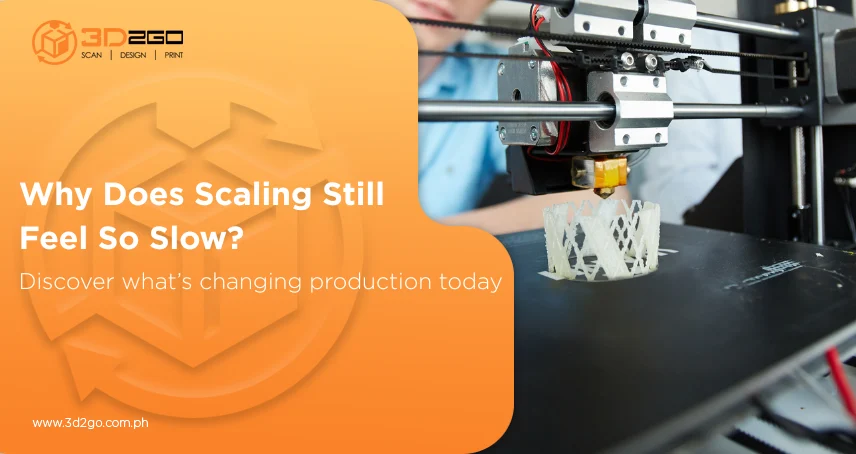
Manufacturing has always been a numbers game. Scale it up, and you usually end up with higher costs, longer setup times, and greater complexity.
That’s why mass production 3D printing is starting to shift how teams approach production altogether.
Instead of locking into rigid systems like molds and long tooling cycles, businesses are now exploring more adaptive workflows. At the center of that shift is bulk 3d printing, a method built around producing multiple units efficiently through additive manufacturing—without the usual friction of traditional scaling.
What Bulk 3D Printing Really Looks Like in Practice
Strip away the buzzwords, and bulk 3d printing is pretty straightforward: it’s about producing multiple parts in a streamlined, repeatable way using 3D printing systems.
But unlike conventional manufacturing, there’s no need for expensive tooling or retooling every time something changes.
Design updates don’t stall production. Files get adjusted digitally, and output continues. That’s where bulk 3d printing quietly changes the rules—it makes production more responsive without breaking the workflow.
Where Traditional Manufacturing Starts to Slow Things Down
Traditional methods still have their place, especially in extremely high-volume production. But they come with baggage.
Setting up molds takes time. Changing designs can be expensive. And scaling often means multiplying overhead rather than simplifying it.
With bulk 3d printing, that structure gets flattened. Production becomes file-driven rather than tool-driven, reducing many of the delays that usually accompany scaling.
It’s not about replacing everything—it’s about removing unnecessary bottlenecks.
Flexibility That Doesn’t Break Efficiency
One of the most practical advantages of bulk 3D printing is its ease of adaptation.
Need a design tweak? Update the file. Need a new version? Run it in the same workflow.
There’s no need to pause production lines or rebuild tooling setups. That flexibility allows teams to:
- Iterate designs faster
- Respond quickly to feedback
- Adjust production volumes without major downtime
It’s a more fluid way of working, especially for industries where things evolve quickly.
Cost Efficiency Without Heavy Upfront Investment
Scaling usually comes with a price tag—sometimes a steep one. Tooling, molds, and setup processes all add up before a single unit is produced.
That’s where bulk 3d printing offers a different financial structure.
Instead of investing heavily up front, production becomes more distributed and on-demand. You produce what’s needed, when it’s needed, without committing to high fixed costs early on.
According to a study, additive manufacturing is gaining global traction as companies prioritize cost efficiency and flexible production models over traditional mass manufacturing.
Faster Turnaround Without Losing Control
Speed matters, but so does control, with traditional systems, getting from design to production can take weeks or even months depending on complexity. bulk 3D printing significantly shortens that gap.
Once the digital file is ready, production can begin almost immediately. And because everything is based on the same source file, consistency is easier to maintain across batches.
So while things move faster, control doesn’t get sacrificed along the way.
Where Bulk 3D Printing Actually Fits Best
Not every product needs large-scale industrial manufacturing. In many cases, flexibility and speed matter more than sheer volume.
That’s where bulk 3d printing fits in best:
- Short production runs
- Spare part manufacturing
- Custom product batches
- Functional prototypes at scale
- Small-to-mid volume consumer goods
In these scenarios, traditional manufacturing often feels too heavy for the job.
More Design Freedom Than Traditional Methods Allow
One of the less obvious benefits of bulk 3d printing is design freedom.
Conventional manufacturing often forces simplification. Complex shapes or internal structures can be difficult—or expensive—to produce.
With bulk 3d printing, those constraints loosen. Designers can work with more complex geometry without worrying as much about tooling limitations.
That opens the door to more creative and functional product designs.
Consistency Across Every Unit
Scaling production isn’t just about making more—it’s about making the same thing, reliably.
Because bulk 3d printing uses a digital file as its base, every unit starts from the same reference point. That helps maintain consistency across batches.
While minor variations can still occur due to material or machine differences, the overall uniformity tends to be more controlled compared to manually assembled processes.
The Trade-Offs You Should Be Aware Of
No production method is perfect, and bulk 3d printing is no exception.
For extremely high-volume production, traditional methods like injection molding may still be faster per unit once everything is set up. Material options can also vary depending on the application.
But for flexibility, iteration, and mid-scale production, bulk 3d printing often ends up being the more practical choice.
Why Adoption Keeps Growing
The growing interest in bulk 3d printing isn’t driven by novelty—it’s driven by real-world constraints.
Companies want faster turnaround times. They want lower upfront risk. And they want the ability to adjust without restarting entire production systems.
As industries become more dynamic, production methods must keep pace. This approach does exactly that.
Scaling Doesn’t Have to Be Complicated
Scaling production has traditionally meant adding complexity—more tools, more steps, more cost.
bulk 3d printing flips that idea. It makes scaling more flexible by removing many of the rigid structures that slow traditional manufacturing down.
Instead of locking into one production path, teams can adjust, iterate, and scale as needed without starting over each time.
3D2GoPH supports this shift by providing practical 3D printing solutions that help businesses move from single prototypes to scalable production without unnecessary friction.