Top 10 Benefits of Using 3D Building Modeling Services in Projects
April 22, 2026
From Concept to Testing: Precision Rapid Prototypes for Educational Applications
April 24, 2026
Step inside any old heritage structure, and you’ll notice it right away: the details aren’t perfect, and that’s exactly what makes them valuable. The worn edges, uneven walls, and tiny imperfections tell a story you can’t recreate.
The problem? Those details fade over time.
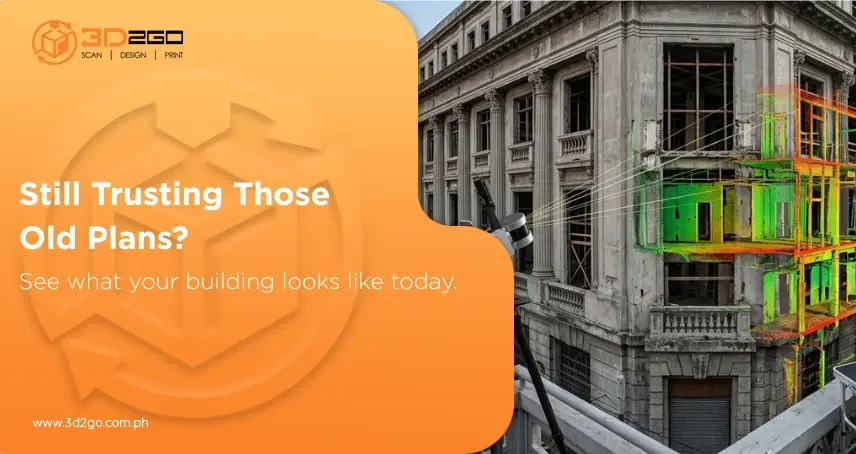
That’s why LiDAR building mapping matters. Instead of guessing measurements or relying on flat photos, you capture the structure exactly as it is, every angle, every curve, every flaw. From there, you build a lidar model heritage building, a digital version that holds onto those details long after the physical structure starts to change.
If you care about preservation, this step isn’t optional; it’s where everything begins.
Why Traditional Documentation Falls Short
Photos look nice, but they don’t tell the whole story. They miss depth. They miss structure. And they definitely miss accuracy.
Manual measurements? They take time and still leave room for error.
When you rely on these methods alone, you end up filling gaps with assumptions. And in heritage work, assumptions can cost you authenticity.
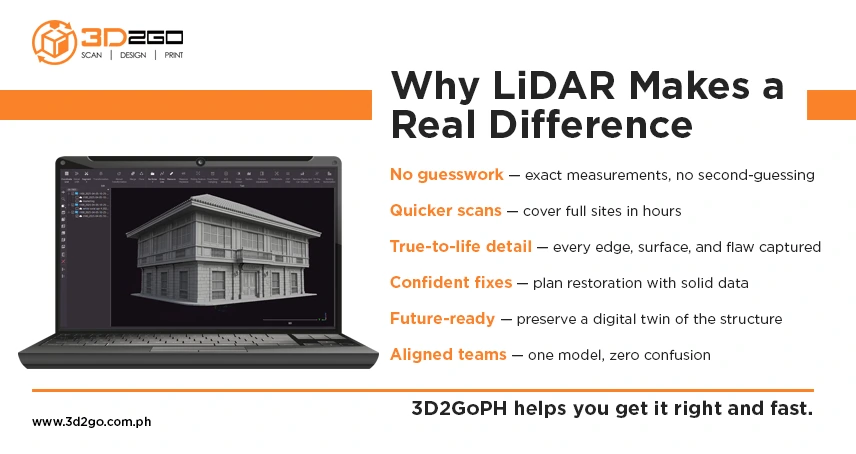
A lidar model heritage building removes that guesswork. You get a complete, measurable, and accurate record of the structure. No second-guessing. No patchwork fixes later.
The Real Risk: Losing Heritage Faster Than You Think
Let’s not sugarcoat it, heritage structures face real threats today.
Flooding, earthquakes, pollution, and rapid development don’t wait. Once damage hits, you can’t rewind.
According to research, natural disasters continue to cause billions of dollars in damage globally each year, putting cultural landmarks at serious risk.
That’s where a lidar model heritage building proves its value. You lock in the structure’s exact details now, so even if something happens later, you still have a reliable reference.
You’re not just documenting, you’re protecting.
What You Actually Get with LiDAR
Forget the technical jargon, here’s what matters.
LiDAR scanning captures millions of data points in a short time. It maps out the structure in full detail, not just what you can see at a glance.
With a lidar model heritage building, you get:
- Exact dimensions you can trust
- Fine details that photos often miss
- Visible signs of wear or damage
- A full 3D view you can explore from any angle
It’s like freezing the structure in time, but in a format you can actually use.
Restoration Gets Easier When You Start with Accuracy
Restoration isn’t about making things look new; it’s about keeping them true to their original form.
Without accurate data, teams often rely on estimates. That’s where mistakes creep in.
A lidar model heritage building gives you a clear starting point. You see what’s changed, what needs repair, and what you must preserve.
That means:
- Fewer errors
- Less rework
- Better results
You don’t waste time fixing avoidable problems.
One Model, Fewer Headaches
Heritage projects involve multiple teams. And when each group uses different references, things get messy fast.
A lidar model heritage building solves that.
Everyone, architects, engineers and historians, works from the same model. You cut down confusion and keep decisions aligned.
Simple change, big impact.
It’s Not Just About Preservation
Here’s something people overlook: this isn’t only about saving structures.
A lidar model of a heritage building also helps you share them.
You can turn these models into:
- Virtual tours
- Educational content
- Museum displays
- Digital archives
So even if access becomes limited, the experience stays available.
Plan Ahead Instead of Reacting Later
Most heritage issues don’t show up overnight. They build up slowly.
With a lidar model heritage building, you can track those changes. Scan the structure again after a few years, compare the data, and spot problems early.
That gives you control.
Instead of reacting to damage, you stay ahead of it.
Precision Isn’t Optional Here
In heritage work, small details matter more than you think.
A slight error can throw off restoration. A missed detail can change how a structure looks and feels.
That’s why a lidar model heritage building makes a difference. You work with real data, not rough estimates.
And that keeps your preservation efforts accurate.
Start with the Right Foundation
If you want to preserve something, you need to capture it properly first. There’s no shortcut around that.
A lidar model of a heritage building gives you a clear, accurate, and lasting record of what matters. It helps you restore better, plan smarter, and protect cultural assets for the long run.
If you’re serious about getting it right, work with a team that understands both the technology and its purpose.
Get started with 3D2GoPH
Because preserving history isn’t just about looking back, it’s about making sure it stays.