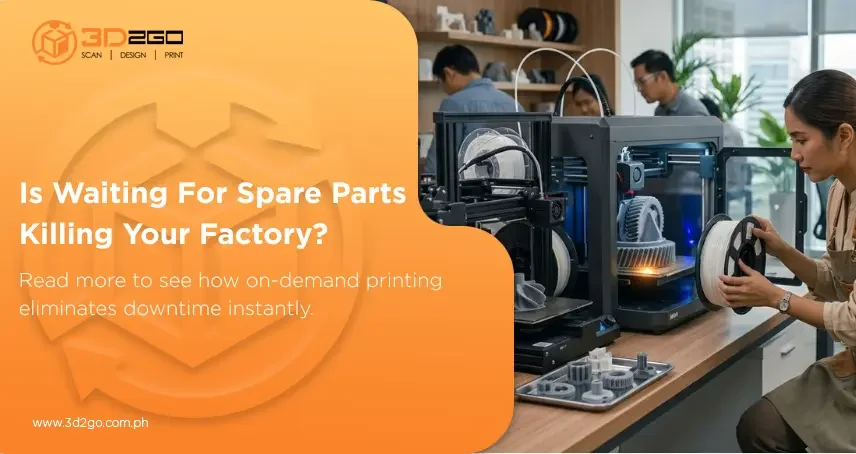
Keeping a production line running smoothly is a constant battle for modern factory managers. A worn-out drive gear, a snapped bracket, or a tiny custom component can bring an entire assembly line to a dead stop in a heartbeat. Traditionally, getting a replacement meant waiting weeks for overseas freight or paying through the nose for a machine shop to make a small custom run.
That painful lag time is exactly why so many facilities are shifting gears. Sourcing custom machine parts through additive manufacturing gives maintenance teams the power to produce exact replacements right when things break down. Turning to 3D printing for machine parts gives businesses the agility to replace legacy hardware, cut expensive factory downtime and keep production moving without sitting on mountains of spare inventory.
The Hidden Costs of Traditional Machine Maintenance
When a vital machine breaks on the shop floor, every hour of delay drains cash. In a traditional factory setup, getting replacement hardware means navigating a slow, unpredictable supply chain.
If your equipment is a bit older, the original manufacturer might not even make those spare components anymore. That leaves plant managers stuck with two terrible choices: retire a perfectly good machine, or pay a specialty CNC shop top dollar to carve out a tiny batch of custom parts. Either way, lead times stretch out for weeks while workers sit around idle.
This constant supply chain friction is driving industrial leaders toward digital fabrication. A study found that supply chain and manufacturing executives are actively bringing additive tech onboard to decentralize spare-parts inventory. Instead of keeping physical hardware collecting dust on warehouse shelves, companies now store digital files and 3D-print machine parts on demand—slashing wait times from weeks to hours.
Key Operational Advantages of 3D Printed Components
Moving away from traditional subtractive machining isn’t just about raw speed—it completely changes how factory parts get designed, built, and maintained:
- Lightning-Fast On-Demand Replacement: The biggest perk of 3d printing of machine parts is drastically shorter lead times. When something snaps, a technician can pull up the 3D file, send it to a commercial printer, and have a fresh replacement ready to install by the end of the day.
- Digital Warehousing: Keeping thousands of physical spare parts on hand ties up valuable capital and floor space. Digital warehousing replaces physical shelves with secure cloud files. You print a part only when it’s needed, cutting storage overhead and eliminating dead stock.
- Freedom to Design Complex Geometries: Traditional cutting tools need direct physical access, which limits how you shape a part. Additive manufacturing builds layer by layer, letting engineers merge multi-piece assemblies into a single solid component. That sheds weight, removes weak joints, and simplifies installation.
- New Life for Legacy Equipment: Heavy factory machinery is built to last for decades, but original manufacturer support rarely does. Through reverse engineering and 3d printing of machine parts, technicians can recreate discontinued components from scratch—keeping reliable old equipment running strong.
Materials Powering Industrial 3D Printing
A common myth is that 3D-printed parts can’t hold up in tough industrial settings. But today’s commercial materials bring real structural strength, thermal resistance, and chemical stability to the table:
- Engineering Plastics (ABS and Nylon): Known for serious impact resistance and toughness. Perfect for guide rails, protective covers, and light-load mechanical gears.
- Carbon Fiber Composites: Blending nylon or polycarbonate with chopped carbon fibers creates parts with an incredible strength-to-weight ratio. These often replace metal in robotic arms, structural brackets, and heavy-duty jigs.
- High-Precision Resins: Built for detailed jobs requiring tight tolerances, smooth surface finishes, or high thermal tolerance.
- Flexible Polymers (TPU): Ideal for custom gaskets, seals, and vibration dampers that need to absorb constant pounding without losing their shape.
Picking the right material ensures that 3d printing of machine parts delivers components ready for heavy real-world stress.
Common Uses on the Shop Floor
Modern facilities rely on 3d printing of machine parts for all kinds of day-to-day fixes:
- Custom Jigs, Fixtures, and Tooling: Custom workholding blocks built to secure specific workpieces during assembly or quality inspection.
- Replacement Gears and Sprockets: Quick-turn drive gears designed to keep conveyor belts and rotating systems running smoothly without waiting on OEM deliveries.
- Enclosures and Guards: Custom-fit plates, electrical covers, and dust shields that protect delicate electronics from factory grit.
- End-of-Arm Robotic Tools: Ultra-lightweight grippers and vacuum manifolds designed specifically for automated pick-and-place arms.
How Additive Manufacturing Streamlines Industrial Maintenance
Making 3d printing of machine parts a regular part of your maintenance playbook creates a fast, flexible routine:
- Spot the Failure: A component breaks, wears out, or needs an immediate tweak.
- Scan or Design: Reverse-engineer the broken part with a 3D scanner or draft it in CAD software.
- Pick Your Material: Engineers choose an industrial polymer or composite matched to the part’s working environment.
- Print and Post-Process: High-precision additive machines build the piece, followed by clean-up, curing, or light machining if tolerances are ultra-tight.
- Install and Run: The new part goes right onto the machine and gets straight back to work.
By following this workflow, maintenance teams head off major breakdowns early, test tweaks on the fly, and keep production moving.
Upgrade Your Maintenance Strategy with 3D2GoPH
Supply chain snarls and unexpected downtime shouldn’t control your production schedule. Harnessing 3d printing of machine parts puts you back in charge of your spare parts supply, cuts operating expenses, and keeps your lines humming.
At 3D2GoPH, we help local manufacturers, engineers, and plant managers turn hardware headaches into fast, on-demand fixes. Whether you need precise 3D scanning to clone an obsolete gear, custom CAD modeling, or high-strength additive production, our team delivers durable results tailored to your exact needs.
Ready to transform your digital file into something you can actually hold? Send us your project details today and let’s map out your custom prototyping strategy!