
From Concept to Testing: Precision Rapid Prototypes for Educational Applications
April 24, 2026
Why Laser Scanning Services Are Becoming Standard in Engineering Projects
April 28, 2026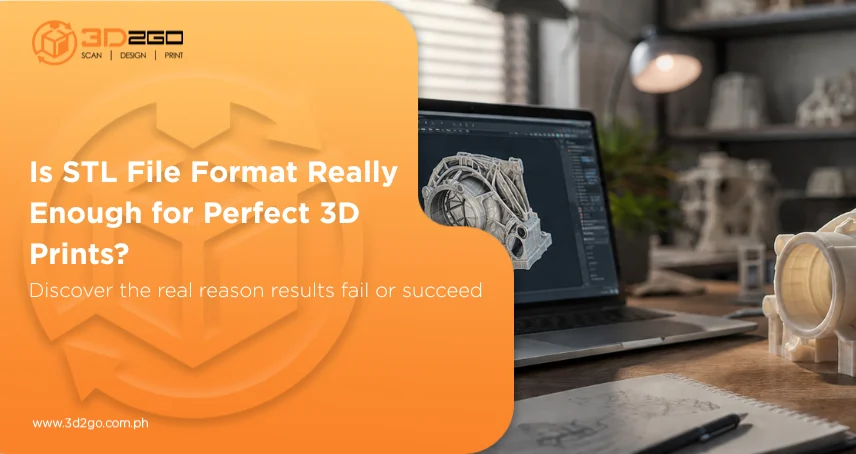
In 3D printing, the final output often draws the most attention, including material quality, machine precision, and surface finish. However, the process begins much earlier, at the file level. Before any object is produced, the design must be translated into a format that a printer can interpret accurately.
This is where a 3D printing service for STL files becomes essential. At the center of this workflow is the stl file format, a widely used standard that enables digital models to be prepared for printing. Despite the introduction of newer file types, this format continues to serve as the foundation for most 3D printing processes due to its simplicity, reliability, and compatibility.
Understanding the STL File Format
The stl file format is designed to represent the surface geometry of a three-dimensional object. It does this by converting the model into a mesh composed of small triangular facets. Each triangle defines a portion of the surface, and together, they form a complete representation of the object’s shape.
Unlike other file formats, the stl file format does not include color, texture, or material data. It focuses solely on geometry. This streamlined structure keeps it lightweight and efficient, making it ideal for 3D printing workflows where clarity and accuracy are critical.
Why the STL File Format Remains Widely Used
The continued use of the stl file format is largely due to its proven reliability. While newer formats such as 3MF and OBJ offer additional features, many industries prioritize consistency and ease of use over complexity.
According to research, the global 3D printing market continues to grow steadily, with organizations relying on established, reliable workflows to support production. In this context, the stl file format remains relevant because it delivers consistent results without introducing unnecessary variables.
Compatibility Across Software and Hardware
One of the key strengths of the stl file format is its broad compatibility. Most computer-aided design (CAD) software supports exporting models in STL format, and nearly all slicing programs can process it without issue. Similarly, most 3D printers are designed to interpret STL-based instructions.
This level of compatibility reduces the need for file conversion and minimizes the risk of errors during transfer. The stl file format effectively acts as a standard bridge between design and production, ensuring a smooth workflow across different tools and platforms.
The Role of STL in Accurate 3D Printing
Accuracy in 3D printing begins with the digital model. The stl file format defines the outer surface of the object through its triangular mesh. The quality of this mesh directly affects the final print.
A well-constructed stl file format ensures that:
- The geometry is represented clearly
- The slicing software can generate precise layers
- The final object maintains its intended structure
If the mesh is too coarse, details may be lost. If it contains errors, the print may fail or produce defects. For this reason, careful preparation of the STL file is essential to achieving accurate results.
STL and the Slicing Process
Before a 3D model can be printed, it must undergo slicing. This step converts the model into a series of thin layers and generates the instructions the printer needs to build the object.
The stl file format supports this process by providing a clean geometric structure that slicing software can interpret efficiently. Since it contains only the necessary surface data, the software can focus on generating toolpaths without processing additional information.
This streamlined approach helps reduce processing time and minimizes potential errors during preparation.
Applications Across Industries
The stl file format is used across a wide range of industries that rely on 3D printing. Its flexibility and simplicity make it suitable for various applications, including:
- Product prototyping and development
- Architectural modeling
- Medical device design
- Educational projects
- Custom manufacturing
In each of these areas, the format serves the same purpose: enabling digital designs to be accurately and efficiently converted into physical objects.
Limitations of the STL File Format
While the stl file format is highly effective, it does have certain limitations. It does not support advanced data such as color, material properties, or textures. Additionally, it relies heavily on mesh quality, which means improperly created files can lead to issues during printing.
However, for many practical applications, these limitations are not significant. When the primary goal is to produce accurate physical models, the stl file format remains sufficient and efficient.
Why Simplicity Continues to Matter
In production environments, simplicity often leads to better outcomes. The stl file format avoids unnecessary complexity, allowing users to focus on the essential aspects of design and manufacturing.
While more advanced formats may offer additional features, they also require more processing and may introduce compatibility challenges. The stl file format, by contrast, provides a straightforward and reliable solution that integrates easily into existing workflows.
Best Practices for Using STL Files
To achieve optimal results, it is important to ensure that the stl file format is properly prepared before printing. Recommended practices include:
- Ensuring the mesh is watertight and free of gaps
- Maintaining an appropriate level of detail
- Avoiding unnecessary complexity in the model
- Checking for errors before slicing
Following these steps helps improve print quality and reduces the likelihood of production issues.
A Reliable Standard in 3D Printing
The stl file format continues to play a central role in 3D printing because of its reliability, compatibility, and efficiency. It provides a clear and consistent way to translate digital designs into printable objects, making it an essential component of modern workflows.
For organizations and individuals working with 3D printing, understanding how to use this format effectively can improve both accuracy and efficiency.
3D2GoPH supports STL-based workflows with precision, ensuring that digital designs are translated into high-quality physical outputs. For those seeking dependable 3D printing solutions, working with an experienced provider can make a significant difference.
Get in touch with 3D2GoPH.
A strong result in 3D printing starts with a well-prepared file and the right expertise behind it.