Halloween setups across Metro Manila—from big commercial mall activations in BGC and Megamall to local haunted attractions and cosplay conventions—have moved far beyond flimsy paper cutouts and cheap store-bought masks. Organizers, prop builders, and cosplayers are constantly searching for ways to level up their visual game. The problem? Off-the-shelf party store gear almost always feels thin, looks mass-produced, and lacks the fine detail needed to turn heads.
That’s where additive manufacturing changes the game. Custom 3D-printed costume accessories give creators a direct line from a digital 3D model to a solid, detailed physical prop. Whether you’re putting together a screen-accurate cosplay build or rigging a full haunted house walkthrough, 3D-printed Halloween props offer structural durability and custom options that traditional EVA foam or paper-mâché can’t match.
Why 3D Printing Beats Traditional Crafting Methods
For years, DIY builders and event crews relied on EVA foam, wire mesh, and papier-mâché to build custom Halloween gear. While those materials have their place, they bring major headaches when you need structural strength, weather resistance, or complex organic details:
- Tough Manual Carving: Sculpting intricate details like mythical armor plates, skeletal ribs, or jagged monster teeth by hand takes dozens of grueling hours.
- Weather Weakness: Paper-mâché degrades quickly in humid weather, while foam props easily tear, crease, or lose shape during transport and storage.
- Inconsistent Copies: If an event agency needs five matching glowing skulls or identical armor sets, hand-carving each piece guarantees mismatched results.
3D-printed Halloween props solve these build bottlenecks. Computer-guided 3D printers execute complex geometry with millimeter precision, translating digital CAD files straight into lightweight, rigid plastic structures.
A survey found that 73% of Halloween décor shoppers repurpose about half or more of their decorations year after year, while 52% do the same with costume pieces. That makes durable, well-finished props a smarter long-term investment: 3D-printed Halloween pieces can be stored, repaired, repainted, and redeployed across multiple seasons instead of being replaced after one event.
4 Popular Ways to Use 3D Printing for Halloween
Additive manufacturing gives prop builders and event planners incredible creative freedom. Here are four practical ways to bring dark concepts to life:
1. Screen-Accurate Cosplay Armor and Helmets
Getting exact head measurements and armor contours right using foam is tough. Digital 3D modeling lets designers scale armor plates and full-head helmets directly to your body dimensions before printing, ensuring a comfortable fit on event day.
2. Interactive Haunted House Animatronics & Decor
Commercial haunted houses and escape rooms need props that handle high foot traffic without snapping. 3D printing Halloween props with impact-resistant thermoplastics like ABS or PETG lets prop builders create lightweight skeletal frames, hollow moving animatronic jaws, and wall sconces that house hidden LEDs or sensors.
3. Custom Creature Masks and Face Shells
Standard rubber masks get hot fast, trap sweat, and lack airflow. 3D-printed face shells and creature masks can include built-in air vents, custom eye openings, and comfortable interior contours so performers can wear them comfortably through long shifts.
4. Large-Scale Venue Centerpieces
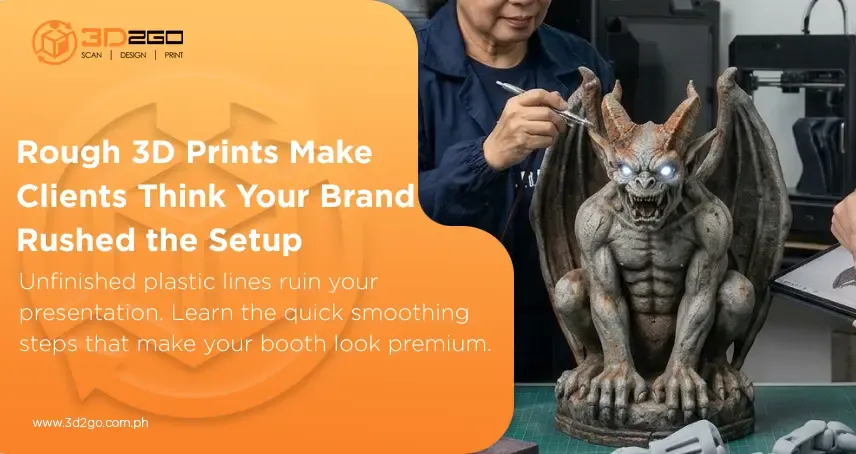
Hosting a major Halloween party or retail installation? Giant gargoyles, life-sized tombstone replicas, and floating phantom hands can be sliced digitally into modular sections, printed across multiple machine beds, and assembled into massive venue features that draw crowd photos.
Using 3D-printed Halloween props across your setup ensures every mask, armor piece, and centerpiece looks crisp and realistic.
Old-School Foam & Paper Props vs. 3D Printed Builds
| Feature | Foam & Papier-Mâché Props | 3D Printed Halloween Props |
| Detail & Precision | Depends entirely on hand-carving skill | Millimeter-exact digital CAD replication |
| Durability | Fragile; tears, dents, or absorbs humidity | Rigid thermoplastics; impact & weather resistant |
| Weight | Light but easily crushed | Lightweight with hollow internal lattice infill |
| Reusability | Usually short-lived or single-use | Highly durable; reusable across multiple seasons |
| Duplication | Hard to replicate identical twins | Unlimited exact duplicate prints from a single file |
Choosing 3D-printed Halloween props gives event hosts and cosplayers sturdy, reliable gear that lasts long after the season ends.
How Digital Files Become Venue-Ready Props
Getting a custom prop ready for setup night follows a straightforward workflow:
- Digital 3D Sculpting: Designers build or tweak a 3D digital model, shaping every scar, horn, or mechanical joint.
- Slicing & Structural Prep: The digital file gets sliced into printable layers. Internal support patterns (like honeycomb infill) are set to keep the prop lightweight yet sturdy.
- Precision Printing: High-resolution 3D printers build the prop layer by layer using thermoplastics like PLA, ABS, or detailed resins.
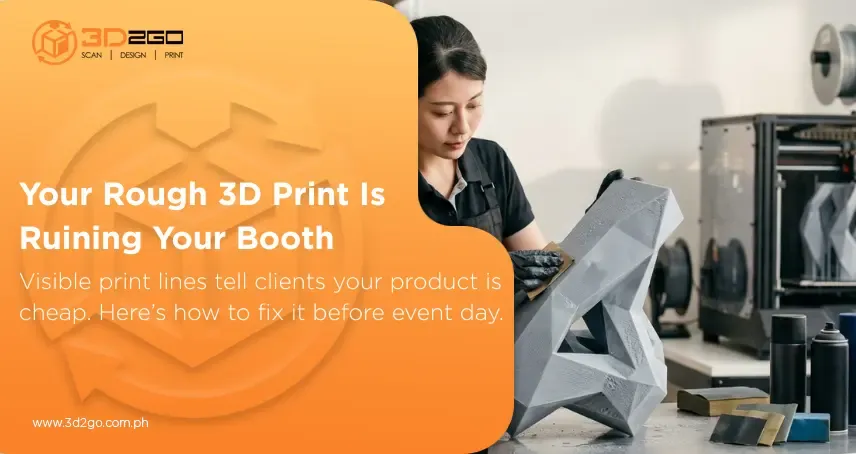
- Surface Prep & Finishing: Technicians wet-sand, fill gaps, prime, and custom spray-paint or airbrush—adding weathered rust, faux metallic sheens, or realistic battle damage.
Relying on professionally finished 3D-printed Halloween props saves you hours of tedious sanding while guaranteeing a polished look under venue lights.
What to Ask Before Ordering Custom Props
To make sure your props arrive fully finished and on schedule for your event, ask your print provider these key questions upfront:
- Do you offer digital 3D modeling if I don’t have a CAD file?
If you only have reference photos, concept art, or rough sketches, confirm that your vendor can create a print-ready 3D model from scratch. - What surface finishing steps do you include?
Raw 3D prints show subtle layer lines. Make sure your provider wet-sands, primes, and matches paint so raw plastic lines don’t show under venue lighting. - Can oversized props be split into modular pieces for transport?
For large props, confirm your printer can digitally slice pieces with internal alignment pegs, making them easy to break down, ship, and reassemble on site.
Asking these operational questions ensures your 3D-printed Halloween props arrive sturdy, realistic, and venue-ready.
Bring Your Spookiest Concepts to Life with 3D2GoPH
Whether you’re gearing up for a major cosplay competition, building a retail Halloween activation, or setting up an immersive haunted walkthrough, flimsy foam props or cheap store masks can hold back your creative vision.
3D2GoPH helps cosplayers, event managers, and creative teams turn bold, dark concepts into durable physical realities. As the leading full-service 3D technology provider in the Philippines, we manage every step under one roof—from initial 3D digital sculpting and scanning to high-resolution printing, wet sanding, gap filling, and custom hand-painted finishes. Whether you need a single custom-fitted mask, a suite of character armor, or a full set of 3D-printed Halloween props for a commercial venue, our team delivers high-detail, sturdy builds made to impress.
Don’t let cheap plastic masks ruin your Halloween setup. Contact our team today to start building your custom Halloween props and accessories!
Frequently Asked Questions About 3D Printed Halloween Props
Can custom Halloween props be made to fit my exact body size?
Yes! Whether it’s a helmet, mask, or piece of armor, we adjust the digital model to match your exact body measurements before printing so it fits comfortably.
Do I need to know how to design in 3D to order?
Not at all. You don’t need any technical experience. Just send us reference photos, character art, or a quick sketch, and our team will build the digital 3D model for you to approve.
Will 3D-printed costumes or props be too heavy to carry around?
No. Even though 3D prints are tough and rigid on the outside, they are printed hollow on the inside. This keeps them very lightweight, so you can easily wear or carry them throughout long conventions or street parties.
How early should I order my props before Halloween?
Because custom props need time for 3D modeling, printing, sanding, and hand-painting, it’s best to order 3 to 4 weeks before your event to ensure everything arrives venue-ready.
Key Takeaways
- Upgrade Beyond Disposable Props: 3D printing replaces fragile foam and paper-mâché with rigid, weather-resistant thermoplastics built to last.
- Complete Design Freedom: Digital CAD modeling lets you print detailed creature features, screen-accurate armor, and custom-fitted helmets without the limits of manual carving.
- In-House Surface Finishing: A full-service local vendor handles professional sanding, priming, and painting for realistic surface textures.
- Plan Production Early: Allow 3 to 4 weeks for CAD design, printing, and hand-finishing so your custom gear arrives venue-ready well before event night.