
3D Printed Body Parts: The Future of Medical Customization
April 17, 2026
Why a Model of the Machinery or Equipment Improves Planning and Demonstration
April 21, 2026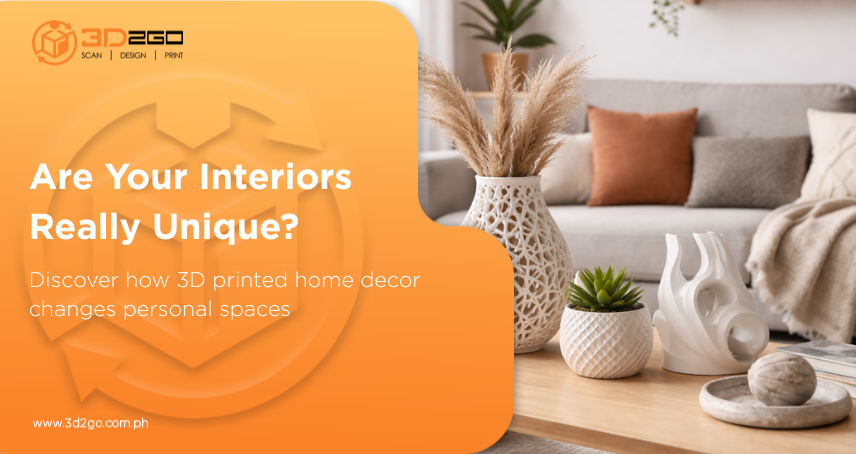
Walk into modern homes today, and you’ll notice something subtle but important: decor isn’t just about filling space anymore. It’s about identity.
People want interiors that feel personal, not copied from the same catalog everyone else is using. That shift is where custom decor printing becomes more important. With services like design, it is no longer limited to what’s available on shelves.
At the center of this change is 3d printed home decor, slowly reshaping how interiors are designed and experienced.
Why Standard Decor Is Falling Behind
Mass-produced decor was once the easiest option. It was affordable, easy to find, and simple to match.
But there’s a downside: many spaces end up looking the same.
That lack of individuality is becoming more noticeable. People don’t just want something that “fits the space.” They want something that feels like it belongs to them.
3D-printed home decor offers that option. Instead of picking from fixed designs, pieces can be created around specific preferences, spaces, and ideas.
A Shift Toward More Personal Spaces
Interior design is no longer just about aesthetics. It’s about expression.
Small details now carry more weight, unique shapes, meaningful objects, and custom pieces that reflect personality.
That’s where 3d printed home decor fits naturally. It allows designs to move beyond standard forms and into something more personal and intentional.
Even subtle changes in shape or texture can completely change how a space feels.
What Makes 3D Printed Decor Different
Traditional decor is limited by manufacturing constraints. Designs need molds, mass production, and standard sizing.
3D printing removes a lot of those restrictions.
With 3d printed home decor, objects are created layer by layer from digital models. That opens the door to more flexible and creative designs that aren’t tied to traditional production methods.
It’s not just about making things differently, it’s about making different things.
Customization Without the Usual Barriers
Custom decor used to feel out of reach for many people. It was often expensive, time-consuming, and limited to high-end projects.
3d printed home decor changes that equation. Because everything is digitally controlled, adjustments can be made without starting from scratch. That makes customization more accessible and practical.
It brings personalization closer to everyday interiors, not just luxury spaces.
More Efficient Design Process
Designing a space often involves compromises. You find something close to what you want, but not exactly what you envisioned.
With 3d printed home decor, that gap becomes smaller. Instead of adjusting your ideas to match available products, you can create pieces that align with your actual design intent.
That makes the design process smoother and more direct.
Unique Pieces That Don’t Feel Repetitive
One of the most noticeable issues in modern interiors is repetition.
Walk into enough homes or commercial spaces, and you start seeing the same styles over and over again.
3d printed home decor helps break that cycle. Since designs can be created digitally from scratch, the chances of duplication are much lower.
Each piece can feel distinct, even within similar design themes.
Growing Demand for Digital Manufacturing
The rise of 3D printing is part of a broader shift toward digital production.
According to research, the global 3D printing market continues to expand as industries adopt more flexible and on-demand manufacturing methods. This growth reflects increasing interest in customized production across multiple sectors, including interior design.
That momentum is helping push 3d printed home decor further into mainstream use.
More Control Over Materials and Production
Another advantage of 3D-printed home decor is the controlled production process.
Because items are built from digital models, material usage can be more precise compared to traditional manufacturing. That reduces unnecessary waste and allows for more intentional production decisions.
It’s not just about aesthetics; it’s also about how efficiently objects are made.
Bridging Design Ideas and Real Spaces
One of the biggest challenges in interior design is translating ideas into physical objects.
What looks good on paper or a screen doesn’t always translate perfectly into real spaces.
3d printed home decor helps bridge that gap. Designers can refine and adjust models digitally before producing them, making it easier to ensure the final result fits the intended space.
That reduces guesswork and improves consistency.
Why This Trend Keeps Growing
Trends in design come and go, but personalization tends to stay.
People want spaces that feel lived-in and intentional, not generic.
That’s why 3d printed home decor continues to gain traction. It supports individuality in a way traditional decor often can’t match.
It’s less about replacing existing design approaches and more about expanding what’s possible.
More Than Just Visual Appeal
Decor isn’t only about how a space looks. It also affects how it feels.
The right piece can change the tone of a room, create balance, or add character that ties everything together.
With 3D-printed home decor, those elements are easier to control because each piece can be shaped to a specific purpose or mood.
Designing Spaces That Feel More Personal
The strongest interiors are not the ones that follow trends perfectly. They’re the ones that feel right for the people using them.
3d printed home decor supports that idea by allowing more freedom in how spaces are designed and expressed.
3D2GoPH operates in this space by providing precise, customizable printing solutions that turn design ideas into real, usable pieces.