
Corporate Giveaways People Will Actually Bring Home
September 9, 2026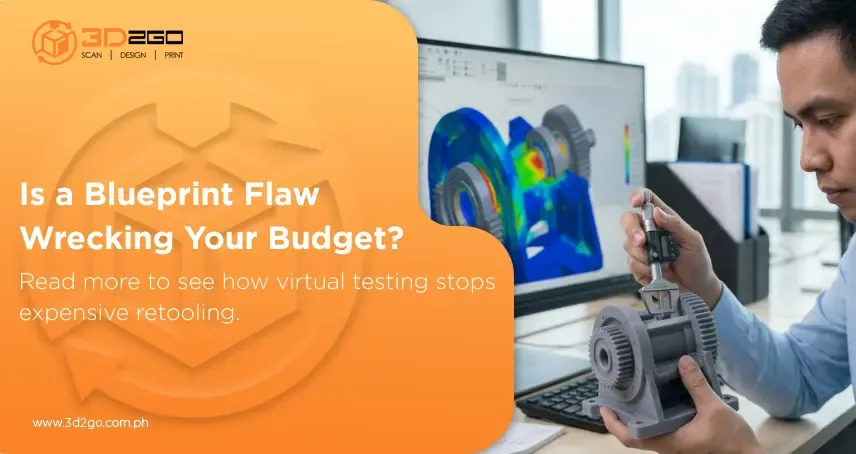
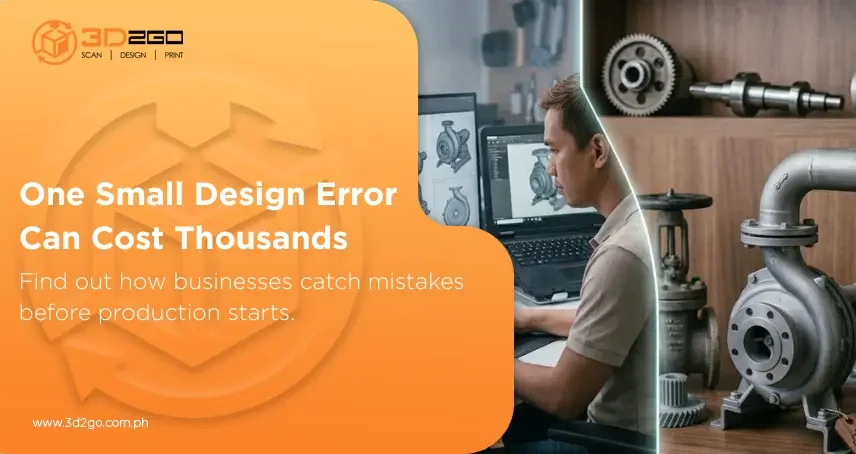
In industrial manufacturing, a tiny mathematical slip on a blueprint can quickly spiral into a six-figure disaster. An awkward clearance angle, an overlooked thermal expansion gap, or a bolt hole off by a hair might look harmless on paper. But once you start cutting custom steel, forging tooling dies, or casting expensive molds, finding a structural flaw drains your capital and delays your launch.
That’s exactly why sharp engineering teams double-check everything digitally before switching on factory machinery. Precise 3D CAD modeling lets designers inspect every hidden angle, tolerance, and contact point in a virtual setup. By weaving accurate mechanical 3d models into your early workflow, you catch critical fit issues while they are still quick, easy, and cheap to fix.
The True Financial Impact of Late-Stage Design Errors
When a mechanical component fails during real-world assembly, the financial hit goes way beyond scrapped metal. You’re stuck paying downtime penalties, paying rush rates at the machine shop, facing late shipment fees, and watching engineers waste hours diagnosing what went wrong.
Flat 2D drawings simply cannot show how complex, multi-part assemblies interact in motion. Relying solely on paper forces designers to mentally visualize three-dimensional spaces—and that’s usually where human error slips through the cracks.
Catching design flaws late carries a massive price tag across industrial manufacturing. According to a global manufacturing study, over 70% of product development leaders report that design errors caught after physical production begins cost up to ten times more than those resolved during early digital prototyping. Building detailed mechanical 3D models gives you a dependable digital safety net, ensuring every gear, bearing seat, and support wall performs flawlessly in simulation first.
How Digital Fabrication Models Catch Costly Mistakes Early
Moving past flat drafts to three-dimensional digital geometry changes how product development works. Here is how virtual testing protects your bottom line from surprise mechanical failures:
- Spatial Clearance and Clash Detection: Internal parts sit tightly packed inside modern machinery. Digital testing tools automatically flag overlapping parts and tight pinches in mechanical 3d models long before anyone cuts physical metal.
- Checking Form, Fit, and Assembly Sequence: Even if individual parts meet their tolerances, assembly can be a nightmare if a technician can’t fit a socket wrench into the casing. Virtual testing lets teams simulate step-by-step assembly, verifying that maintenance crews can actually reach and service internal parts later.
- Stress and Thermal Testing: Factory components take a beating from heavy loads, extreme heat, and constant vibration. Detailed mechanical 3D models let engineers run Finite Element Analysis (FEA) simulations, stressing the digital part to spot weak points and thin walls before anything fractures in the field.
- Seamless Prototyping: Working with digital three-dimensional files makes bridging computer designs and physical samples painless. Accurate geometry lets you rapid-prototype working plastic test pieces in hours, giving your team a tangible part to inspect before locking in expensive metal production.
Key Industries Leveraging Digital Mechanical Modeling
Practically any business relying on custom hardware, automated equipment, or specialized tools relies on virtual part validation to safeguard production:
- Automotive and Mobility: Testing engine mounts, custom brackets, and drivetrain housings for long-term stress and vibration.
- Consumer Electronics: Fitting complex circuit boards, battery clips, and outer shells into ultra-compact devices.
- Industrial Automation: Validating robotic arms, conveyor drive gears, and custom pick-and-place end effectors for round-the-clock factory use.
- Medical Devices: Creating ergonomic covers, structural frames, and precise fluid valves that demand tight tolerance control.
In every case, relying on detailed mechanical 3d models acts as an insurance policy against unexpected factory halts.
From Digital File to Physical Production
Taking a machine component from a rough idea to a validated, production-ready part follows a logical sequence:
- Drafting and CAD Conversion: Turning rough sketches or technical specs into clean 3D geometry.
- Virtual Stress and Motion Checks: Running software tests to confirm load limits, heat tolerance, and smooth motion using mechanical 3d models.
- Refining Tolerances: Fine-tuning wall thickness, bolt holes, and contact surfaces based on simulation feedback.
- Physical Prototype Testing: Printing a physical sample using mechanical 3d models on high-precision 3D printers to test real-world feel and fit.
- Full Fabrication: Moving straight into final metal machining or mass production with full confidence in your design.
Relying on solid mechanical 3d models throughout this process ensures that when your physical components arrive, they fit together perfectly on the very first try.
Avoid Costly Machine Mistakes with 3D2GoPH
A single blueprint oversight shouldn’t wreck your budget or throw your launch off schedule. Smart digital modeling and early physical prototyping put you back in control of production, eliminating costly guesswork before you cut metal.
3D2GoPH equips engineers and industrial teams across the Philippines with high-precision 3D CAD modeling, detailed reverse engineering, and rapid 3D prototyping. We help you validate fit and function early so you can move into mass production with complete peace of mind.
Ready to test your design before locking in expensive factory runs? Send us your project details today and let’s bring your mechanical concepts to life with total confidence!