
3D Printed Replacement Parts for Machines with Discontinued Components
April 16, 2026
Why 3D Printed Home Decor Is Gaining Ground in Contemporary Interiors
April 20, 2026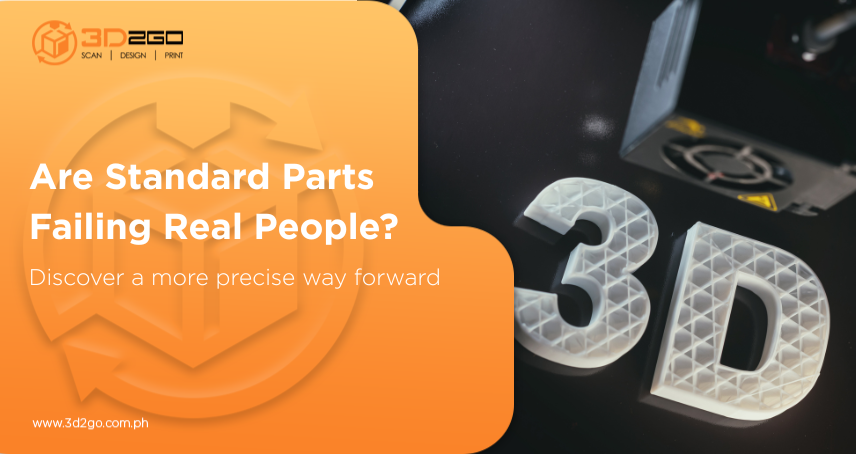
For years, medical solutions followed a familiar pattern: standard sizes, standard shapes, standard expectations.
But real people don’t fit into neat categories. And that mismatch? It shows up quickly in comfort, performance, and overall results.
That’s exactly where custom prosthetic printing is starting to change the conversation. With options like this, there’s a clear shift toward building solutions around the individual, not the average.
At the center of it all are 3D-printed body parts, offering a more precise and adaptable approach to medical needs.
When “Standard Fit” Doesn’t Really Fit
Standardization makes production easier, but it doesn’t always serve the user.
Even minor differences in anatomy can affect how something fits or functions. A slight misalignment might not seem like much at first, but over time, it can lead to discomfort or limited usability.
That’s the limitation of a one-size-fits-all design.
With 3d printed body parts, the approach flips. Instead of adjusting the person to fit the product, the product is built to match the person. It’s a subtle shift, but it makes a noticeable difference in real-world use.
Built Around the Individual, Not the Average
What sets 3D printing apart is how it starts.
Rather than relying on pre-made molds, it uses digital data, often based on scans, to guide the entire process. That allows for far more flexibility in shaping and structuring each component.
In practical terms, 3D-printed body parts can be designed to reflect a patient’s exact contours and proportions. It’s not about getting close, it’s about getting it right from the beginning.
Precision That Carries Through the Process
Accuracy isn’t just a technical benefit; it’s something people feel.
When a component fits properly, everything else tends to fall into place. Movement feels more natural. Adjustments are minimal. There’s less friction, both physically and in the process itself.
Because 3d printed body parts are built from detailed data, that precision carries through from design to final use. It reduces the need for repeated modifications, thereby saving time for both medical teams and patients.
Faster Turnaround Without Cutting Corners
Time matters, especially in healthcare.
Traditional customization can take weeks, sometimes longer, depending on the complexity of the request. And if revisions are needed, that timeline stretches even further.
With 3d printed body parts, once the design is finalized, production can move quickly. There’s no need to rework molds or restart large-scale processes. It’s a more direct path from concept to finished component.
That speed doesn’t replace quality; it supports it.
A Better Experience for the Patient
At the end of the day, this isn’t just about technology; it’s about how it affects people.
A well-fitted component can improve comfort, mobility, and overall experience. It can reduce the need for constant adjustments and make daily use more manageable.
Because 3d printed body parts are designed with the individual in mind, they tend to feel more natural. And that makes a difference where it matters most, in everyday life.
Expanding Across Medical Applications
The use of 3d printed body parts continues to grow across different areas of healthcare.
They’re being explored in prosthetics, orthopedics, dental work, and even pre-surgical planning. Each application benefits from the same core advantage, precision-tailored to the individual.
As the technology becomes more accessible, these use cases are becoming less experimental and more practical.
A Shift Backed by Industry Growth
This move toward customization isn’t happening in isolation.
According to research, the global 3D printing market is expected to expand significantly as industries adopt more flexible and personalized production methods. Healthcare is part of that shift, with a growing emphasis on patient-specific solutions.
That momentum reinforces the value of 3d printed body parts as a long-term approach, not just a temporary innovation.
From Digital Model to Real-World Use
One of the strengths of this process is its seamless transition from digital design to physical output.
Medical teams can review, adjust, and refine a model before it’s ever produced. That reduces guesswork and helps ensure the final result performs as expected.
With 3d printed body parts, that connection between design and reality becomes much tighter and more reliable.
Why This Approach Is Gaining Ground
As expectations shift, the limits of traditional methods become more obvious.
People want solutions that feel right, not just functional. They want fewer adjustments, faster timelines, and better outcomes.
That’s why 3d printed body parts are gaining traction. They offer a way to meet those expectations without overcomplicating the process.
A More Practical Path to Personalization
Personalized healthcare doesn’t have to be complicated.
Sometimes, it’s about starting with the right data and using the right tools to turn that into something usable.
3d printed body parts make that possible by combining accurate modeling with flexible production. It’s a more direct way to create solutions that actually match real needs.
Designed for Real People, Not Just Specifications
At its core, this shift is about alignment, making sure what’s created works with the person, not against them.
3d printed body parts bring that idea into practice by focusing on fit, function, and usability from the very beginning.
3D2GoPH supports this approach by developing precise, application-ready components based on real-world requirements.