Why Businesses Work with a Digital Model Maker Instead of DIY Modeling
April 13, 2026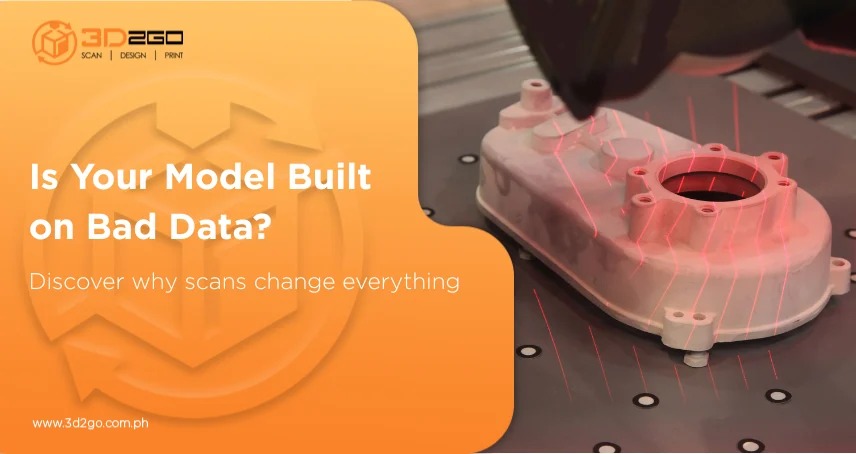
Top 10 Benefits of Converting a Laser Scan to 3D Model
April 15, 2026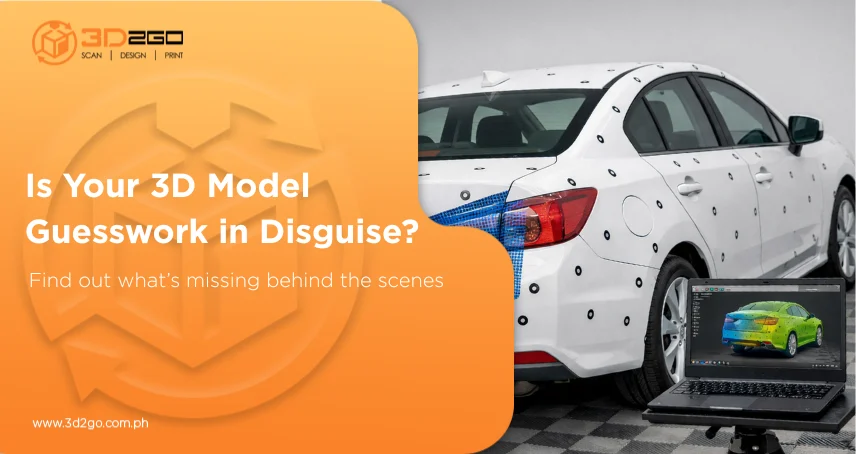
There’s a point where “good enough” stops being good enough, especially when you’re dealing with vehicles.
A slight mismatch in measurements might seem harmless at first, but once it reaches fabrication, design alignment, or restoration work, those small gaps turn into real problems. Parts don’t fit the way they should. Curves feel off. Adjustments pile up.
That’s usually where teams start looking for a more reliable way to capture real-world data. And more often than not, they end up shifting toward precision laser scanning through solutions like.
At the center of this approach is 3d laser scanning technology, which has changed how physical vehicles are translated into digital models, faster, cleaner, and far more accurate than traditional methods.
What 3D Laser Scanning Technology Actually Does
Instead of measuring a vehicle piece by piece, 3D laser scanning technology captures its entire surface in a single, structured process.
The scanner collects millions of data points from every visible angle of the object. These points form a dense spatial map called a point cloud, which is then processed into a complete digital model.
What makes this different from manual methods is simple: it doesn’t interpret, it records.
A properly executed scan using 3d laser scanning technology delivers:
- Exact real-world geometry
- True-to-scale proportions
- Full surface detail, including curves and edges
- A digital model that reflects the physical object with high fidelity
There’s very little room for assumption. What you see in the scan is what exists in reality.
Why Accuracy Matters More Than It Seems
Vehicles are full of subtle design elements, curves, transitions, and layered surfaces that are easy to misread by hand.
And that’s where problems usually begin.
A small measurement error doesn’t stay small. It affects alignment. It impacts fitment. It creates inconsistencies that only become visible later in the process, when corrections are more expensive and time-consuming.
This is where 3d laser scanning technology changes the dynamic. By capturing the entire surface at once, it removes the need for repeated manual interpretation.
The result is a foundation that teams can actually trust.
How the Process Works in Practice
Even though the outcome looks highly technical, the workflow behind 3d laser scanning technology is quite structured and straightforward.
First, the scanner captures the vehicle from multiple angles, recording surface data in real time. Then all that information is combined into a point cloud, a dense digital representation of the object.
From there, the data is cleaned. Noise is removed, gaps are refined, and the structure is stabilized. Finally, the processed data is converted into a usable 3D model.
Each step builds toward one goal: turning a physical object into a precise digital version that can be used for design, analysis, or modification.
Where Traditional Measurement Falls Short
Manual measurement still works in simple scenarios, but vehicles are rarely simple.
Flat surfaces are easy to handle. Complex curves, hidden edges, and overlapping structures are not.
And even when measurements are taken carefully, human variation becomes a factor. Two people can measure the same section and still get slightly different results.
That inconsistency adds up.
With 3d laser scanning technology, the entire object is captured in a single process. There’s no switching between tools, no repeated checks, and no interpretation between steps. Just consistent, repeatable data.
Faster Capture Without Sacrificing Detail
Speed and accuracy usually sit on opposite sides of the table. One improves at the expense of the other.
But 3d laser scanning technology disrupts that balance.
Because it captures full-surface data in a single pass, it significantly reduces the time required to move from a physical object to a digital model, without losing detail.
That combination is especially valuable in industries where timelines are tight, but precision still matters.
Industry Momentum Behind 3D Scanning
The shift toward digital measurement isn’t happening in isolation.
According to research, the 3D scanning market continues to grow as industries adopt more advanced digital workflows across design, manufacturing, and engineering applications. This growth reflects a broader move toward precision-based digital processes that replace manual estimation with data-driven accuracy.
In that environment, 3d laser scanning technology is becoming less of an upgrade and more of a standard.
Where This Technology Makes the Biggest Impact
The value of 3d laser scanning technology becomes most obvious in real-world applications.
In automotive design, it helps engineers work with exact geometry rather than approximations. That leads to more accurate modifications and better-fitting components.
In restoration work, it allows old or damaged vehicles to be digitally preserved and reconstructed with precision.
In engineering analysis, it provides a reliable reference for studying structural and performance characteristics.
And in customization projects, it ensures parts and modifications align properly with the original form.
Across all of these use cases, the advantage is the same: fewer assumptions, more certainty.
Why More Teams Are Moving Toward Scanning-Based Workflows
As expectations around accuracy continue to rise, manual workflows start to feel limiting.
They take longer, introduce variability, and often require multiple rounds of correction before reaching usable quality.
3d laser scanning technology removes much of that friction by providing a reliable starting point from the beginning.
Instead of building from estimates, teams build from real data. That shift alone changes how efficiently projects move forward.
Turning Physical Reality Into Usable Digital Models
At its core, 3d laser scanning technology is about conversion.
It converts a physical object into a structured digital asset that can be analyzed, modified, or integrated into other workflows.
But the real value isn’t just the scan itself; it’s what it enables afterward.
Better design decisions. Faster approvals. More predictable outcomes.
That’s where the impact becomes clear.
From Real Vehicles to Reliable Digital Outputs
Vehicles are one of the most demanding subjects to digitize because small details matter so much.
Even slight inaccuracies can affect downstream processes, especially when precision is critical.
With 3d laser scanning technology, those details are captured as they exist in reality, not reconstructed or estimated after the fact.
That level of reliability is what makes the final digital model truly usable.
Bringing Precision Into Every Stage of Work
When accuracy is handled at the start, everything else becomes easier.
Fewer revisions. Smoother workflows. Faster decision-making.
That’s why more teams are adopting structured scanning processes built on 3D laser scanning technology rather than relying on manual methods.
3D2GoPH applies this approach through precision-focused scanning and modeling workflows designed for real-world applications.