The Growing Demand for 3D Design Services in Modern Industries
May 22, 2026
3D Printed Scale Models That Turn Complex Projects into Tangible Displays
May 26, 2026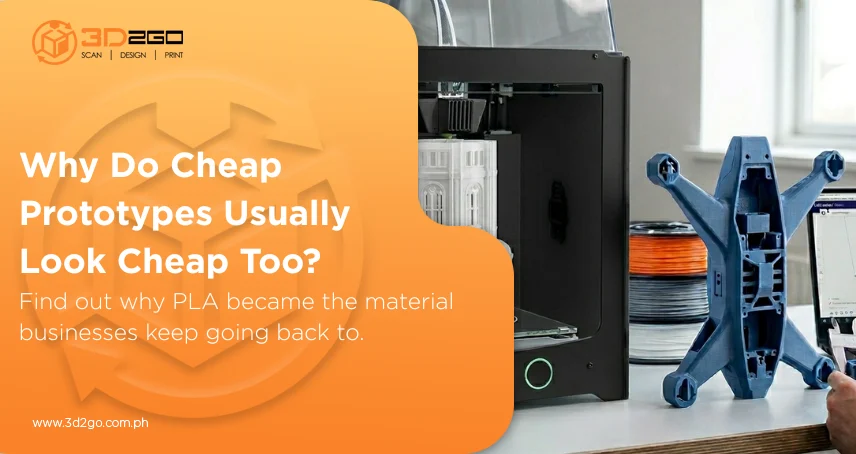
Not every 3D print is meant to survive harsh factory conditions or extreme mechanical stress. Sometimes, the real goal is much simpler: create something accurate, visually clean, and fast enough to keep a project moving. That’s exactly where PLA earns its reputation.
For designers, startups, engineers, and even marketing teams, custom PLA plastic printing has become one of the easiest ways to turn digital concepts into physical models without navigating overly complicated production requirements.
There’s a reason PLA plastic 3d printing continues to dominate so many prototyping workflows. It’s dependable, affordable, visually polished, and surprisingly versatile for projects where presentation matters just as much as functionality.
And honestly, when deadlines are tight and revisions keep changing, practicality tends to win.
Why PLA Became the Default Choice for So Many Projects
PLA, or polylactic acid, is one of the most widely used materials in additive manufacturing today. Part of that comes down to ease of use. Compared to more demanding filaments, PLA is far less temperamental during printing.
It melts at lower temperatures, produces less warping, and generally behaves more predictably throughout the process. That consistency is a major reason businesses continue to rely on PLA plastic 3D printing for prototypes and visual models.
Because when production timelines get compressed, the last thing teams want is to spend hours troubleshooting failed prints.
A material that prints reliably saves time before anyone even notices the final model sitting on the table.
Presentation Quality Matters More Than People Admit
A prototype doesn’t just communicate dimensions. It communicates confidence.
You can have a strong product idea, but if the model looks rough, uneven, or unfinished, people subconsciously question the design itself. That’s one reason PLA plastic 3d printing works so well for display models and early-stage presentations.
PLA naturally produces smoother-looking surfaces and cleaner visible detail compared to many industrial-grade materials. Fine edges, curves, embossed elements, and small design features tend to come through more clearly without requiring excessive post-processing.
That makes a difference for:
- Product mockups
- Architectural presentations
- Trade show displays
- Marketing prototypes
- Educational models
- Concept presentations
In many situations, the visual impression of a prototype shapes how seriously people take the idea behind it.
Faster Prototypes Lead to Better Decisions
One of the biggest advantages of PLA plastic 3d printing isn’t the material itself. It’s the speed it enables.
Design teams can move from digital concept to physical prototype quickly enough to evaluate ideas in real time, rather than waiting weeks for traditional fabrication methods. If something feels off — maybe the scale looks awkward, or the ergonomics don’t work physically — revisions can happen immediately.
Instead of treating prototypes like expensive milestones that must be perfect before production, businesses can iterate more freely. They can test, adjust, refine, and improve ideas faster because costs and turnaround times remain manageable.
And realistically, most successful products go through several rounds of refinement anyway. Faster iteration simply makes those improvements easier to achieve.
PLA Makes Early Development Less Expensive
Traditional prototyping can become expensive very quickly, especially during early-stage development, when designs are constantly evolving.
That’s another reason PLA plastic 3d printing remains such a practical option. Businesses can create multiple prototype versions without investing heavily in tooling, molds, or large-scale production setups upfront.
If the dimensions need adjusting tomorrow, the digital file will be updated, and another version can be printed shortly afterward.
That kind of flexibility matters because product development rarely follows a perfectly straight line. Ideas evolve. Client feedback changes direction. Market demands shift halfway through projects.
PLA supports those changes without making every revision feel financially painful.
Ease of Printing Reduces Production Delays
Some 3D printing materials require tightly controlled environments just to produce stable results. Excessive heat fluctuations, improper cooling, or small calibration issues can ruin prints entirely.
That reliability is one of the biggest reasons PLA plastic 3d printing remains so widely used across both commercial and creative industries. The material produces consistent results without requiring the same level of environmental control as more industrial-focused filaments.
Fewer failed prints mean fewer delays, lower material waste, and smoother project timelines overall.
For businesses juggling multiple prototypes or client deadlines, consistency becomes incredibly valuable.
Display Models Benefit More From Detail Than Raw Strength
For display pieces, concept prototypes, and presentation materials, visual accuracy usually matters more than impact resistance or heat tolerance. That’s where PLA plastic 3d printing often outperforms stronger but less visually refined materials.
PLA captures intricate details exceptionally well, making it ideal for projects that rely heavily on appearance and surface quality.
That’s why it’s commonly used for:
- Product visualization
- Miniatures and figurines
- Marketing displays
- Architectural scale models
- Presentation prototypes
- Creative concept pieces
When people evaluate a prototype visually, surface quality often shapes their first impression before they even think about technical performance.
Sustainability Is Becoming Part of Material Decisions
PLA is often considered a more environmentally conscious option because it’s derived from renewable resources like corn starch and sugarcane rather than petroleum-based plastics.
Of course, real-world disposal and recycling systems are more nuanced than simple “eco-friendly” labels suggest. Still, many businesses exploring PLA plastic 3d printing appreciate having a material option associated with lower dependence on fossil-based production.
According to research, manufacturers implementing smart manufacturing and advanced production technologies reported improvements of up to 20% in production output and employee productivity, highlighting the growing importance of digital manufacturing workflows across modern industries.
That growing interest is pushing businesses to explore materials that better balance usability, affordability, and sustainability.
PLA Fits Both Creative and Commercial Workflows
Another reason PLA plastic 3d printing remains popular is its versatility. The same material can support industrial prototypes one day and highly visual marketing models the next. It adapts well across industries because it offers a balance between ease of production and presentation quality.
It’s also available in a wide range of colors, finishes, and specialty variations, allowing businesses to create polished outputs without requiring extensive finishing work afterward.
That flexibility makes PLA useful not just for engineers, but also for designers, educators, architects, marketers, and creative teams working on visual presentations.
Good Printing Still Depends on Proper Execution
Even though PLA is considered beginner-friendly, professional results still depend heavily on experience.
Print orientation, support placement, layer settings, calibration, and file preparation all affect how the final model turns out. A poorly prepared file can still produce weak surfaces, inaccurate dimensions, or visible defects regardless of material quality.
That’s why many businesses rely on professional PLA plastic 3d printing services when prototypes need to look clean, accurate, and presentation-ready.
Experienced production teams understand how to optimize both the file and printer settings to achieve greater consistency and sharper final output.
Why Businesses Work With 3D2GoPH for PLA Printing Projects
Businesses looking for dependable printing support usually need more than someone pressing “print” on a machine. They need accurate file handling, reliable production quality, and outputs that hold up during presentations, evaluations, and client reviews.
3D2GoPH provides professional PLA plastic 3d printing services for businesses requiring prototypes, display models, concept pieces, and customized production support across multiple industries.
Their team handles projects that prioritize both visual quality and practical production reliability, helping clients move from digital concepts to physical models more efficiently.
Sometimes the Most Practical Material Wins
Not every project needs the toughest material available. In many cases, businesses simply need prototypes that look clean, print reliably, and arrive fast enough to support development timelines.
That’s exactly why PLA plastic 3d printing continues to play such a major role across modern prototyping and display workflows.
It offers a practical mix of presentation quality, affordability, production speed, and flexibility that fits a wide range of creative and commercial applications.
For businesses seeking professionally produced prototypes and high-quality display models, 3D2GoPH provides reliable PLA printing solutions tailored to real-world production needs.