
STL File Format: The Standard That Quietly Powers 3D Printing
April 27, 2026
Manual Scanning of the Body Parts for Custom-Fit Medical and Wearable Solutions
April 29, 2026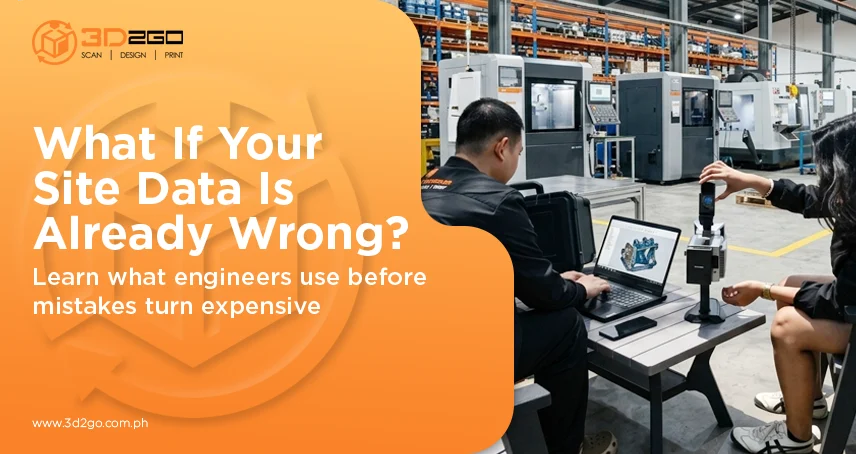
Engineering projects don’t usually fail because of big mistakes. More often, it’s the small inaccuracies, missing measurements, outdated drawings and overlooked site conditions that cause trouble later on.
That’s exactly why precision 3D scanning has begun to take on a more central role in how teams work today.
At the heart of this shift are laser scanning services. They’ve quietly moved from being a “nice-to-have” tool to something many engineering teams now rely on from day one of a project. Not because it’s trendy, but because it removes guesswork where it matters most.
Why Old-School Measurement Methods Are Struggling
Traditional surveying still has its place, but it’s starting to show its limits, especially in complex environments.
Manual measurements take time. They depend heavily on field conditions. And even with experienced teams, there’s always a chance something gets missed or recorded slightly off.
That “slightly off” part is where problems begin.
laser scanning services change that dynamic by capturing the full environment in one go. Instead of sampling points, you get the entire site in detail, walls, structures, surfaces, and everything in between.
It’s less about checking points and more about capturing reality as it is.
Engineering Is Getting More Demanding, and More Digital
Projects today move faster, involve more stakeholders, and leave less room for correction later.
Design decisions are increasingly driven by digital models rather than field assumptions. That shift isn’t accidental; it’s a response to tighter timelines and higher expectations.
That’s where laser scanning services fit naturally. They feed accurate, real-world data straight into digital workflows, so teams aren’t designing in the dark.
What Laser Scanning Actually Delivers
Strip away the technical jargon, and the idea is straightforward.
laser scanning services capture a physical space using laser pulses that measure distance and shape. These measurements form a point cloud, a dense digital map of the environment.
From that, engineers can build accurate 3D models that reflect actual site conditions rather than assumptions.
This allows teams to:
- Measure spaces with precision
- Build reliable as-built models
- Compare designs against real conditions
- Identify clashes before construction begins
It’s not just data collection; it’s a clearer way to see the project before work even starts.
Why Accuracy Carries So Much Weight
In engineering, small errors rarely stay small.
A slight misalignment in measurement can cascade into design conflicts, construction delays, or unexpected costs. And once work is underway, fixing those issues gets expensive quickly.
That’s where laser scanning services make a noticeable difference. They reduce reliance on estimates and replace them with verified measurements from the site itself.
When teams start with accurate data, everything downstream becomes more predictable, including design, coordination, and execution.
Faster Capture, Deeper Detail
One of the more surprising things about laser scanning services is how quickly they work.
What used to take days on-site can now be captured in a fraction of the time. But speed isn’t the only win here; the level of detail is just as important.
Millions of data points are collected in a short scan, creating a highly detailed digital representation of the site. That level of detail helps teams zoom in or out as needed, without going back to the field.
In practice, it means fewer site revisits and fewer missing pieces in the design process.
Planning Becomes Less Guesswork, More Strategy
Before any construction or design work moves forward, understanding the site properly is non-negotiable.
With laser scanning services, teams don’t rely on old drawings or partial surveys. They start with a full, current view of the environment.
That helps with:
- Detecting design conflicts early
- Planning more efficient layouts
- Avoiding unexpected site constraints
- Reducing rework during execution
Instead of reacting to issues during construction, teams can address them during planning, where it’s far easier and cheaper to fix.
A Shared Reference Everyone Can Trust
Engineering projects usually involve multiple teams working at once, including designers, consultants, contractors, and project managers.
Misalignment between these groups can slow everything down.
With laser scanning services, everyone works from the same digital foundation. There’s no debate over whether a measurement is correct or whether a drawing is up to date.
That shared reference point keeps conversations focused on decisions, not corrections.
Where Laser Scanning Shows Up in Real Projects
The use of laser scanning services isn’t limited to one type of work. It shows up across a wide range of industries, including:
- Infrastructure and civil engineering
- Industrial facility mapping
- Construction and renovation projects
- Heritage documentation
- Plant and factory upgrades
In each case, the goal is the same: capture the real world accurately so planning and execution don’t rely on guesswork.
What Happens Without It
Without laser scanning services, teams often rely on a mix of older drawings, manual surveys, and field estimates.
That’s manageable in simple projects, but in complex environments, it increases risk.
Common issues include:
- Design clashes discovered too late
- Incomplete site data
- Rework during construction
- Timeline delays
These aren’t rare problems; they’re recurring ones in projects that lack accurate baseline data.
Why It’s Becoming the Default Choice
As engineering projects grow more complex, the tolerance for error shrinks.
That’s why laser scanning services are no longer treated as optional in many workflows. They’re becoming part of the standard approach because they reduce uncertainty at the very beginning of a project.
Once teams experience the difference, especially in terms of accuracy and time saved, it’s hard to go back to older methods.
Engineering Works Better With Better Data
At its core, engineering has always been about precision. What’s changed is how that precision is achieved.
Laser scanning services make it possible to capture real-world conditions quickly, accurately, and in a format that teams can actually use. That shift improves planning, reduces errors, and makes execution far more predictable.
For teams looking to tighten their workflow and reduce avoidable rework, adopting this approach is less of a trend and more of a practical step forward.
3D2GoPH supports engineering teams with reliable scanning solutions designed to deliver accurate, usable data from the start, so decisions are based on what’s actually there, not what’s assumed.
Connect with 3D2GoPH.
Because in engineering, clarity at the start saves everything that comes after.