
Why Laser Scanning Services Are Becoming Standard in Engineering Projects
April 28, 2026
The Technical Challenges Behind a Realistic Human Figure 3D Model
April 30, 2026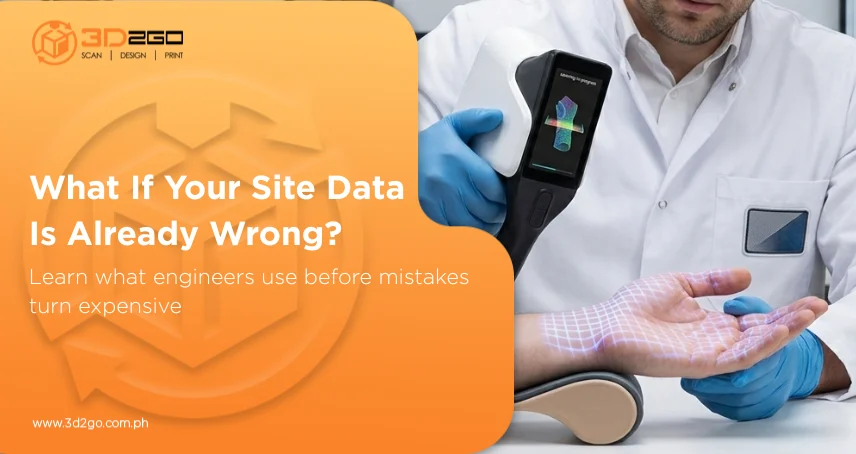
Getting the right fit has always been a bit more complicated than it looks. A small measurement mismatch can lead to discomfort, poor performance, or a device that simply doesn’t do its job well.
That’s why handheld 3D body scanning has started replacing older measurement methods across the medical and wearable industries. It captures the body as it is—no guesswork, no approximations.
In this shift, manual scanning of the body parts continues to be used to describe traditional-to-digital transitions in measurement practices. While the wording feels old-school, it points to a very modern need: capturing precise human body data for truly customized solutions.
Why Traditional Measuring Methods Struggle to Keep Up
For a long time, body measurements were done using tapes, molds, and visual estimation. It worked, but only up to a point.
The issue isn’t effort, it’s consistency.
Even slight differences in posture or technique can change results. And when you’re building something that needs to fit perfectly, small errors matter more than people think.
That’s where manual scanning of the body parts highlights the gap between older methods and today’s expectations. It reflects a process that depends heavily on interpretation rather than exact data capture.
And in modern applications, interpretation just isn’t enough anymore.
A Shift Toward Digital Precision
Modern scanning changes the entire approach. Instead of measuring point by point, it captures the entire surface and structure of the body in a single pass.
When applied to manual scanning of the body parts, this shift replaces estimation with exact geometry. Every curve, angle, and contour gets recorded as digital data.
From there, designers and medical professionals can build solutions that match real anatomy—not averages.
The result is less adjustment, fewer revisions, and a much tighter fit from the start.
Why Personalization Is Becoming the New Standard
Healthcare and wearable design are moving in a clear direction: personalization.
One-size-fits-all solutions are slowly losing ground because people’s bodies don’t fit into standard molds.
This is where manual scanning of the body parts becomes especially relevant. It supports the creation of products designed around the individual—not the other way around.
Where Manual Scanning of the Body Parts Is Used
Manual scanning of body parts is used across several industries where precision matters most.
Orthotics and Prosthetics
Custom support devices rely on exact body alignment to function properly. Even minor inaccuracies can affect comfort and usability.
Wearable Devices
From performance gear to medical wearables, proper fit directly impacts function and comfort.
Rehabilitation Equipment
Correct positioning is critical for recovery tools and support braces.
Sports and Performance Gear
Athletes benefit from gear that follows their exact body shape, improving both comfort and movement efficiency.
In all these areas, accurate data is not optional—it’s the foundation.
Why Accuracy Matters More Than Anything Else
Speed is helpful, but accuracy is what actually determines success.
If manual scanning of the body parts produces inaccurate data, the final product suffers, no matter how advanced the design or materials are.
That usually leads to:
- Poor fit and discomfort
- Extra adjustments after production
- Increased costs
- Longer delivery timelines
When accuracy improves, everything else tends to fall into place more smoothly.
Reducing the Room for Human Error
Traditional measurement methods rely heavily on technique. And while trained professionals do their best, human variation is always present.
A slight shift in position or tension in the measuring tape can change results.
With manual scanning of the body parts, that variation is significantly reduced. The system captures data directly from the body surface, minimizing interpretation and inconsistency.
The outcome is more reliable data from the very beginning.
A Faster Path From Measurement to Production
One of the biggest advantages of modern scanning is how quickly the data becomes usable.
Once manual scanning of the body parts is complete, the information can be converted into digital models immediately. Designers don’t need to wait for multiple measurements or physical molds.
That removes several steps from the traditional workflow:
- Rechecking measurements
- Creating physical casts
- Reworking designs after fitting tests
Instead, everything moves from scan to design with far fewer interruptions.
Better Fit Means Better Comfort
Comfort doesn’t happen by accident. It’s the result of precise design based on accurate data.
When body parts are scanned manually correctly, designers can account for subtle details—such as asymmetry, posture, and pressure zones—that are often missed in manual measurement.
That leads to products that feel more natural when worn or used.
And in medical applications, that difference can significantly improve user experience.
Why Adoption Keeps Growing
The shift toward scanning isn’t slowing down. If anything, it’s becoming standard practice.
Once teams work with manual scanning of the body parts, they tend to stick with it because the difference is clear—fewer errors, faster workflows, and better-fitting outcomes.
It removes uncertainty early in the process, which has a ripple effect on everything that follows.
Precision Is No Longer Optional
Custom-fit medical and wearable solutions depend on one thing above all else: accurate body data.
Manual scanning of the body parts plays a key role in that process, bridging older measurement methods with modern digital design. It reduces errors, improves comfort, and supports more reliable production outcomes.
As personalization continues to shape the healthcare and wearable industries, precision-focused scanning will become increasingly important.
3D2GoPH supports this shift with scanning solutions that accurately capture real-world body data, helping teams move from concept to production with confidence.