
Custom-Made Corporate Giveaways That Strengthen Brand Recall
May 15, 2026
Laser Scanner Workflows for Vehicles, Equipment, and Industrial Parts
May 19, 2026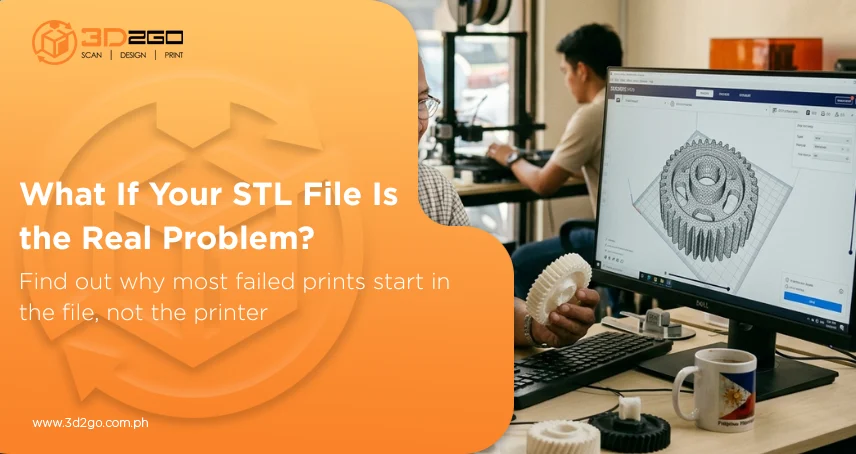
Most people look at a finished 3D print and assume the printer did all the work. In reality, the outcome is already decided long before anything gets printed. The file itself carries most of the weight—literally and technically.
That’s where 3D modeling for STL files comes in. It’s the step that transforms a concept into something a machine can actually understand and build layer by layer.
For both businesses and first-time users, 3d stl models act as the bridge between imagination and physical output. When the file is solid, printing feels smooth. When it isn’t, problems show up fast.
And that difference is often what separates a successful print from a frustrating one.
What 3D STL Models Actually Are?
At a basic level, 3D STL models are digital 3D objects composed of tiny triangles that form a mesh. Think of it like replacing a smooth surface with thousands of small flat pieces. The printer reads those pieces and reconstructs the shape layer by layer.
It’s not concerned with artistic detail or color. It only cares about structure—how the object exists in space.
The cleaner and more accurate the mesh is, the better the final print turns out. Even small issues in geometry can affect how the object is interpreted during slicing or printing.
That’s why STL files are simple in concept but sensitive in execution.
Why Businesses Depend on STL-Based Workflows
For companies working with prototypes or product development, 3d stl models are more than just files—they’re part of the decision-making process.
Instead of committing early to expensive manufacturing, teams can test ideas digitally first, then move to physical prototypes only when needed.
This reduces guesswork. It also helps teams align faster because everyone is working from the same digital reference.
In fast-moving industries, speed and clarity can make a real difference. A well-prepared STL file can mean fewer revisions, fewer delays, and fewer surprises once printing starts.
Prototyping Becomes More Practical With STL Files
One of the biggest advantages of 3d stl models is how easily they support rapid prototyping. A digital concept can be turned into a physical object quickly, allowing teams to test fit, structure, and usability before committing to production.
Instead of debating how something might work, businesses can actually hold it in their hands and evaluate it directly. That feedback loop changes how products are developed. Adjustments happen earlier, mistakes get caught sooner, and decisions become more grounded in real-world testing.
The Hidden Issue Most First-Time Users Don’t Expect
At first glance, 3d stl models seem straightforward. You open the file, and it looks fine, and everything feels ready.
But printing tells a different story.
Many beginners run into problems like:
- Gaps in the model surface
- Scale mismatches
- Broken or incomplete geometry
- Thin walls that fail during printing
The frustrating part is that these issues aren’t always visible in the design software. Everything can look fine until the printer starts interpreting the file.
Why File Quality Matters More Than Fancy Designs
A complex model doesn’t guarantee a successful print. In fact, poorly optimized 3d stl models often fail even if they look impressive on screen. The printer doesn’t interpret creativity—it reads structure.
If the mesh is messy or inconsistent, the print will reflect that, no matter how visually appealing the design appears. Clean geometry, correct scaling, and proper mesh integrity matter far more than visual complexity.
That’s why experienced users often focus more on file preparation than design detail alone.
STL Files Make Digital Manufacturing More Flexible
One of the biggest strengths of 3d stl models is how easily they fit into modern manufacturing workflows.
Instead of long production setups or tooling requirements, STL-based processes allow fast iteration. A design can be updated, re-exported, and printed again without restarting the entire system.
That flexibility supports faster development cycles and quicker testing phases.
According to research, 3D printing adoption continues to expand across industries as companies focus more on rapid prototyping and agile product development.
Why STL Is Still the Most Common Format
Even with newer file formats available, STL hasn’t disappeared—and there’s a reason for that. 3d stl models are widely supported, easy to export, and compatible with most 3D printers and slicing software without conversion issues.
That simplicity keeps them practical, especially for teams that prioritize reliability over complexity.
It’s not the most advanced format, but it remains one of the most dependable. And in production environments, dependability usually matters more than features.
Where Things Go Wrong in STL Preparation
Most printing issues don’t start at the printer—they start in the file.
Some common problems in 3d stl models include:
- Incorrect scaling between software and printer settings
- Unwatertight or broken mesh geometry
- Overly dense or unnecessarily complex models
- Missing structural thickness
- Poor export settings during file conversion
Each of these can cause printing failures or unexpected results.
Why Professionals Spend Time Cleaning STL Files
There’s a noticeable gap between basic STL files and professionally prepared 3d stl models.
Professionally handled files are usually:
- Optimized for printing
- Free from mesh errors
- Properly scaled and structured
- Ready for slicing without manual fixes
That preparation reduces wasted material, failed prints, and unnecessary trial-and-error cycles.
STL Models Are Used Far Beyond Hobby Printing
Today, 3d stl models are used across a wide range of industries—not just personal projects.
Common applications include:
- Product development and testing
- Engineering prototypes
- Medical modeling and visualization
- Manufacturing parts and fixtures
- Educational demonstrations
- Custom industrial designs
The format’s flexibility allows it to adapt to both simple and highly technical workflows.
As 3D printing becomes more integrated into production pipelines, STL files remain a universal standard.
The File Is What Makes or Breaks the Print
It’s easy to focus on printers, materials, or settings—but the real foundation of any successful print is the file itself.
Well-built 3d stl models ensure smoother workflows, fewer errors, and more reliable physical outputs. Whether you’re a business developing prototypes or a first-time user exploring 3D printing, the quality of the STL file directly affects the outcome.
And as adoption of 3D printing continues to grow, understanding how STL files work becomes even more important for consistent results.
3D2GoPH helps businesses and individuals create clean, production-ready STL models designed to reduce errors and improve print success from the very beginning.