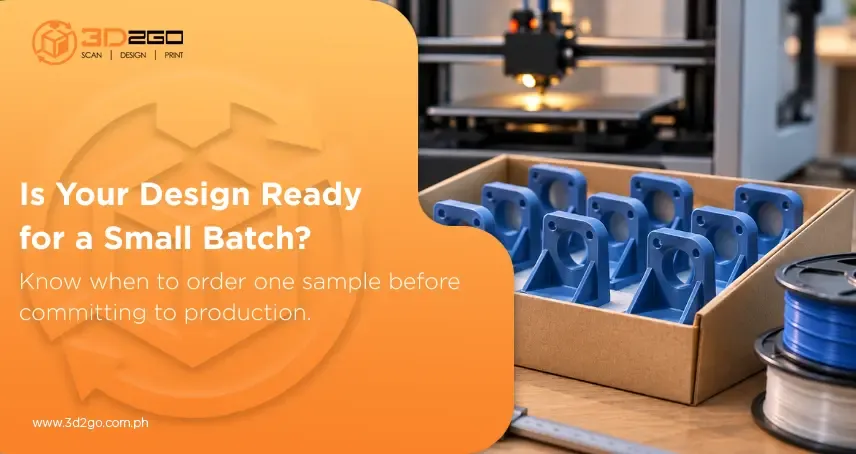
You’ve finished designing a custom product and are ready to have it made. The question now is how many pieces you should order. Is one enough to get started, or would ordering ten or twenty be more practical?
The answer depends on whether your design has already been tested. Ordering several copies of an untested product can become expensive if the measurements are wrong or the finished item doesn’t work as expected.
Through small-batch 3D printing services, businesses and individuals can explore limited production quantities without immediately committing to large manufacturing orders. For new designs, starting with one sample is often the more practical choice.
Should You Order One Piece or Several?
Order one piece if you still need to test the design. Order a small batch if the design has been approved and you need multiple copies for a specific purpose.
For example, a business developing a custom phone holder may need one sample to check its size, stability, and fit. Once those details are confirmed, ordering several pieces for customers or product trials becomes more reasonable.
The difference is whether you’re paying to test an idea or produce something that’s already been tested.
| Your Situation | Recommended Approach |
| You’re testing a new design | Order one sample |
| You’re unsure about the dimensions | Order one sample |
| You need to check how parts fit together | Order one sample |
| Your prototype has been approved | Consider a small batch |
| You’re preparing samples for several customers | Consider a small batch |
| You’re restocking an unchanged, previously tested item | Consider a small batch |
These are general recommendations. The right quantity still depends on the product, budget, and consequences of a design error.
Why Your First Order Shouldn’t Always Be a Batch
A digital model can show a product’s dimensions, but it won’t tell you everything about how the finished object will work.
Consider a replacement plastic cover for a piece of equipment. The design might appear correct on a computer, but the printed cover could have an opening that’s slightly too narrow or mounting holes that don’t line up.
If you’ve ordered twenty copies, the same problem could affect the entire batch. Testing one sample first allows you to correct the design before ordering more.
This is particularly important for custom brackets, equipment housings, fitted accessories, and products with moving or connecting parts.
What to Inspect Before Approving 3D Printed Parts
The first sample should be evaluated based on what the product is supposed to do. A decorative item may require a clean appearance and accurate details, while a functional component may need precise dimensions and a secure fit.
Before approving the design, check:
- Measurements: Confirm that the important dimensions match your requirements.
- Fit: Test the item with any components it needs to connect to.
- Function: Check whether it performs its intended purpose.
- Surface finish: Look for visible defects that could affect appearance or use.
- Assembly: Make sure connecting parts can be installed or removed as intended.
- Material suitability: Confirm that the material is appropriate for the planned application.
Record any problems and update the design before requesting another print. A successful initial test doesn’t guarantee long-term durability, especially for products exposed to heat, repeated movement, or heavy loads.
When Ordering a Small Batch Makes More Sense
Once the sample meets your requirements, producing several copies becomes a practical next step.
A small batch may be appropriate for businesses preparing an initial product launch, testing customer demand, or fulfilling a limited number of orders. It can also work for customized promotional items, display accessories, and replacement components that aren’t needed in large quantities.
For example, a business might test one custom desk organizer before ordering 25 pieces for an initial sales run. The business can then evaluate customer interest and product feedback before deciding whether to order more.
There isn’t one standard quantity that defines a small batch. The appropriate number depends on the product, printing method, and provider’s production requirements.
Does Ordering More Pieces Lower the Cost?
Ordering several copies may reduce the average cost per piece when setup and preparation work can be shared across the order. However, quantity alone doesn’t guarantee a lower unit price.
The final quotation depends on the object’s size, material, printing time, design complexity, and finishing requirements. Certain designs may also require additional supports or processing, which can affect production costs.
Before placing an order, request prices for one sample and your preferred batch quantity. Comparing the quotations will show whether ordering several pieces offers a meaningful cost advantage for your project.
Why Small-Batch Production Matters to Businesses
3D printing is increasingly used for more than creating prototypes. Businesses also use it to produce custom components and finished products in quantities suited to their needs.
A 2024 Forbes article on 3D printing in manufacturing reported that 70% of business customers surveyed by Protolabs printed more parts in 2023 than in 2022. The underlying survey gathered feedback from more than 700 end users.
The finding shows increased printing activity among those surveyed, although it doesn’t establish that small batches are cheaper or more effective than other manufacturing methods.
For businesses developing custom products, limited production provides an option between testing a single sample and committing to a much larger manufacturing order.
What If You Need to Change the Design?
A design change doesn’t necessarily mean the entire project must restart. If the first sample reveals a problem, the digital model can be revised before another piece is printed.
Suppose a custom bracket fits its mounting points but doesn’t provide enough clearance for a nearby component. Adjusting the model may solve the issue without changing the rest of the design.
The revised sample should still be tested before approval. This is especially important when changes affect dimensions, assembly, or function.
Can You Skip the Sample and Order a Batch Immediately?
You can, particularly if you’re reordering a previously approved product with unchanged specifications.
For new designs, skipping the sample introduces additional risk. An incorrect measurement or unsuitable material could affect every item in the order.
Even with an existing design, requesting a new sample may be appropriate when changing printing providers, materials, or production methods. Different processes can produce different results, so previous approval doesn’t always apply to a new production setup.
How to Keep a Small Batch Consistent
Once a design has been approved, the provider needs clear instructions to reproduce it.
Keep the final digital file, required dimensions, material specifications, and finishing instructions together. If the item must fit another component, identify the measurements that are particularly important.
For functional products, agree on how the finished pieces will be checked. Decorative items may require more attention to visible details, while fitted components may need dimensional inspection.
The objective is to establish what an acceptable finished item looks like before production begins.
Where Can I Find Reliable 3D Printing Services in Metro Manila?
When looking for a printing provider in Metro Manila, start by checking whether the company can produce the type of item you need. Some projects require detailed models, while others involve functional components with specific material and dimensional requirements.
Review the provider’s available printing methods, material options, design assistance, and finishing services. Ask whether it accepts single-piece orders and small batches, and confirm the estimated turnaround before proceeding.
3D2GoPH is an option for individuals and businesses seeking custom 3D printing services in the Philippines. Customers can inquire about design requirements, production quantities, and available services. Confirm current service availability and delivery arrangements for your Metro Manila location before placing an order.
What Should You Send When Requesting a Quotation?
You don’t need to prepare a lengthy proposal. The provider mainly needs enough information to understand what you’re ordering.
Include the following:
- Design file: Your existing 3D model, if available.
- Reference material: Sketches or photos if you still need modeling assistance.
- Measurements: Overall size and any critical dimensions.
- Quantity: Whether you’re requesting one sample or a small batch.
- Intended use: What the item needs to do.
- Material preferences: Any required properties or preferred materials.
- Finishing requirements: Desired appearance or additional processing.
- Deadline: When you need the completed order.
Providing accurate information helps the provider assess the project and prepare a quotation based on its actual requirements.
Order One First or Proceed With a Small Batch?
The decision comes down to how confident you are in the design.
If you’re developing something new, one sample allows you to inspect the product and identify necessary changes. If the design has already been tested, a small batch may be more appropriate for customer orders, product trials, or limited production.
Your budget also matters. Compare the cost of testing one piece against the potential expense of receiving several items that need corrections.
For custom products, confirming the design before increasing the order quantity is generally a sensible approach.
Start Your Custom Printing Project With 3D2GoPH
Whether you’re preparing your first prototype or ordering several copies of an approved design, having clear specifications makes the process easier.
3D2GoPH offers custom printing and related design services for businesses and individuals in the Philippines. You can share your project requirements, preferred materials, and quantity to discuss available production options.
If you’re unsure whether to begin with one piece or a small batch, the team can review your requirements and help you explore a suitable approach.
Request a Quotation From 3D2GoPH to discuss your design and preferred order quantity.
Frequently Asked Questions About Single and Small-Batch 3D Printing
- Should I Order One Sample Before Requesting Several Copies?
For a new or untested design, ordering one sample is generally advisable. It allows you to check the product’s dimensions, appearance, and function before approving a larger quantity.
- Can I Order a Small Batch Without an Existing 3D Model?
You may be able to request 3D modeling assistance using sketches, reference images, and measurements. A digital model must be prepared before printing, and design work may involve additional costs.
- Is Small-Batch 3D Printing Suitable for Small Businesses?
Yes. It can suit businesses developing custom merchandise, testing customer demand, or fulfilling limited orders. The appropriate quantity and production method depend on the product’s requirements.
Key Takeaways
- Order one sample when the design still needs physical testing.
- Inspect fit, dimensions, function, and material suitability before approving additional copies.
- Small batches are appropriate for tested designs, limited sales, and initial product runs.
- Compare quotations for different quantities rather than assuming larger orders always cost less.
- Clear design files and specifications help support consistent results.