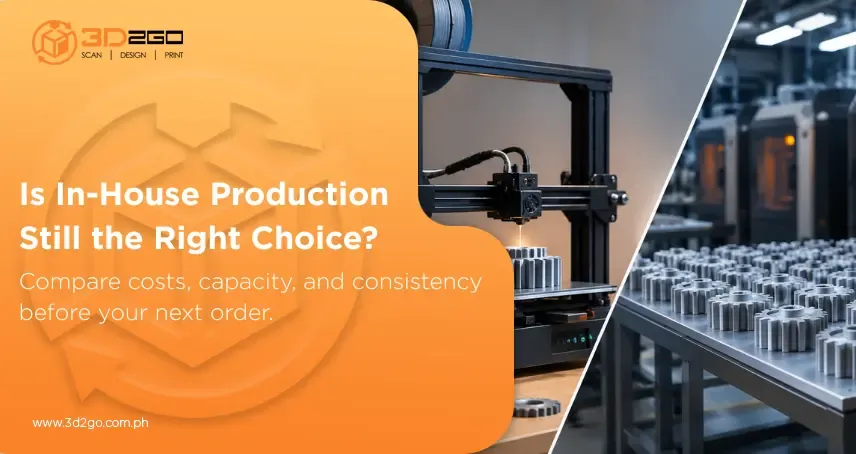
Producing a small batch of 3D-printed parts is manageable for many businesses with their own equipment. However, repeat orders can increase production demands, especially when customers require larger quantities, consistent quality, and reliable delivery schedules.
Comparing in-house vs professional 3D printing helps businesses determine whether their existing equipment and staff can handle recurring production requirements. Companies can also consider 3D printing services for businesses when additional production capacity is needed.
The decision depends on order volume, operating costs, available equipment, and the resources required to maintain consistent results.
In-House vs Professional 3D Printing: Which Is Better for Repeat Orders?
In-house printing suits businesses with manageable production volumes, available equipment, and employees who can oversee printing operations. Professional 3D printing services may be more practical when order quantities increase, specialized equipment is required, or internal production begins affecting other business activities.
The comparison below outlines the main differences.
| Factor | In-House Printing | Professional 3D Printing |
| Equipment | Requires company-owned printers | Uses the service provider’s equipment |
| Production capacity | Limited by available machines | Depends on provider capacity |
| Labor | Managed by internal employees | Provider handles agreed production tasks |
| Maintenance | Company’s responsibility | Provider’s responsibility |
| Quality control | Managed internally | Based on agreed specifications and inspection |
| Costs | Equipment, materials, labor, and maintenance | Production quotations and applicable delivery fees |
The better option depends on total production requirements rather than equipment ownership alone.
When In-House 3D Printing Makes Sense
Businesses that regularly produce prototypes, replacement components, or small quantities of custom parts may benefit from having their own printers. Internal equipment allows employees to make design adjustments and produce samples without coordinating every order with an external provider.
In-house production is most practical when equipment capacity matches demand and employees have the technical knowledge to manage printing, maintenance, and quality checks. Companies should also account for equipment downtime and other projects that may compete for machine availability.
Can Your Equipment Handle Larger Repeat Orders?
Production capacity becomes important when customers request larger quantities or several orders arrive within the same period. For example, if a part requires two hours to print individually, producing 100 pieces would require approximately 200 machine hours, excluding setup, finishing, maintenance, and possible reprints.
When evaluating in-house vs professional 3D printing, businesses should calculate their available machine hours and the number of acceptable finished parts they can produce within the required schedule. Printing several pieces together may improve output, depending on the design and equipment.
If internal capacity cannot meet demand, professional printing services may provide additional production resources without requiring immediate equipment purchases.
Understanding the Total Cost of 3D Printing
The cost of operating an in-house printer includes equipment purchases, filament or resin, electricity, maintenance, replacement components, and employee time. Failed prints and additional finishing work can also increase the cost of each acceptable finished part.
Professional 3D printing costs depend on the provider’s quotation, which may include materials, machine time, and agreed finishing services. Shipping, additional processing, or special requirements may involve separate charges.
For businesses comparing in-house vs professional 3D printing, the most useful calculation is the total cost per accepted finished part. Companies with steady production volumes may benefit from internal equipment, while businesses with occasional large orders may find professional services more practical.
Maintaining Consistent Quality Across Repeat Orders
Customers placing repeat orders expect parts that meet the same approved dimensions, material requirements, and appearance standards. However, variations in machine calibration, print orientation, materials, and processing conditions can affect the finished results.
Businesses should maintain approved design files, material specifications, and inspection requirements for recurring production. For example, custom equipment covers must continue fitting their intended components even when produced in separate batches.
With in-house vs professional 3D printing, quality requirements remain important regardless of who operates the equipment. External providers should receive clear specifications, while internal teams need consistent production and inspection procedures.
Managing Multiple Orders and Production Deadlines
Several customer orders arriving at the same time can create scheduling problems for businesses with limited equipment. Printers assigned to repeat production may become unavailable for prototypes, urgent replacement parts, or other projects.
Professional 3D printing services can help businesses manage additional workloads when internal machines are occupied. However, external production schedules depend on the provider’s equipment availability, order quantity, materials, and finishing requirements.
When comparing in-house vs professional 3D printing, businesses should review their typical order volumes, peak production periods, and delivery commitments before deciding whether additional capacity is necessary.
How Professional 3D Printing Affects Employee Workload
Operating 3D printers requires employees to prepare files, manage materials, monitor production, remove supports, inspect parts, and handle unsuccessful prints. These responsibilities can affect other business activities when order volumes increase.
Working with a professional printing provider allows internal employees to focus on product development, customer requirements, and other responsibilities while the provider handles agreed production tasks. Businesses still need to coordinate specifications, approve samples when necessary, and verify that delivered parts meet their requirements.
The value of professional printing services depends on whether the arrangement reduces internal workload while maintaining acceptable production costs and quality.
Why Repeat Orders Require More Production Capacity
According to a 2024 Forbes article on 3D printing in manufacturing, 70% of business customers surveyed by Protolabs printed more parts in 2023 than in 2022.
Increasing order volumes can put pressure on businesses that rely on limited in-house printing equipment. Professional 3D printing services offer an additional production option when existing machines cannot accommodate larger batches or overlapping orders.
For businesses comparing internal and external production, the priority is finding a setup that can meet recurring demand while maintaining consistent quality and delivery schedules.
Combining In-House Printing With Professional 3D Printing Services
Businesses do not necessarily need to choose only one production method. Internal printers can remain available for prototypes, design revisions, and small orders, while professional printing providers handle larger batches or projects that require additional equipment.
A combined approach may help businesses manage changing order volumes without immediately expanding their internal printing facilities. However, approved design files, materials, and quality requirements should remain consistent across both production arrangements.
For companies assessing in-house vs professional 3D printing, this approach may offer flexibility when production demand varies throughout the year.
What to Prepare Before Working With a Professional 3D Printing Provider
Clear production requirements help providers evaluate whether they can complete an order according to the expected specifications and schedule.
Businesses should prepare the following information:
- Approved 3D files: The correct design version for production.
- Order quantity: Required number of parts and expected reorder frequency.
- Material specifications: Preferred materials and necessary properties.
- Dimensions and tolerances: Measurements and acceptable variations.
- Finishing requirements: Surface appearance, color, and additional processing.
- Delivery schedule: Required completion and delivery dates.
These details support more accurate quotations and reduce misunderstandings during repeat production.
Choosing the Right Production Setup for Your Business
The decision between in-house vs professional 3D printing should be based on actual production requirements. Businesses can begin by reviewing monthly order quantities, machine availability, operating costs, and the time employees spend managing printing activities.
In-house production remains suitable when existing resources can meet demand without affecting other responsibilities. Professional printing services become worth considering when recurring orders exceed available capacity, require specialized equipment, or add to the workload.
A cost comparison using real production records and external quotations can help businesses determine which arrangement is more practical.
Discuss Your Repeat Orders With 3D2GoPH
Businesses handling repeat orders need sufficient production capacity, consistent specifications, and reliable quality checks. When internal equipment is insufficient, professional printing services may be an alternative to buying additional machines.
3D2GoPH offers 3D printing services for businesses in the Philippines. Companies can submit their design files, required quantities, material preferences, and finishing requirements to discuss suitable production options.
For businesses considering in-house vs professional 3D printing, 3D2GoPH can provide a quotation to help compare external production with existing internal costs.
Discuss your 3D printing requirements us to review your project and request a quotation.
Frequently Asked Questions About In-House and Professional 3D Printing
- Is Professional 3D Printing More Affordable Than In-House Production?
It depends on production volume, equipment costs, materials, maintenance, and labor. In-house printing may be economical for regular workloads, while professional services may suit occasional large orders or additional production needs.
- Can Professional 3D Printing Services Support Repeat Orders?
Yes, depending on the provider’s production capacity and capabilities. Businesses should supply approved design files, material specifications, order quantities, and quality requirements to support consistent results.
- Can Businesses Use In-House and Professional 3D Printing Together?
Yes. Businesses can use internal printers for prototypes and smaller jobs while working with professional providers for larger orders or projects requiring different equipment. Consistent design specifications and quality checks remain necessary.
Key Takeaways
- In-house printing provides direct production control but requires equipment, maintenance, and staff resources.
- Professional 3D printing services can provide additional capacity when internal equipment cannot meet order requirements.
- Repeat orders require consistent design files, materials, and quality checks.
- Production costs should include equipment, materials, labor, maintenance, and finishing.
- Businesses can combine internal printing and professional production services to manage changing workloads.