Not All 3D Laser Scanning Companies Deliver the Same Results
September 17, 2026
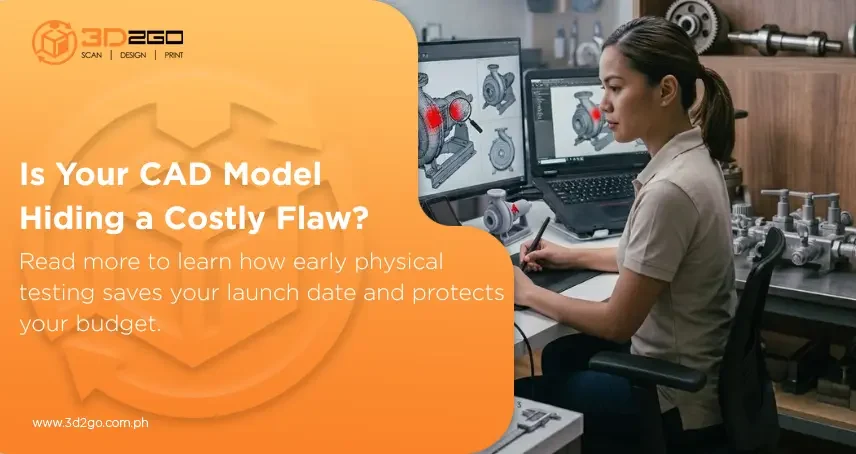
Every product designer, engineer, and entrepreneur knows the deceptive charm of a sleek 3D CAD model. On a high-resolution screen, a digital assembly looks flawless—surfaces align cleanly, light hits every curve just right, and virtual tolerances show zero interference. But rendering a design in software is a world away from holding a physical object in your hands. Once you translate pixels into physical matter, real-world friction takes over: moving joints bind up, ergonomic handles feel awkward, and mounting brackets flex under light stress.
Skipping physical testing to jump straight into tooling or mass production is a massive gamble. Investing early in professional 3D prototype development lets you catch design flaws, structural weaknesses, and assembly headaches while they’re still cheap and simple to fix. Relying on comprehensive prototype development services gives your team the freedom to test, tweak, and validate ideas long before committing serious capital to factory tooling.
The Danger of Relying Solely on Digital Models
Digital simulations have come a long way, but virtual environments still can’t simulate every real-world nuance. A computer monitor won’t tell you how a user’s hand fatigues after holding a tool for twenty minutes, nor can it truly predict how different surface textures feel across varying temperatures.
Jumping directly from a 3D file to factory production introduces heavy operational risks:
- Costly Tooling Adjustments: Injection molds and stamping dies cost thousands of dollars to produce. Modifying an existing steel mold because a latch pin missed by half a millimeter stalls production and drains cash fast.
- Ergonomic and Usability Blindspots: A product that looks intuitive in a 3D rendering often feels top-heavy or clumsy in actual use.
- Assembly Bottlenecks: Digital models hide how tricky a part might be to assemble on the floor. If a screw hole is blocked by an awkward angle, assembly times shoot up.
Caught early during design checks, these issues are minor tweaks. Caught after tooling, they become financial nightmares. Product development data from McKinsey & Company reveals that resolving design and functional flaws during early physical prototyping costs up to 100 times less than fixing those same defects after full-scale production begins. Leveraging specialized prototype development services eliminates that uncertainty, letting you stress-test your build long before it hits customer hands.
How Physical Prototyping Accelerates Product Innovation
Physical iteration isn’t just about catching mistakes—it’s about unlocking better design solutions. Working through hands-on test builds gives engineering teams the confidence to push creative boundaries without taking unnecessary financial risks.
1. Functional Testing in Real Conditions
Static CAD files can’t simulate fluid flow, mechanical friction, or thermal expansion the way a physical model does. Tapping into flexible prototype development services lets engineers produce functional working units out of engineering-grade polymers, high-impact resins, or carbon-fiber composites. Running these units through real operating conditions gives you immediate feedback on mechanical performance and long-term durability.
2. Fast Design Iterations
In traditional manufacturing, machining a single test sample could take weeks. Modern additive technology shrinks that timeline down to days. When you utilize responsive prototype development services, your design team can test a concept on Monday, review the physical part on Tuesday, update the CAD file on Wednesday, and have a revised model in hand by Thursday afternoon.
3. Stakeholder Confidence and Investor Buy-In
Whether you’re pitching investors, presenting to executive leadership, or launching a pre-order campaign, a rendering rarely carries the weight of a physical object. Putting a tangible, well-finished sample into someone’s hands turns abstract ideas into a concrete opportunity, making sign-offs and funding approvals far easier to secure.
Choosing the Right Prototype Stage for Your Build
You don’t need a full-color, production-ready model at every stage of the process. Experienced teams use a tiered approach based on where you are in the product journey:
- Proof-of-Concept Models: Quick, low-cost builds made strictly to test basic geometry, size, and general fit within an assembly.
- Functional Engineering Samples: Printed with tough polymers like ABS, Nylon, or PETG to test load capacity, snap-fits, and mechanical movement under stress.
- Visual and Ergonomic Prototypes: High-resolution resin models finished with custom paint and texture to evaluate aesthetic appeal and hand feel.
- Pre-Production Master Samples: Industrial-grade builds created to double-check final tolerances, packaging fit, and assembly steps before full factory rollout.
Structuring your pipeline with targeted prototype development services keeps your budget focused on the right priorities at every step.
From Initial File to Final Physical Validation
Turning a conceptual rendering into a road-ready physical part takes a clear engineering workflow:
- CAD File Optimization: Engineers review your 3D geometry to ensure proper wall thickness, draft angles, and support placement for the chosen printing method.
- Material Selection: Picking the right material—whether high-impact plastics, flexible elastomers, or clear optical resins—based on real-world demands.
- Additive Fabrication: Building the physical part using industrial 3D printing methods like Fused Deposition Modeling (FDM), Stereolithography (SLA), or PolyJet technology.
- Post-Processing and Finishing: Removing supports, smoothing surfaces, applying custom coatings, or assembling multi-part mechanisms.
- Testing and Refinement: Stress-testing the physical build against your original goals and updating the CAD file for final production.
Relying on seasoned prototype development services throughout this process guarantees your factory run goes off without unexpected hitches.
Bring Your Concepts to Life with 3D2GoPH
A digital model on a screen is a great starting point, but it shouldn’t be the final check before you commit to factory production. Taking the time to build, hold, and test physical samples puts you in control of your product’s quality, feel, and market performance.
As a leading provider of end-to-end additive manufacturing solutions in the Philippines, 3D2GoPH helps inventors, engineers, and product teams bring complex ideas to life. By combining high-precision 3D scanning, custom CAD modeling, and industrial-grade 3D printing under one roof, our team builds accurate models tailored to your exact specifications.
Tired of measuring twice and still getting fitment errors on-site? Skip the guesswork and get exact CAD models built directly from your physical setup. Share your project specs with our engineering team today and let’s turn your product concepts into production-ready reality with zero room for error.