

Why 3D Scan Point Cloud File Formats Matter for High-Precision Scanning Projects
June 1, 2026
How Scan Jigs and Fixture Services Help Reduce Machine Alignment Errors
June 4, 2026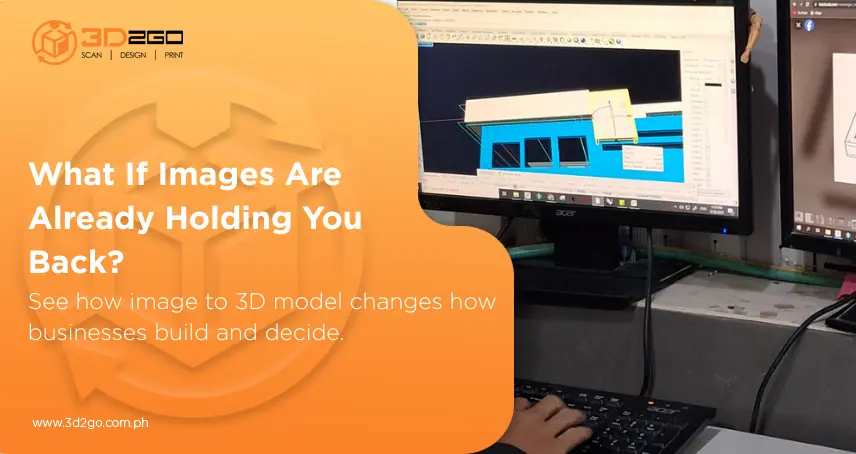
A single image can now do more than just capture a moment. With today’s digital tools, businesses can turn ordinary visuals into fully detailed 3D assets used for design, simulation, training, and even product development.
That’s exactly why photo-to-3D model conversion has become such a valuable solution across different industries. What once took weeks of manual work can now be done faster and with far more precision. Companies are using it to visualize ideas earlier, reduce production costs, and create experiences that feel more interactive and realistic.
As demand for digital content continues to grow, image-to-3D model technology is quietly becoming part of everyday business operations — from hospitals and construction sites to online stores and gaming studios.
Here’s a closer look at how different industries are putting it to work.
1. Product Development Is Moving Much Faster
Manufacturers don’t want to spend months building physical prototypes anymore if they can avoid it. That’s where image-to-3D model workflows make a huge difference.
Instead of starting from scratch, teams can convert reference images into editable 3D models and test ideas digitally before anything enters production. Designers can tweak dimensions, materials, or features early on without wasting resources on multiple physical revisions.
It also improves collaboration. Engineers, product designers, and stakeholders can review the same model in real time and make faster decisions.
According to a study, digital manufacturing technologies continue to help businesses improve operational efficiency and accelerate production processes.
2. Healthcare Professionals Can Visualize Complex Cases Better
Medical imaging has come a long way, but flat scans only show so much. With image to 3d model technology, healthcare providers can create detailed visual representations of organs, bones, and tissues using MRI or CT scan data.
That added depth matters.
Surgeons often use 3D models to prepare for complex procedures before entering the operating room. Medical students also benefit from realistic visual learning rather than relying solely on textbooks or static diagrams.
In some cases, patients understand their conditions more clearly when doctors can show them a 3D visualization rather than pointing at a traditional scan.
3. Architects Can Present Ideas More Clearly
Blueprints don’t always help clients picture the final result. Even detailed sketches can leave room for confusion.
That’s why many firms now rely on image to 3d model solutions during the planning stage. By converting concept images or floor plans into immersive 3D visuals, architects can present projects in a more tangible way.
Clients can explore layouts, understand proportions, and see how materials might look before construction even starts.
For developers and real estate companies, that kind of visualization can also make marketing easier. A realistic 3D presentation often creates stronger interest than flat renders alone.
4. Online Shopping Feels More Interactive
Scrolling through static product photos doesn’t always give buyers enough confidence to make a purchase. Customers want to examine products from every angle, especially when shopping online.
That’s one reason image to 3d model technology is becoming more common in e-commerce.
Brands can now create interactive product displays that allow shoppers to rotate items, zoom into details, and get a more realistic sense of scale and texture. Furniture companies, gadget retailers, and fashion brands are already using 3D visualization to make online shopping feel less limiting.
The experience feels closer to in-person browsing — and that can influence buying decisions.
5. Gaming and Entertainment Depend on It
The entertainment industry has always pushed visual technology forward, and image to 3d model systems are now a major part of that process.
Game developers and animation studios use them to build characters, environments, props, and visual effects more efficiently. A simple reference image can evolve into a detailed digital asset ready for production.
This speeds up workflows while helping artists maintain visual consistency across projects.
As audiences continue to expect more realistic graphics and immersive storytelling, demand for high-quality 3D assets continues to rise.
6. Education Is Becoming More Visual
Some concepts are just easier to understand when people can see them from every angle.
Schools, universities, and training providers are increasingly using image to 3d model applications to create more engaging learning experiences. Engineering students can inspect mechanical parts digitally. Medical trainees can study anatomy through interactive models. Architecture students can explore structural concepts beyond flat drawings.
The same idea applies to workplace training. Companies can build virtual demonstrations and simulations that feel safer and more practical than traditional instruction methods.
It’s easier to retain information when people can interact with what they’re learning.
7. Historical Preservation Has Gone Digital
Museums and cultural organizations face a constant challenge: preserving fragile artifacts without damaging them.
That’s where image to 3d model technology becomes incredibly useful. Historical objects can be recreated digitally for restoration work, documentation, or public viewing.
Instead of repeatedly handling delicate items, researchers can examine highly detailed digital replicas. Museums can also create virtual exhibits that allow people around the world to explore collections online.
For preservation teams, digital modeling adds another layer of protection for culturally important pieces.
8. Construction Teams Can Spot Problems Earlier
Construction delays are expensive. Miscommunication between teams makes them even worse.
By turning site images into interactive 3D environments, image to 3d model systems help project managers visualize layouts more accurately before work begins. Teams can identify structural conflicts, spacing issues, or planning mistakes earlier in the process.
That saves time, reduces costly revisions, and improves coordination across contractors and engineers.
It also makes presentations easier when explaining plans to investors, developers, or clients who may not understand technical drawings.
9. Automotive Design Is Becoming More Flexible
Car manufacturers and aftermarket businesses are using image to 3d model tools to speed up customization and design development.
Design teams can test body modifications, interior layouts, and replacement parts digitally before manufacturing anything physically. This allows companies to experiment more freely while reducing production risks.
Custom automotive shops also benefit from 3D modeling when creating personalized upgrades or restoring older vehicles.
For an industry built around precision, digital modeling adds both efficiency and flexibility.
10. AR and VR Experiences Need 3D Content
Augmented reality and virtual reality wouldn’t function without detailed digital assets behind them.
Retailers now let customers preview furniture inside their homes using AR apps. Real estate companies offer virtual walkthroughs of properties before construction finishes. Training providers simulate work environments for safer practice sessions.
All of these experiences rely heavily on image to 3d model technology.
As businesses continue to invest in immersive digital experiences, demand for realistic 3D content will only grow across industries.
Why More Businesses Are Investing in 3D Modeling
At its core, image to 3d model technology helps businesses communicate ideas more clearly.
It shortens design cycles, improves visualization, supports collaboration, and creates better customer experiences. More importantly, it allows companies to make decisions earlier, before spending time and money on physical production.
That flexibility is exactly why industries continue adopting it at a rapid pace.
What started as a specialized design tool has evolved into something far more practical for modern business operations.
Your Competitors Are Already Turning Images Into Revenue
The role of image to 3d model technology is expanding far beyond design studios and entertainment companies. It’s now helping businesses improve planning, streamline production, enhance training, and create more engaging digital experiences across multiple industries.
As expectations for visualization and digital interaction continue rising, companies that invest in professional 3D modeling solutions are better positioned to stay competitive.
3D2GoPH helps businesses transform concepts, images, and ideas into high-quality 3D assets tailored for different commercial applications.
Looking for reliable 3D modeling solutions for your business? Visit the 3D2GoPH and connect with the team today.