
Top 10 Innovative Applications of Image to 3D Model Technology Across Modern Industries
June 2, 2026
Why 3D Printed Gifts Are Trending for Personalized Celebrations and Special Occasions
June 8, 2026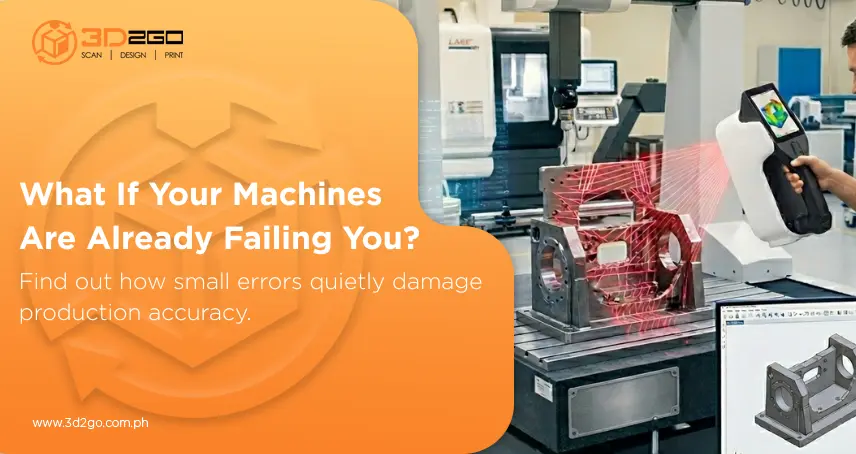
A fixture shifts slightly. Measurements start drifting. Operators make small adjustments just to keep production running smoothly. But over time, those minor inconsistencies can snowball into rejected parts, machine strain, and costly downtime.
That’s one reason manufacturers are investing more in industrial fixture scanning services. Instead of relying only on manual inspection methods, companies are using 3D scanning technology to identify alignment issues earlier and with far greater precision.
In high-precision manufacturing, small errors rarely stay small for long. Scan jigs and fixture services help businesses detect hidden deviations before they affect product quality, machine performance, or production timelines.
Why Alignment Problems Become Expensive
Fixtures and jigs play a critical role in keeping production accurate. Once alignment starts drifting, even slightly, the effects can spread across the entire workflow.
Machines compensate for inaccurate positioning. Parts stop fitting correctly. Quality checks become inconsistent. Eventually, material waste and maintenance costs begin increasing.
The challenge is that many alignment issues develop gradually. A fixture may still appear functional while quietly affecting output quality behind the scenes.
According to research, manufacturers continue to adopt advanced digital technologies to improve operational efficiency and reduce production disruptions. Precision-based inspection tools are becoming more important as industries demand tighter tolerances and faster production cycles.
What Scan Jigs and Fixture Services Actually Do
Scan jigs and fixture services use advanced 3D scanning equipment to capture highly accurate digital measurements of fixtures, tooling systems, and machine components.
Instead of relying on visual estimation or manual measuring tools alone, technicians create detailed digital models that can be compared against CAD files or original specifications.
This process helps identify:
- Fixture wear
- Positional shifts
- Surface inconsistencies
- Structural deformation
- Alignment deviations
Because the data is digital, engineers can analyze conditions more quickly and with greater accuracy than traditional inspection methods allow.
Hidden Wear Becomes Easier to Catch
Fixtures naturally wear down over time. Constant vibration, heat, pressure, and repetitive use slowly affect machine components, even when the changes aren’t immediately visible.
That’s where scan jigs and fixture technology become valuable.
A high-resolution scan can reveal subtle deviations long before they become noticeable during production. Maintenance teams can detect early-stage wear, correct alignment problems, and prevent defects before they affect larger batches of output.
Catching those issues early often saves manufacturers from more expensive repairs later.
Better Alignment Improves Production Consistency
Even advanced automated systems depend on accurate reference points. Once positioning becomes unreliable, production quality can start fluctuating from one batch to another.
Scan jigs and fixture services help manufacturers maintain tighter tolerances by verifying fixture accuracy throughout operations.
This is especially important in industries such as:
- Aerospace
- Automotive manufacturing
- Electronics
- Precision machining
- Heavy equipment production
In these sectors, even small dimensional inaccuracies can affect assembly, safety, or overall product performance.
Faster Maintenance and Less Downtime
Traditional alignment inspections can take hours, especially for larger or more complex machine setups.
Technicians often need repeated manual measurements just to confirm where the problem is coming from. That process slows maintenance and increases downtime.
Scan jigs and fixture workflows simplify inspections by providing faster and more detailed measurement data. Teams can quickly compare current scan results against previous records and identify where alignment conditions have changed.
That speed allows maintenance teams to spend less time troubleshooting and more time resolving issues.
Reverse Engineering Older Fixtures
Many manufacturers still operate equipment with incomplete or outdated documentation. Recreating damaged fixtures manually can be difficult when the original design files no longer exist.
Scan jigs and fixture services simplify reverse engineering by converting physical components into precise digital models.
Engineers can use those scans to reproduce replacement parts, improve fixture designs, or recreate missing CAD data with much greater accuracy.
For facilities using legacy equipment, this helps extend machine life while reducing production disruptions tied to unavailable components.
Stronger Quality Control Processes
Inspection systems are only reliable when fixtures remain properly aligned.
If a fixture shifts even slightly, measurement data can become inconsistent. That creates problems throughout the quality control process because inaccurate readings often lead to unnecessary adjustments or rejected parts.
Scan jigs and fixture technology improve inspection reliability by digitally verifying fixture conditions and dimensional accuracy.
This leads to:
- More accurate inspection results
- Better production consistency
- Fewer rejected components
- Improved compliance with manufacturing standards
As quality requirements continue tightening across industries, digital verification methods are becoming increasingly valuable.
Why More Manufacturers Are Using 3D Scanning
Modern manufacturing leaves very little room for error. Production speeds are faster, tolerances are tighter, and customer expectations continue rising.
That’s why more businesses are integrating scan jigs and fixture services into regular maintenance and quality assurance workflows. 3D scanning provides clearer measurement data, faster analysis, and more reliable documentation compared to traditional inspection methods.
More importantly, it helps manufacturers identify alignment risks before they turn into larger production problems.
Small Misalignments Can Create Bigger Production Problems
Even a slight shift in a fixture or jig doesn’t stay “minor” for long. It slowly shows up in production—parts that don’t fit quite right, inconsistent output, and downtime that could’ve been avoided.
That’s where scan jigs and fixture services make a real difference. By identifying alignment issues early, they help keep production accurate, stable, and predictable before small errors turn into costly disruptions.
3D2GoPH supports manufacturers with advanced 3D scanning solutions designed to improve fixture accuracy and overall production reliability.
If you want to reduce alignment risks before they affect your operations, connect with the team.