From Thesis Projects to Product Launches: Where a 3D Printing Prototype Service Delivers the Most Value
July 10, 2026
What Are 3D Product Modeling Services and Who Needs Them?
July 15, 2026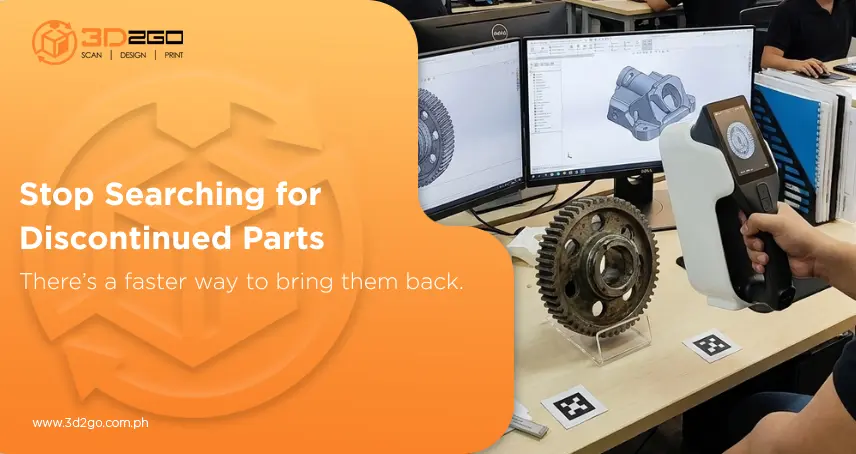
Finding a replacement part isn’t always as simple as placing an order. Older machines, discontinued products, and custom-built equipment often come with a frustrating problem: the part you need is no longer available.
Instead of replacing an entire assembly—or worse, an entire machine—many businesses are turning to object digitization to recreate components with remarkable accuracy. By capturing the exact geometry of an existing part, manufacturers, engineers, and maintenance teams can reproduce pieces that would otherwise be impossible to source.
This is where 3d scanning spare parts becomes a practical solution. Rather than relying on outdated blueprints or manual measurements, modern 3D scanning creates a detailed digital model that serves as the foundation for reverse engineering, redesign, or manufacturing.
The demand for this technology continues to grow as more industries embrace digital manufacturing. According to research, the global 3D scanning market is projected to reach several billion U.S. dollars by the end of the decade, driven by increasing adoption across manufacturing, automotive, healthcare, and engineering sectors. That growth reflects a simple reality: accurate digital data is becoming just as valuable as the physical part itself.
Whether you’re restoring industrial equipment or recreating a one-of-a-kind component, 3d scanning spare parts helps keep projects moving without the long wait for hard-to-find replacements.
Why Traditional Replacement Methods Fall Short
When a critical component fails, time quickly becomes your biggest challenge. Some manufacturers stop producing replacement parts after only a few years. Others may have closed down entirely, leaving equipment owners with limited options. Even when replacement parts are available, long lead times and international shipping can bring operations to a standstill.
Manual measurement isn’t always the answer, either. Complex surfaces, internal curves, and intricate details are difficult to capture using conventional tools. Even a small measurement error can affect how the finished component fits or performs.
That’s why many companies now rely on 3d scanning spare parts to generate highly accurate digital models without the guesswork. The result is a faster, more reliable way to reproduce components while minimizing costly errors.
How 3D Scanning Makes Reverse Engineering Faster
Reverse engineering begins with understanding an existing part. Using advanced scanning equipment, technicians capture millions of data points across an object’s surface. These measurements are converted into a detailed digital model that reflects the component’s exact dimensions and geometry.
Once the scan is complete, engineers can clean the data, make design improvements if necessary, and prepare the file for manufacturing or 3D printing.
This process makes 3d scanning spare parts especially valuable when original CAD files no longer exist. Instead of recreating a design from scratch, businesses can work directly from the scanned model, reducing development time and improving accuracy.
The digital file also becomes a long-term asset. If the same component needs to be produced again, there’s no need to repeat the entire measurement process.
Industries That Benefit the Most
The need for replacement components isn’t limited to one sector. Almost any industry that relies on physical equipment can benefit from digital scanning and reverse engineering.
Manufacturing companies use 3d scanning spare parts to reproduce worn machine components and reduce unexpected downtime. Automotive restoration shops recreate discontinued vehicle parts that are no longer available from suppliers. Industrial maintenance teams digitize aging equipment to extend its service life without investing in entirely new systems.
The technology also supports aerospace, marine, energy, construction, and even medical applications, where precision is critical to ensuring every part performs as intended.
Regardless of the industry, the goal remains the same: recreate components accurately, shorten delays, and keep operations running.
Accuracy Matters More Than Speed Alone
Producing a replacement quickly is important—but producing the right replacement matters even more.
A poorly fitting component can lead to additional wear, equipment failure, or repeated repairs. That’s why accuracy sits at the center of every successful reverse engineering project.
With 3d scanning spare parts, even intricate shapes and complex geometries can be captured with a level of detail that’s difficult to achieve through manual measurement alone. This allows engineers and manufacturers to verify dimensions before production begins, reducing the likelihood of expensive revisions later.
When every millimeter counts, precise digital data provides the confidence needed to move from scanning to manufacturing with fewer surprises.
Common Challenges When Recreating Obsolete Parts
Recreating an old or discontinued component isn’t always straightforward. Some parts have worn down over time, while others may be cracked, warped, or missing small sections. In many cases, there’s no technical drawing or CAD file available to work from.
That’s where 3d scanning spare parts becomes especially valuable. By capturing the remaining geometry of a component, engineers can rebuild an accurate digital model, repair missing features, and prepare the design for manufacturing. This approach reduces guesswork and helps ensure the replacement performs as intended.
Build a Digital Library Before Parts Become a Problem
Waiting for a part to fail before creating a digital copy can lead to unnecessary downtime. Many manufacturers now scan critical components while they’re still in good condition, creating a digital archive that can be accessed whenever replacements are needed.
Using 3d scanning spare parts as part of a preventive maintenance strategy allows businesses to respond faster to unexpected breakdowns. Instead of searching for discontinued components or starting from scratch, a production-ready digital file is already available, helping reduce delays and keep operations moving.
Choosing the Right 3D Scanning Partner
Not all scanning projects require the same level of expertise. Industrial machinery, automotive components, and custom-built parts each present different challenges, making experience just as important as the equipment being used.
A reliable provider should offer high-precision scanning, accurate data processing, and support throughout the reverse engineering process. The goal isn’t simply to capture a part—it’s to produce a digital model that’s ready for design refinement, analysis, or manufacturing.
Working with an experienced team also helps avoid costly errors that could affect the fit and function of the finished component.
Why Businesses Choose 3D2GoPH
When precision matters, having the right technology and expertise can make all the difference. 3D2GoPH provides professional 3d scanning spare parts services for businesses, manufacturers, engineers, and individuals who need accurate digital models of existing components.
Whether you’re replacing a discontinued part, restoring legacy equipment, or preparing a component for reverse engineering, 3D2GoPH delivers detailed scans to enable faster, more reliable product development. With advanced scanning solutions and a commitment to quality, businesses can confidently move from physical objects to production-ready digital files.
Ready to Recreate a Hard-to-Find Part?
Every component has a lifespan, but that doesn’t mean the equipment it belongs to has to be retired. When replacement parts become difficult to source, 3d scanning spare parts offers a practical way to recreate components with speed and precision. From reducing equipment downtime to supporting reverse engineering and long-term digital archiving, the technology gives businesses greater control over maintenance and production.
If you’re looking for an accurate and dependable way to reproduce existing components, 3D2GoPH has the expertise and technology to help. Our team delivers high-quality scanning solutions that simplify reverse engineering and help bring obsolete or damaged parts back into service.
Ready to recreate a hard-to-find component? Get in touch with 3D2GoPH today and discover how our 3D scanning services can help you digitize, reverse-engineer, and reproduce spare parts with confidence.