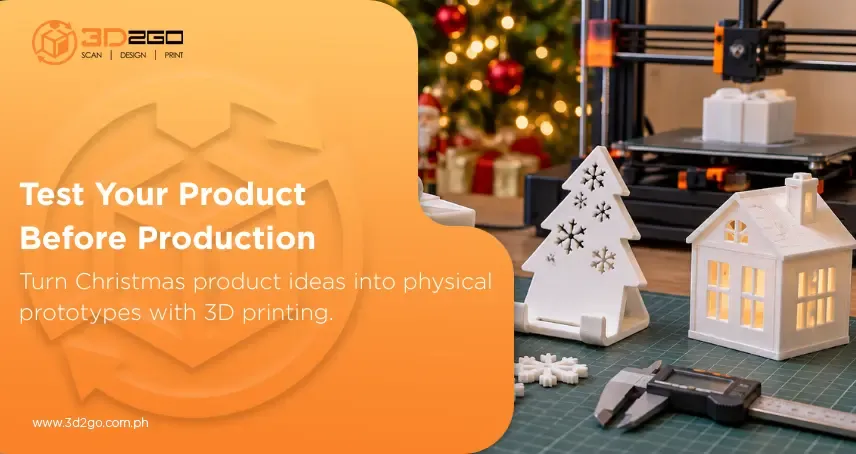
A Christmas product can look perfect in a design file and still fail when someone tries to use it. A gift box might have a lid that won’t close. A phone stand could tip over. A decorative product might be too bulky for its packaging.
Finding these problems after production has started can mean wasted materials, additional expenses, and missed deadlines.
That’s why businesses use 3D rapid prototyping services to turn product designs into physical samples before committing to larger orders. 3D printing for product development allows designers to check dimensions, test basic functions, and make changes while the design is still flexible.
For seasonal products with limited selling periods, catching these issues early can make a difference.
A Good Product Idea Still Needs Testing
A sketch can show what a product should look like. It can’t tell you whether the finished item will work as expected.
Consider a business developing a reusable Christmas gift container. The design might include a decorative lid, several compartments, and a handle.
Before production, someone needs to check whether the lid fits, the compartments have enough space, and the handle is comfortable to hold.
The same applies to simpler products. A Christmas-themed phone stand needs to hold a device securely. A tabletop display should remain stable when customers place items on it.
These details are easy to overlook when you’re focused on appearance.
A physical prototype gives you something to examine before making a final decision.
From Sketch to a Working 3D Model
You don’t need a finished technical drawing to start exploring a product idea.
A rough sketch, reference photographs, and basic measurements can help establish the design. From there, a digital 3D model can define the product’s shape, dimensions, and individual components.
Take a Christmas-themed desk organizer as an example.
The model needs to account for compartment sizes, wall thickness, and the space required for everyday items. If the organizer includes a removable tray, the design also needs enough clearance for the parts to fit together.
A digital model makes these features easier to review and adjust.
But measurements on a screen aren’t the same as a physical product. Printing a sample helps confirm whether the design works outside the computer.
How 3D Printing for Product Development Helps Catch Design Problems
The first prototype doesn’t have to be perfect. Its job is to show what needs improvement.
A printed sample can reveal issues that aren’t obvious in a digital model. Maybe the base is too narrow, the lid is difficult to remove, or two parts don’t fit together.
Instead of guessing, you can identify the problem and revise the design.
This is one reason prototyping remains a major application of 3D printing.
According to manufacturing company Jabil’s 2023 3D Printing Survey Report, 96% of surveyed respondents identified prototyping as a product lifecycle stage positively impacted by 3D printing.
The figure reflects industry respondents’ views rather than a guaranteed result for every business. Still, it shows how widely the technology is valued during product development.
For a Christmas product, the practical benefit is being able to correct a design before ordering a larger quantity.
Test the Parts That Matter Most
Not every prototype needs extensive testing. What matters is checking the features customers will actually use.
For a reusable gift box, focus on how the lid opens and closes. For a phone stand, check the viewing angle and stability. For a desk organizer, make sure the compartments fit the items they’re intended to hold.
A few useful checks include:
- Fit: Do the parts connect without forcing them together?
- Size: Does the product accommodate its intended contents?
- Stability: Does it remain upright during normal use?
- Handling: Can someone comfortably hold, open, or move it?
- Assembly: Can the components be put together correctly?
Record what doesn’t work instead of relying on general impressions.
For example, saying a lid is difficult to open isn’t as useful as identifying where it catches or how much clearance it needs.
Specific observations make the next design revision easier.
Keep in mind that a printed prototype may not behave exactly like the final manufactured product, especially when different materials or production methods will be used.
Make Changes While They’re Still Manageable
Imagine approving 500 reusable Christmas containers, only to discover that the lids don’t fit properly.
Correcting that problem after production could mean reworking or replacing finished items.
A prototype offers an opportunity to catch the issue earlier.
If the lid is too tight, the digital model can be adjusted. If a handle feels uncomfortable, you can change its shape before another sample is printed.
You can repeat the process until the design meets the requirements you’re testing.
This doesn’t mean unlimited revisions are free or that 3D printing is always the cheapest option. Each prototype has costs related to materials, machine time, design work, and finishing.
The advantage is having a way to evaluate changes before committing to a larger manufacturing run.
Christmas Product Ideas That Benefit From Prototyping
Some seasonal products are straightforward to manufacture. Others need closer attention because they include fitted parts, custom shapes, or specific functional requirements.
Here are several examples:
| Christmas Product | What to Check Before Production |
| Reusable gift container | Lid fit, compartment sizes, and ease of opening |
| Christmas-themed phone stand | Device clearance, viewing angle, and stability |
| Custom ornament holder | Attachment dimensions and support |
| Holiday desk organizer | Compartment sizes and accessibility |
| Retail display stand | Assembly, dimensions, and stability |
| Decorative product housing | Component clearance and overall fit |
These aren’t limited to Christmas merchandise. The same checks apply to promotional products, packaging components, accessories, and everyday household items.
For businesses, having a physical sample also makes it easier to review a product with colleagues or manufacturing partners.
People can examine the actual dimensions and features instead of relying entirely on rendered images.
The Printing Material Affects What You Can Test
A prototype’s material should match the purpose of the test.
If you only need to check a product’s shape and dimensions, a basic printed sample may be enough.
If you’re evaluating a clip, hinge, or other functional component, the material’s flexibility and strength become more important.
Different 3D printing methods also have different capabilities.
Filament-based printing can suit many larger parts and general prototypes. Resin-based printing may be useful for smaller components that require finer details.
The right option depends on the design, budget, and features you need to evaluate.
A printed sample isn’t automatically proof that the finished product will be durable or safe. Products involving electricity, heat, food contact, or children’s use may require additional testing and compliance checks.
Don’t Confuse an Approved Prototype With a Finished Product
A prototype that looks good and passes basic fit checks may still need work before manufacturing.
The final production method can affect the design.
For example, a part intended for injection molding may require different wall thicknesses or other design adjustments compared with a 3D-printed sample.
The final material may also behave differently under pressure, repeated use, or changing temperatures.
Before approving production, confirm that the design meets its intended requirements and can be manufactured using the chosen process.
For Christmas products, the schedule matters too. Allow time for design revisions, production, finishing, packaging, and delivery.
A prototype helps reduce uncertainty, but it doesn’t replace proper production planning.
Prepare Your Product Design for the Next Step
Once the prototype has been reviewed, gather the information needed for the next production decision.
Keep the updated digital model, final dimensions, material requirements, and testing notes.
If several versions were printed, identify which one contains the approved changes.
This avoids confusion when discussing the product with a manufacturer or requesting a quotation.
It also helps ensure that future adjustments are made using the correct design rather than an outdated file.
Develop Your Product Idea With 3D2GoPH
A physical prototype helps you see whether a product’s dimensions, fit, and basic features work as intended before making larger production commitments.
3D2GoPH provides 3D modeling and rapid prototyping services for businesses, designers, and individuals developing custom products. Whether you’re starting with a sketch or an existing 3D model, you can discuss your design, material options, and testing requirements.
For Christmas merchandise and other seasonal products, getting a prototype made early gives you more time to review and improve the design before production deadlines approach.
Discuss Your Product Idea With 3D2GoPH to explore your prototyping requirements and request a quotation.
Frequently Asked Questions About 3D Printing and Product Development
- Can I Make a 3D Printed Prototype Without a Finished Design?
Yes. You can begin with sketches, reference images, and measurements. A digital 3D model must be created before printing, and the amount of design work depends on the product’s complexity.
- Can a 3D Printed Prototype Be Used for Product Testing?
Yes. Prototypes can help evaluate dimensions, fit, assembly, and certain basic functions. Additional testing may be needed if the final product uses different materials or manufacturing methods.
- Is 3D Printing Suitable for Small Businesses Developing Christmas Products?
Yes. Small businesses can use 3D printing to create samples of merchandise, accessories, packaging components, and display products before deciding whether to proceed with larger production quantities.