
What Makes Professional 3D Object Models More Valuable Than Generic CAD Files?
June 17, 2026
From Game Character Models to Custom Figurines: Bringing Digital Characters into the Real World
June 22, 2026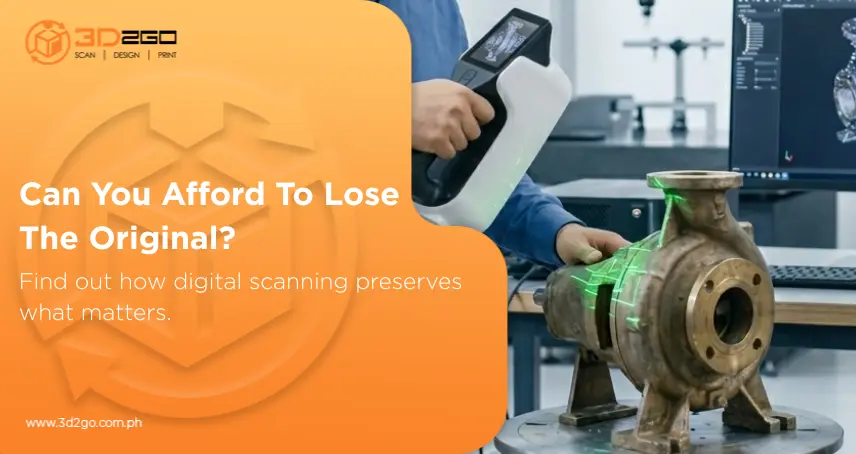
A machine part carries years of engineering decisions. A prototype reflects countless design revisions. Even an aging component that’s no longer in production contains valuable information. The problem is that information often stays locked inside the object itself.
That’s why more businesses are turning to 3D digital srecanning services. Instead of relying on manual measurements or outdated drawings, companies can capture physical objects in remarkable detail and transform them into usable digital assets.
This is where digital scan 3d technology comes in. By converting real-world objects into precise digital representations, businesses gain information they can analyze, share, modify, and preserve long after the original object has changed—or disappeared entirely.
What Is Digital Scan 3D?
The simplest way to understand digital scan 3d technology is to think of it as a bridge between the physical and digital worlds.
Specialized scanners capture the shape, dimensions, contours, and surface details of an object by collecting millions of data points. That information is then processed into a digital model that closely reflects the original item.
Unlike traditional measurement methods, which often focus on selected dimensions, digital scan 3d technology captures the complete geometry of an object. The result is a far more detailed and useful digital reference.
Why Businesses Are Digitizing Physical Assets
Information becomes more valuable when it’s easier to access.
Physical objects can be difficult to transport, inspect, or share between teams. They can also wear down, become damaged, or change over time.
A digital version solves many of those challenges.
Through digital scan 3d services, businesses can create digital assets that remain accessible long after the physical object is no longer available. Engineers, designers, project managers, and stakeholders can work from the same reference regardless of location.
That level of accessibility makes collaboration far more efficient.
Reverse Engineering Without Starting From Scratch
One of the most practical applications of digital scan 3d technology is reverse engineering.
Many organizations still rely on equipment or components that were designed years ago. Original CAD files may be missing, documentation may be incomplete, and replacement parts may no longer be available.
Rather than rebuilding everything from memory, companies can scan the existing object and use the digital data as a foundation for redesign, analysis, or reproduction.
This approach often saves significant time while reducing the risk of measurement errors.
Helping Product Development Move Faster
Design teams rarely get everything right on the first attempt.
Products evolve through testing, refinement, and continuous improvement. Having accurate digital references makes that process much easier.
Using digital scan 3d workflows, teams can capture prototypes, compare revisions, and evaluate design changes with greater precision. Small differences that might otherwise go unnoticed become easier to identify and address.
The result is a smoother development cycle and fewer surprises later in production.
A Better Way to Inspect and Validate
In manufacturing, precision isn’t optional.
A slight deviation in a component can create assembly issues, affect performance, or increase production costs. Traditional inspection methods can identify some problems, but they don’t always provide a complete picture.
With digital scan 3d technology, scanned data can be compared directly against original design specifications. This allows manufacturers to quickly identify discrepancies and verify whether parts meet the required tolerances.
It’s a faster and often more comprehensive approach to quality control.
Preserving Valuable Objects and Structures
Not every scanning project is tied to manufacturing.
Museums, restoration teams, architects, and facility managers often use digital scan 3d services to preserve detailed records of important assets. Historical structures, sculptures, industrial equipment, and unique objects can all be documented digitally before changes occur.
Having a digital archive creates opportunities for future restoration, replication, analysis, and documentation.
In some cases, it may become the most complete record available.
The Growing Importance of Digital Capture
As industries continue adopting digital workflows, the demand for accurate physical data continues to increase.
According to research, the global 3D scanning market is projected to grow significantly in the coming years as organizations seek faster and more reliable ways to capture real-world information.
The reason is simple: better data leads to better decisions.
When teams can work from accurate digital assets rather than assumptions or incomplete documentation, planning becomes more reliable and execution becomes more efficient.
More Than a Digital Copy
The real value of digital scan 3d isn’t simply creating a digital version of an object.
It’s creating a resource that can support design, engineering, manufacturing, inspection, documentation, and future innovation. Once an object becomes a usable digital asset, the possibilities expand far beyond its original purpose.
That’s why organizations across industries continue investing in scanning technologies as part of their broader digital transformation strategies.
Turn Today’s Objects Into Tomorrow’s Resources
Through professional digital scan 3d services, businesses can preserve that information, unlock new opportunities for analysis and development, and create digital resources that remain useful for years to come.
At 3D2GoPH, advanced scanning solutions help organizations capture highly detailed digital assets for reverse engineering, product development, inspection, documentation, and asset preservation.
If you’re looking to convert physical objects into accurate, usable digital resources, visit us and discover how professional scanning services can support your next project.


