
What Makes a High-Quality Digital 3D Model Essential for Modern Projects?
June 9, 2026
What Can Professional Digital Model Making Do for Your Next Project?
June 11, 2026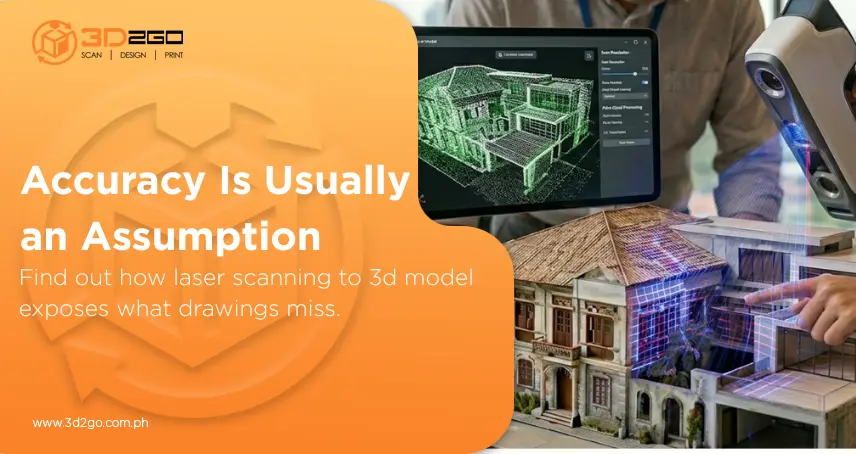
In many industries today, “close enough” just doesn’t cut it anymore. A small measurement gap or missed detail can snowball into rework, delays, or budget overruns.
That’s why more teams are turning to laser scanning to 3D modeling services to capture real-world spaces and convert them into precise digital assets they can actually work with.
At the center of it all is laser scan to 3d model technology. It takes physical environments or objects and rebuilds them digitally with a level of accuracy that traditional methods struggle to match. Instead of estimating or manually measuring everything, teams get a reliable digital reference they can trust.
Here’s where that shift is already making a difference across Philippine industries.
1. Construction Site Capture
Construction sites change fast. What’s true today might not be accurate tomorrow. With laser scan to 3d model, entire sites can be captured in a single workflow and turned into updated digital references.
This helps project teams verify progress, compare plans with reality, and catch discrepancies early—before they become expensive fixes.
2. Architectural Renovation Planning
Renovation projects often run into one common problem: outdated drawings. A laser scan to 3d model setup solves this by creating an exact digital replica of existing structures.
Architects can then plan modifications based on real spatial data rather than assumptions, making design decisions far more grounded.
3. Industrial Equipment Layouts
In manufacturing environments, even a few millimeters can matter. Using laser scanning to 3d model workflows, factories can digitally map machines and layouts to study spacing, alignment, and flow efficiency.
It becomes easier to spot bottlenecks or potential issues without touching the physical setup.
4. Cultural and Heritage Preservation
Historical structures don’t stay unchanged forever, so documenting them accurately is crucial. Through laser scanning to 3d model technology, heritage sites can be preserved digitally in great detail.
These models can support restoration work, academic research, and long-term archival efforts.
5. Product Recreation and Reverse Engineering
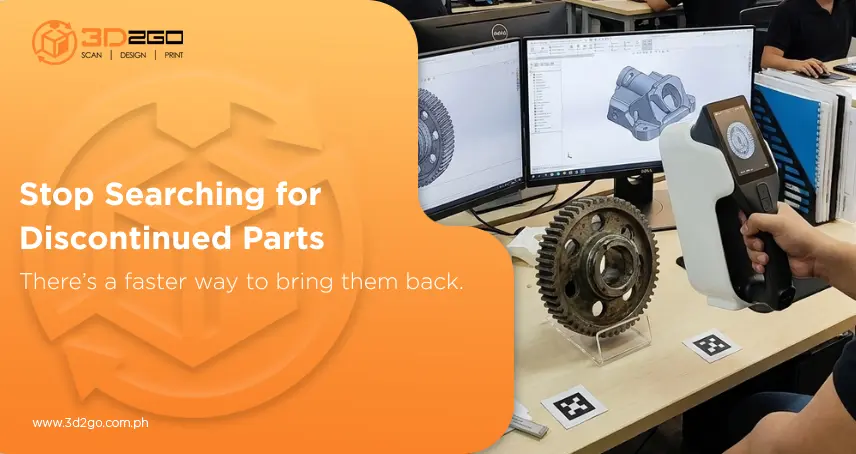
When original CAD files are missing or outdated, teams often have to rebuild designs from scratch.
A laser scan to 3d model process speeds this up by capturing the physical object and converting it into a usable digital version. From there, engineers can refine or redesign without starting from zero.
6. Infrastructure Monitoring
Bridges, tunnels, and large-scale structures need constant inspection. With laser scan to 3d model, engineers can compare updated scans against previous datasets to detect movement, deformation, or wear.
It’s a practical way to catch issues early without relying solely on manual inspections.
7. Urban Planning and Development
City planning isn’t just about maps anymore—it’s about data-rich environments. A laser scan to 3d model approach allows planners to build digital twins of real locations.
These models help simulate traffic flow, evaluate zoning decisions, and test future developments before anything is built.
8. Film and Digital Production
Realism is everything in modern media. Studios use laser scan to 3d model techniques to capture real-world objects, environments, and textures for use in films, games, and virtual sets.
It saves production time while improving visual authenticity.
9. Mining and Terrain Mapping
Mining operations depend heavily on accurate ground data.
A laser scan to 3d model workflow provides detailed terrain mapping that helps teams assess excavation areas, measure volume changes, and improve safety planning with more reliable data.
10. Real Estate Visualization
Buyers don’t want guesswork—they want clarity.
With laser scan to 3d model, developers can create highly accurate property visualizations that reflect real spatial dimensions. This gives clients a clearer sense of space long before construction is finished.
Why This Technology Is Gaining Ground
Across industries, decisions are becoming more data-driven—and that puts pressure on accuracy.
According to research, global adoption of 3D scanning and modeling technologies continues to rise as organizations prioritize efficiency, precision, and digital workflows. That trend is exactly what’s pushing laser scan to 3d model solutions into mainstream use.
Why Accuracy Changes Everything
The biggest advantage of laser scan to 3d model workflows isn’t just speed—it’s trust in the data. Teams stop arguing over interpretations because they’re all looking at the same accurate digital reference. That alone reduces friction between designers, engineers, and stakeholders.
It also helps shorten revision cycles, since issues are caught earlier in the planning stage rather than during execution.
A Shift Toward Digital Reality
What used to be optional is quickly becoming standard practice. As projects grow more complex, laser scan to 3d model technology offers a clearer, more reliable way to understand physical spaces and objects without relying on approximation.
It’s less about replacing traditional methods and more about improving how teams see and work with real-world data.
Precision Is the Real Advantage
The role of laser scan to 3d model technology is expanding quickly across construction, manufacturing, design, and other industries. What makes it valuable is simple—it reduces guesswork and helps teams work with more certainty from the start.
3D2GoPH provides professional laser scanning and 3D modeling solutions that support more accurate and reliable digital representations for real-world projects.