

Upgrade Your Project Accuracy with Laser Scanning Services in the Philippines
January 28, 2026
Sell and Present Better with 3D Architectural Rendering in the Philippines
January 30, 2026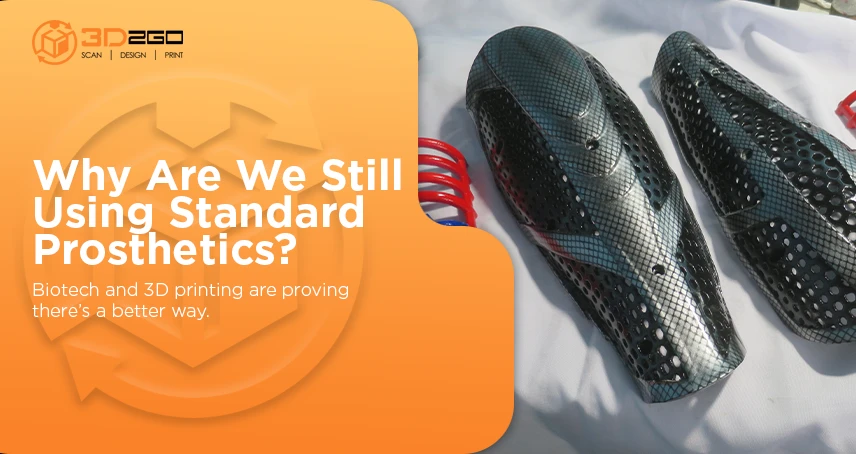
For decades, prosthetic care followed a familiar pattern. A patient lost a limb; measurements were taken by hand, molds were made, and weeks later, a device arrived that mostly fit. Adjustments followed. Sometimes many of them. Comfort was learned, not designed.
Today, that story is changing, and fast.
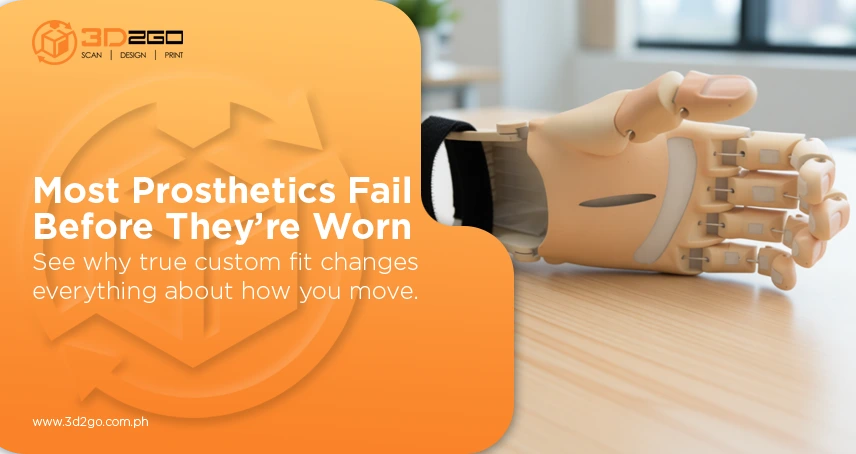
Thanks to medical prosthetic printing, healthcare providers are moving toward prosthetics that feel less like replacements and more like extensions of the human body. At the center of this shift is 3D-printed prosthetics biotech, a growing field that blends biology, engineering, and digital manufacturing to create devices shaped for real people, not averages.
This isn’t about technology for technology’s sake. It’s about restoring mobility, dignity, and confidence in ways that simply weren’t possible before.
From Standard Shapes to Human-First Design
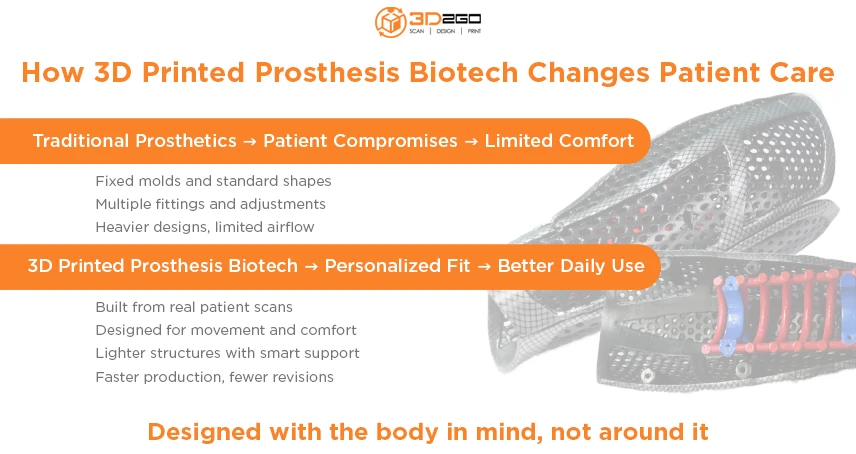
Traditional prosthetics rely heavily on standardized components. While functional, they often struggle to accommodate unique bone structures, muscle distribution, or skin sensitivity. That’s where 3d printed prosthesis biotech quietly changes the rules.
Instead of forcing the body to adapt to the device, 3D printing allows the device to adapt to the body.
Using detailed scans and patient data, designers can create digital models that reflect real anatomy — every curve, contour, and pressure point. These models are then printed layer by layer using medical-grade materials chosen for strength, flexibility, or comfort, as needed.
The result is a prosthesis that fits better from day one and often requires fewer follow-up adjustments.
Why Biotech Matters in Prosthetic Printing
3D printing alone isn’t the full story. The “biotech” part is what makes this approach truly transformative.
3D-printed prosthetics incorporate biological data, such as how a patient moves, how weight is distributed, and how muscles interact with the device. That insight influences everything from socket shape to internal lattice structures that reduce weight without sacrificing durability.
This blend of biology and engineering leads to prosthetics that don’t just attach to the body. They work with it.
And patients notice the difference.
Comfort Isn’t a Luxury, It’s a Requirement
Anyone who wears a prosthetic daily knows that discomfort isn’t a small issue. Pressure points, poor airflow, and awkward alignment can make even the best-designed device difficult to use over the long term.
With 3d printed prosthesis biotech, comfort is built into the design stage, not treated as an afterthought. Internal structures can be adjusted to reduce pressure. Ventilation can be integrated directly into the model. Weight can be distributed more evenly.
That attention to detail often translates into better mobility, fewer skin issues, and higher overall patient satisfaction.
Speed Without Sacrificing Precision
One of the biggest frustrations in prosthetic care has always been time. Traditional manufacturing can take weeks or months, especially when revisions are required.
3D-printed prostheses from biotech shorten that timeline dramatically.
Once a digital design is finalized, printing can begin almost immediately. Adjustments don’t require starting from scratch; files can be refined, reprinted, and improved quickly. For patients, that means faster delivery and quicker adaptation to daily life.
In pediatric care, where children outgrow devices rapidly, this speed isn’t just convenient. It’s essential.
Cost Efficiency That Expands Access
Prosthetics are expensive. That reality limits access for many patients, especially in developing regions. One reason 3d printed prosthesis biotech is gaining traction is its potential to reduce overall costs without lowering quality.
By cutting down manual labor, material waste, and repeated fittings, 3D printing helps make custom prosthetics more affordable. Digital workflows also allow designs to be reused, modified, and scaled efficiently.
Real-World Impact Across Healthcare Settings
The applications of 3d printed prosthesis biotech go well beyond standard limb replacements.
- Lower-limb and upper-limb prosthetics tailored to specific mobility needs
- Pediatric prosthetics that can be updated as children grow
- Rehabilitation devices designed to support therapy goals
- Temporary prosthetics are used during recovery or surgical planning
In each case, the value lies in adaptability. Digital designs evolve alongside patient needs rather than locking them into static solutions.
Challenges Still Exist, and That’s Okay
Like any emerging technology, 3d printed prosthesis biotech isn’t without its challenges. Material testing, regulatory approval, and long-term durability studies are ongoing. Not every printed device is meant for permanent use, and not every clinic is yet fully equipped for digital workflows.
But progress doesn’t require perfection. It requires momentum, and this field has plenty of it.
As materials improve and clinical standards evolve, the reliability and reach of printed prosthetics will only continue to grow.
A Shift Toward Human-Centered Healthcare
What makes 3d printed prosthesis biotech compelling isn’t just innovation. Its intent.
This approach reflects a larger movement in healthcare: treating patients as individuals, not averages. Designing tools that respond to real bodies, real movement, and real lives.
Prosthetics are no longer just medical devices. They’re personal tools that shape how people move through the world.
Where Precision Meets Compassion
The future of prosthetic care isn’t about mass production. It’s about meaningful personalization.
Through 3D-printed prostheses, biotech can enable healthcare providers to offer devices that fit better, feel better, and better support patients in their daily lives. It’s a blend of technology and empathy, precision guided by human needs.
For organizations and individuals exploring advanced prosthetic solutions in the Philippines, 3D2GoPH brings together expertise in medical prosthetic printing and biotech-driven design. If you’re ready to move beyond standard solutions and toward truly personalized care, the conversation starts here.