

Map 3D Model for Buildings Visualizes Commercial Projects Effectively
April 6, 2026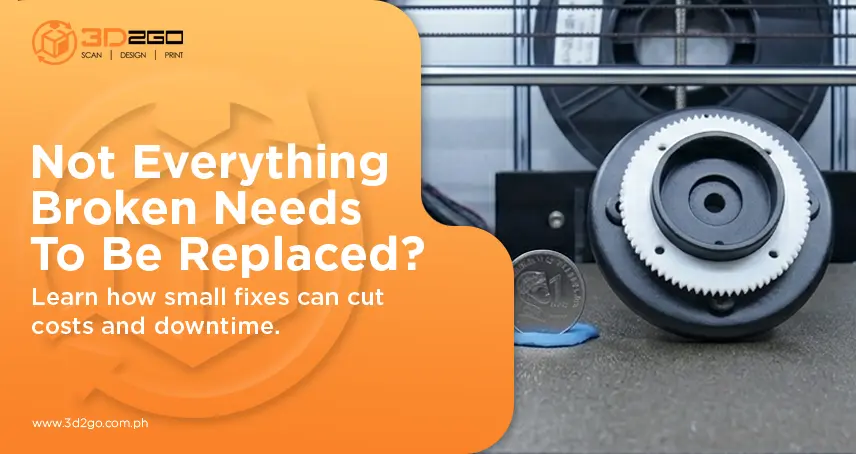
Machines don’t usually fail all at once. They decline in small, almost unnoticeable ways, until performance finally drops enough to disrupt operations.
In many cases, the real issue isn’t the entire system. It’s a single worn component. That’s where replacement gears come in.
Instead of replacing expensive machinery, businesses are now turning to targeted solutions, such as custom gear replacement, to restore performance with precision and speed.
The idea is simple: fix what’s failing, not what’s still working.
When Small Gear Issues Become Big Operational Problems
Gears work silently inside machines, but they carry a constant load and pressure. Over time, that stress builds up.
At first, the signs are subtle, such as a slight vibration, uneven motion, or reduced efficiency. Easy to ignore, but dangerous if left unchecked.
This is where replacement gears become essential. Instead of waiting for full breakdowns, teams can isolate the problem early and restore function before it spreads across the system.
A small component failure rarely stays small for long.
Downtime Is More Expensive Than Most Teams Expect
According to Deloitte, unplanned downtime can cost industrial manufacturers up to 11% of their annual revenue.
That number changes how maintenance decisions should be viewed. It’s no longer just about repair costs; it’s about lost productivity, delayed output, and operational disruption.
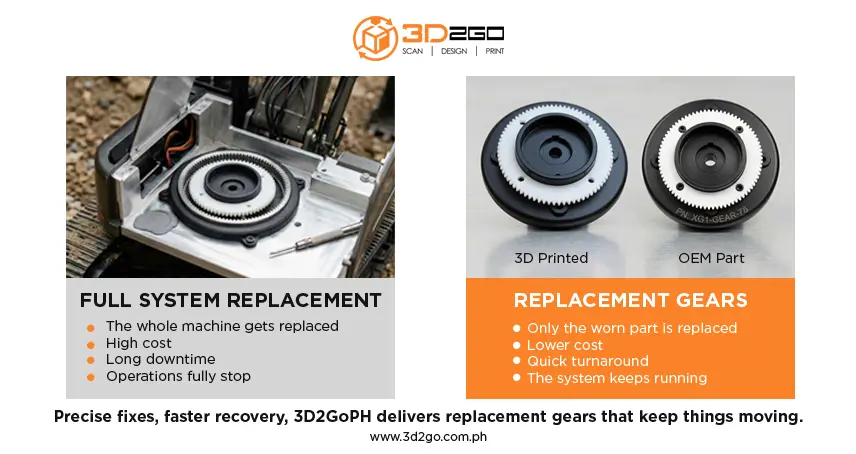
This is why many businesses prefer replacement gears over full system replacement. It shortens recovery time and keeps operations moving without unnecessary delays.
Precision Engineering Makes Restoration Possible
Modern manufacturing has changed what repair actually looks like.
With advanced fabrication and modeling methods, worn components can now be recreated with high accuracy, even when original files are unavailable.
For replacement gears, this level of precision is critical. Even a slight deviation can affect alignment, efficiency, and long-term performance.
When done correctly, the machine doesn’t just get “fixed”, it gets restored to proper function.
When Replacement Gears Make the Most Sense
Not every issue requires a full rebuild. In fact, many systems only need focused intervention.
replacement gears are the better option when:
- Damage is isolated to one gear
- The rest of the system is still stable
- Downtime needs to be minimized
- Original parts are unavailable
- The machine still has a strong structural life
In these cases, replacing the full system is unnecessary and inefficient.
Extending Equipment Life Without Reinventing Systems
One of the most practical advantages of replacement gears is extending the usable life of existing machinery.
Instead of retiring equipment early, businesses can maintain output by focusing on parts replacements. This reduces capital pressure and improves long-term asset utilization.
It also supports a more efficient maintenance mindset: repair intelligently, not excessively.
How 3D Manufacturing Improves Gear Replacement
With 3D scanning and digital modeling, even worn or damaged gears can be recreated with high precision.
This is especially valuable for replacement gears, where exact dimensions directly impact performance.
Instead of waiting weeks for rare parts, manufacturers can now reproduce components faster and with greater flexibility, keeping downtime to a minimum.
A Smarter Maintenance Strategy
Maintenance is no longer just about fixing breakdowns. It’s about choosing the right level of intervention.
Using replacement gears, businesses can avoid unnecessary replacements and focus only on what’s actually failing.
That shift improves efficiency, reduces waste, and keeps operations stable without overengineering the solution.
Cost, Speed, and Reliability: Finding the Balance
Every maintenance decision comes down to trade-offs.
Full replacement offers certainty but comes at a high cost and long delay. Quick fixes are fast but not always durable.
replacement gears sit in the middle, offering a balanced approach that restores performance without overcommitting resources.
For many operations, that balance is exactly what keeps production consistent.
Where Precision Becomes the Difference
Even the best strategy depends on execution.
Poorly made components can lead to repeated failures, misalignment, and additional system strain.
That’s why working with a capable manufacturing partner matters just as much as choosing the right solution.
With 3D2GoPH, replacement gears are produced with attention to accuracy and functional reliability, ensuring that restored systems actually perform as expected, not just temporarily recover.
Precision That Keeps Operations Moving
At the end of the day, machinery doesn’t need more complexity; it needs precision where it matters most.
replacement gears offer a practical, efficient way to restore systems without unnecessary replacements or extended downtime. When executed properly, they don’t just fix machines; they protect productivity.
3D2GoPH brings that precision into practice, combining technical capability with dependable execution so businesses can keep operations running without interruption.