
Why Custom Parts Manufacturing Is Growing Across Modern Industries
March 27, 2026
There’s a point in every project where assumptions stop working. Measurements that “look about right” suddenly don’t hold up. A small mismatch turns into a delay, then a revision and finally a cost you didn’t plan for.
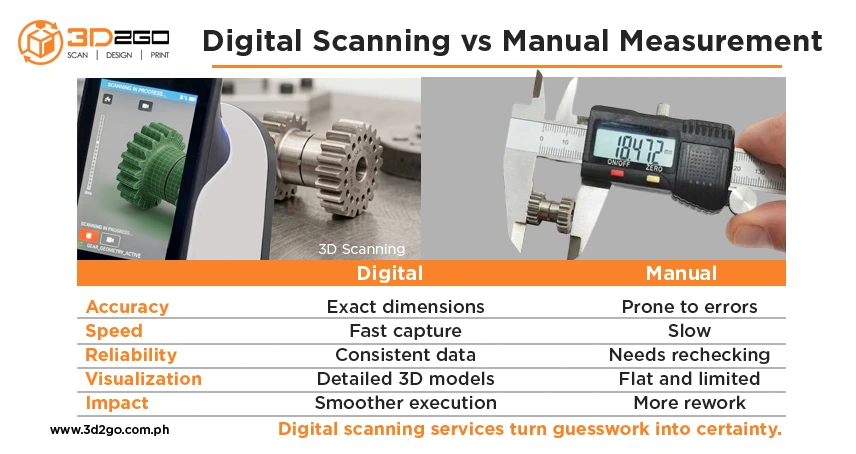
That’s exactly why more businesses are shifting toward precision scanning services. Instead of relying on manual measurements or rough estimates, they’re using digital scanning services to capture environments exactly as they are, down to the smallest detail.
And once you’ve seen that level of accuracy in action, it’s hard to go back.
From real estate to manufacturing, digital scanning services are quietly changing how projects are planned, presented, and executed. Not in a flashy way, but in a way that simply works better.
What Are Digital Scanning Services, Really?
At first glance, digital scanning services might sound overly technical. In reality, the idea is straightforward: capture the physical world and turn it into precise digital data.
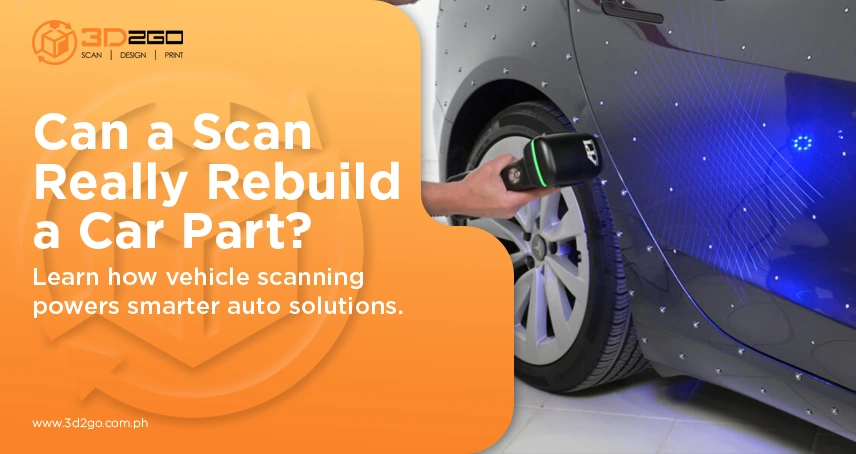
Using tools such as laser scanners or LiDAR, millions of data points are collected from a space or an object. These points form what’s called a “point cloud”, a dense, highly accurate digital map of reality.
From there, it’s converted into a 3D model that teams can actually use.
What makes digital scanning services stand out isn’t just the technology; it’s the reliability. You’re no longer interpreting measurements. You’re working from something that’s already exact.
Why Accuracy Isn’t Optional Anymore
Here’s the uncomfortable truth: most project issues don’t come from bad ideas; they come from bad data.
A few millimeters off in measurement might not seem like much. But in construction, manufacturing, or large-scale planning, that’s enough to create a chain reaction of problems.
- Components don’t fit
- Timelines stretch
- Budgets take a hit
This is where digital scanning services quietly solve a major problem. By starting with accurate data, you remove a huge layer of uncertainty.
Decisions become clearer. Teams align faster. And you avoid fixing problems that shouldn’t have existed in the first place.
How Digital Scanning Services Actually Work
The process isn’t complicated, but it is precise.
It usually starts with a scan of the physical space. High-powered devices sweep the area, capturing geometry, dimensions, and surface details. Within a short time, you have a complete digital representation.
That raw data is then processed into a usable form, typically a 3D model integrated into CAD or BIM systems. From there, teams can analyze, adjust, or present the project with confidence.
What’s interesting is how flexible digital scanning services are. The same data can be used for planning, simulation, inspection, or even physical reproduction through 3D printing.
One scan, multiple applications. That’s where the real value starts to show.
Where Digital Scanning Services Make a Real Difference
Real Estate and Property Development
Buyers don’t just want to see a property; they want to understand it.
With digital scanning services, developers can create accurate virtual models that let clients explore spaces remotely. It’s not just convenient, it builds confidence. When people can clearly see what they’re investing in, decisions happen faster.
Tourism and Destination Planning
Tourism is all about experience, but experience usually comes later.
That’s where digital scanning services step in. They allow destinations to be explored before they’re even visited. Whether it’s a heritage site or a new development, stakeholders can visualize the space in a way that static images can’t.
Urban Planning and Infrastructure
Planning a city or infrastructure project without accurate data is risky. There are too many variables, too many moving parts.
Using digital scanning services, planners can create digital twins, highly accurate models of real environments. These models make it easier to test scenarios, identify issues, and align decisions before anything is built.
Manufacturing and Product Development
In manufacturing, precision isn’t negotiable.
Digital scanning services are widely used for reverse engineering, quality control, and prototyping. Instead of starting from scratch, teams can scan existing components, refine them, and produce better versions with confidence.
The Real Business Value Behind It
It’s easy to focus on the technology, but the real impact of digital scanning services shows up in how businesses operate.
Projects move faster, not because people are rushing, but because they’re not second-guessing data. Communication improves because everyone is working from the same reference.
And perhaps most importantly, risks drop.
Fewer surprises. Fewer corrections. Fewer costly mistakes.
That kind of consistency doesn’t just improve workflows; it strengthens how businesses deliver results.
What’s Driving the Shift Toward Digital Scanning
This isn’t just a trend; it’s a response to increasing complexity.
Projects are getting larger. Timelines are tighter. Expectations are higher. And traditional methods simply aren’t keeping up.
According to Global Market Insights, the 3D scanning market was valued at $5.1 billion in 2024 and is projected to reach $14.2 billion by 2034. That kind of growth doesn’t happen without a clear demand for better, more reliable solutions.
Businesses are moving toward digital scanning services because they solve real problems, not just because they’re new.
Why More Businesses Are Making the Switch
Once companies start using digital scanning services, the shift tends to stick.
The reasons are straightforward:
- You get accurate data from the start
- You reduce the need for rework
- You improve how projects are communicated
- You deliver results with more confidence
It’s not about replacing existing workflows; it’s about strengthening them.
And in industries where precision matters, that’s a competitive edge you can’t ignore.
From Data to Decisions
At the end of the day, digital scanning services aren’t just about capturing data; they’re about making that data useful.
When you can see exactly what you’re working with, decisions become less about guesswork and more about clarity. That shift changes how projects move, how teams collaborate, and how outcomes are delivered.
If accuracy, efficiency, and confidence matter to your projects, it’s worth considering how digital tools can support them.
For reliable, precise solutions tailored to your needs, reach out to 3D2GoPH