

Why Custom Made Trophies Are Replacing Traditional Awards in the Philippines
February 6, 2026
Replace Hard-to-Find Parts with 3D Scanning Spare Parts Services
February 10, 2026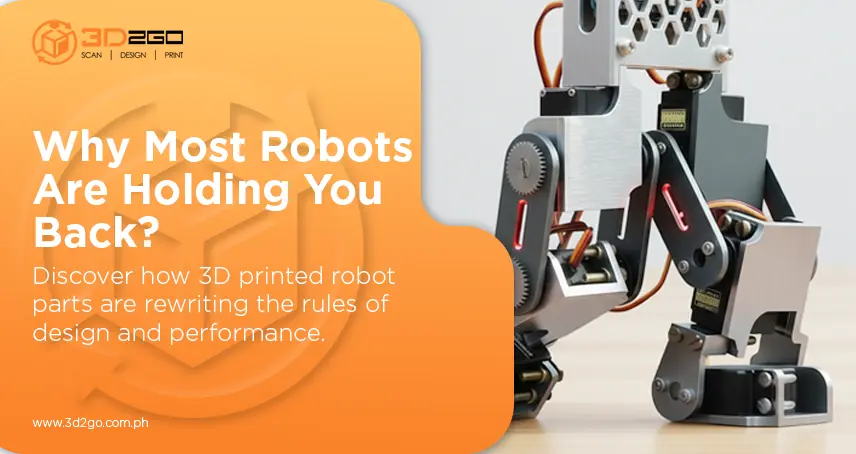
Robots don’t fail because ideas are weak. Most of the time, they fail because the parts can’t keep up with the idea behind them. A design looks good on screen, but once it’s built, components don’t fit, weigh too much, or move incorrectly. That gap between concept and reality is exactly where printed robot components start to matter.
Today, 3d printed robot parts are helping engineers, educators, and robotics teams close that gap. Instead of forcing designs to work around standard components, builders can now create parts that fit the robot’s purpose from the start. It’s not just faster, it’s smarter.
Why Robotics Is Shifting Toward 3D Printing
Robotics has changed. Projects are no longer limited to massive factories or research labs with long budgets and timelines. Smaller teams are building capable robots for education, inspection, automation, and research. That shift demands flexibility.
3d printed robot parts support this new way of building. They allow teams to move quickly, test ideas early, and refine designs without waiting weeks for machining or imported components. When something doesn’t work, and something always doesn’t, it’s adjusted digitally and reprinted.
That speed encourages better thinking. Designers experiment more because the risk is lower and the feedback is immediate.
Design Freedom That Actually Improves Performance
One of the biggest strengths of 3D-printed robot parts is the freedom to design around function rather than limitations. Traditional manufacturing often pushes designers toward simple shapes and standardized sizes. Robotics rarely benefits from that.
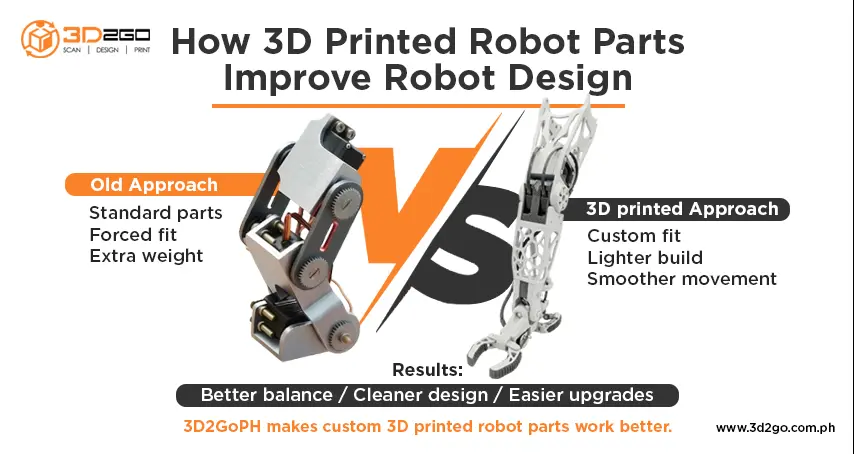
With 3D printing, parts can be shaped to fit tight spaces, balance weight properly, or route wiring cleanly through the structure. Mounts can be customized for specific sensors. Housings can be designed to protect electronics without adding unnecessary bulk.
These aren’t cosmetic improvements. They directly affect how a robot moves, how long it lasts, and how easy it is to maintain.
Faster Prototyping Without Guesswork
Prototyping used to mean compromise. Either you spent too much time perfecting a design before building it, or you rushed something physical and hoped for the best. 3d printed robot parts change that dynamic.
Teams can print early versions, test them in real conditions, and revise with confidence. If a joint doesn’t move smoothly or a frame flexes too much, the fix is straightforward. Adjust the model. Print again. Test again.
This loop doesn’t just save time, it improves outcomes. Robots evolve through use, not assumptions.
Strength, Weight, and Material Choices That Make Sense
There’s a lingering myth that printed parts are weak. In reality, modern printing materials cover a wide range of strengths and properties. The key is choosing the right material and designing the part properly.
For many applications, 3d printed robot parts don’t need to be indestructible. They need to be light, accurate, and durable enough for their role. Frames benefit from reduced weight. Protective housings need impact resistance. Flexible components can absorb vibration.
When material choice and design work together, printed parts perform exactly as intended.
Where 3D Printed Robot Parts Are Used Today
The real value of 3D-printed robot parts is evident across various fields. In schools and universities, students use hands-on printed materials to understand mechanics and motion. In research labs, teams create custom mounts and frames for experimental robots that don’t follow standard layouts.
Startups rely on printed parts to validate ideas before committing to larger production runs. Even established manufacturers use printed robot components during early design phases to test layouts and movement paths.
In every case, the goal is the same: build smarter before building bigger.
Cost Efficiency Without Cutting Corners
Cost isn’t just about price; it’s about wasted effort. Traditional manufacturing often locks teams into expensive decisions early. 3d printed robot parts reduce that pressure.
Instead of paying for tooling or minimum orders, teams produce exactly what they need. Changes don’t mean starting over. They mean adjusting the file and printing again.
Customization That Supports Smarter Systems
Robots work best when everything fits together cleanly. 3D-printed robot parts support system-level thinking by enabling designers to consider assembly, maintenance, and future upgrades from the outset.
Parts may include access points for repairs, built-in cable channels, or mounting points for future sensors. This kind of foresight is difficult to achieve with off-the-shelf components.
The result is a robot that’s easier to assemble, improve, and scale.
Why Local Expertise Makes a Difference
Working with a local printing provider matters more than many teams expect. Communication is faster. Revisions are clearer. Feedback happens in real time.
For robotics projects in the Philippines, access to reliable local support for 3d printed robot parts reduces delays and misunderstandings. It also allows teams to focus on solving design problems rather than managing logistics.
A Smarter Way to Build Robots
Robotics is no longer just about making machines move. It’s about designing systems that adapt, perform efficiently, and evolve over time. 3D-printed robot parts support that goal by giving builders greater control over every detail.
They remove unnecessary barriers and replace them with flexibility, speed, and clarity.
How 3D2GoPH Supports Smarter Robotics
This is where 3D2GoPH fits naturally into the process. With hands-on experience producing accurate, functional printed components, the team supports robotics projects from early concepts to refined builds.
Instead of forcing ideas into generic solutions, 3D2GoPH helps turn specific designs into parts that work in real-world conditions. That approach matters when building robots meant to perform, not just look good in theory.
If you’re ready to explore how 3d printed robot parts can improve your next robotics project, start the conversation today.
Connect with 3D2GoPH
Smarter robots begin with parts designed to think ahead.