
Replacement Gears Restore Machinery Without Replacing Entire Systems
April 7, 2026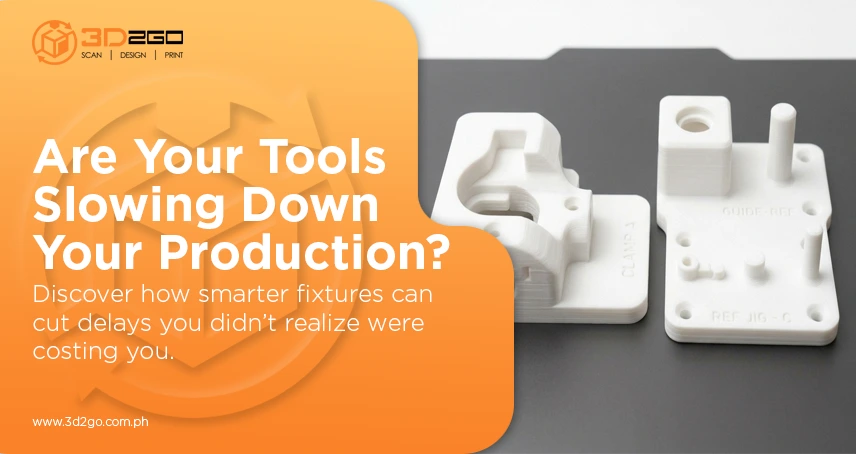
Production floors don’t slow down because machines stop. They slow down because setups take too long, adjustments drag on, and small inefficiencies stack up.
That’s why more manufacturers are rethinking their approach to tooling, starting with custom jig fixtures. With solutions like Teams, you can simplify setups and remove the friction that usually comes with traditional tooling.
At the center of this shift are 3d printed jigs and fixtures, not as replacements for skill or machinery, but as practical tools that make everything run smoother.
The Real Problem Isn’t Production, It’s Setup
Most delays don’t happen during production. They happen before it even starts.
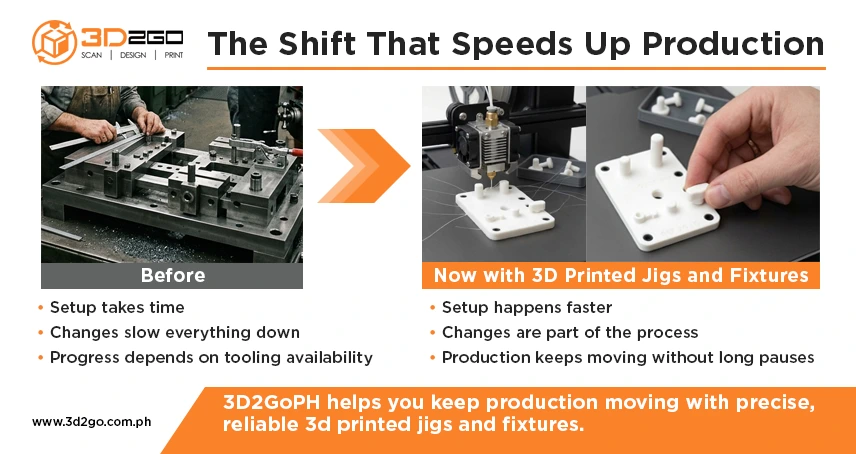
Traditional jigs and fixtures take time to fabricate. And once they’re made, they’re not exactly flexible. Change a dimension, update a process, or tweak a design, and suddenly, you’re back to square one.
That’s where things start to break down.
With 3d printed jigs and fixtures, that rigidity disappears. You’re no longer stuck waiting on rework or new tooling. You can adjust, reprint, and move forward without dragging the entire operation with you.
Speed Changes the Way Teams Work
There’s a noticeable shift when teams aren’t waiting around for tools.
Instead of planning around limitations, they start making decisions faster. Small improvements get implemented immediately. Adjustments happen in real time.
That’s exactly the space where 3d printed jigs and fixtures operate. They shorten the gap between idea and execution.
And when that gap shrinks, everything else moves faster, too.
Built to Adjust, Not Just Hold
Jigs and fixtures aren’t just supports; they guide how work gets done.
But in environments where change is constant, rigid tools become a problem. They hold things in place, yes, but they also hold back progress.
3d printed jigs and fixtures flip that around. They’re built with change in mind. You can refine, tweak or even redesign them entirely without disrupting your workflow.
This matters most in setups where no two runs are identical.
Precision Without the Usual Trade-Offs
There’s often an assumption that faster tools mean less accuracy.
That’s not the case here.
With proper design and execution, 3d printed jigs and fixtures can achieve high levels of precision. They guide alignment, improve repeatability, and reduce reliance on manual adjustments.
For operators, that means less guesswork. For businesses, it means fewer errors and more consistent output.
It’s the kind of improvement that doesn’t look dramatic, but shows up clearly in results.
Cost Isn’t Just About Price, It’s About Waste
Tooling costs aren’t just about how much you spend upfront. They’re about how often you have to redo things.
Traditional tooling gets expensive fast when changes are involved. Each revision means more time, more labor, and more material.
With 3d printed jigs and fixtures, that cycle is shorter. You’re not starting from scratch every time. You’re building on what already works and refining it as you go.
Over time, that approach cuts down waste—not just in materials, but in effort.
Iteration Becomes a Strength, Not a Setback
No production setup is perfect on the first try.
What separates efficient operations from struggling ones is how quickly they can improve.
This is where 3d printed jigs and fixtures make a noticeable difference. They allow teams to test, adjust, and refine without slowing down the rest of the team.
Instead of committing to a single “final” version, you get a process that evolves naturally.
And that’s often where the best improvements come from.
Where These Tools Make the Biggest Impact
While the benefits are clear, their value becomes more obvious in real use.
3d printed jigs and fixtures are commonly used for:
- Assembly alignment tools
- Welding guides
- Inspection fixtures
- Drilling and cutting guides
- Holding irregular or custom parts
In each case, they reduce time spent adjusting and increase confidence in the output.
A Smarter Way to Approach Manufacturing
The shift toward 3d printed jigs and fixtures isn’t just about adopting new technology. It’s about changing how teams think about efficiency.
Instead of working around limitations, they remove them.
Instead of delaying improvements, they act on them quickly.
And instead of overbuilding solutions, they focus on what’s actually needed.
That’s what makes the difference.
Why Execution Still Matters
Even with all the advantages, results still depend on how well the tools are designed and produced.
A poorly made fixture can create more problems than it solves. Misalignment, inconsistency, and premature wear can all come from lack of precision.
That’s why working with the right partner matters.
3D2GoPH focuses on delivering 3d printed jigs and fixtures that are not only functional, but reliable in real production environments.
Keep Your Production Moving Without the Usual Delays
Efficiency isn’t about doing more; it’s about removing what slows you down.
3D-printed jigs and fixtures make this possible by simplifying setups, improving flexibility, and ensuring consistent results.
They don’t replace your process; they make it work better.
If you’re ready to streamline your operations with reliable solutions, get in touch with 3D2GoPH.