
How 3D Miniature Landscape Models Help Explain Complex Terrain
March 25, 2026
Why Custom Parts Manufacturing Is Growing Across Modern Industries
March 27, 2026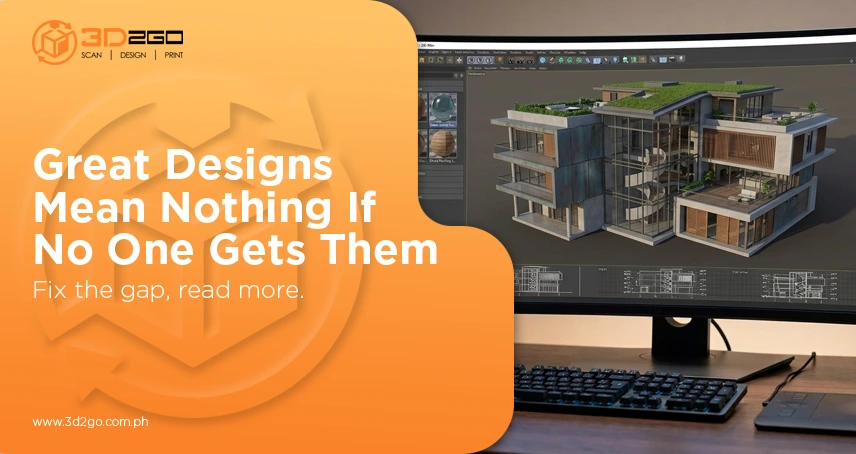
Architectural ideas don’t fail because they’re bad; they fail because they’re misunderstood. A brilliant concept on paper can easily fall apart when clients can’t visualize it or when teams interpret it differently. That gap between idea and understanding is where problems begin.
This is exactly why more firms are investing in professional digital modeling. Instead of relying solely on blueprints and technical drawings, they work with a digital modeler who can turn abstract designs into clear, visual, and easy-to-grasp models.
The result? Fewer revisions, faster approvals, and stronger client confidence. In this article, we’ll break down why architectural businesses are increasingly outsourcing to a digital modeler and how it directly impacts project success.
What Is a Digital Modeler?
A digital modeler is a specialist who creates detailed three-dimensional representations of buildings, environments, and structures using advanced software tools. These models go far beyond basic visuals; they’re precise, scalable, and built for real-world application.
Using tools like CAD software, rendering engines, and 3D modeling platforms, a digital modeler produces:
- High-quality 3D models of architectural designs
- Photorealistic renders for presentations
- Walkthrough animations and virtual environments
- Digital assets for simulations or planning
Unlike traditional drawings, these outputs allow stakeholders to see the design as if it already exists. That level of clarity changes everything.
Why Architectural Projects Need Digital Modeling
Architecture is inherently complex. Every project involves layers of design, structure, environment, and usability. Explaining all of that through flat drawings is a challenge, even for experienced professionals.
This is where a digital modeler becomes essential.
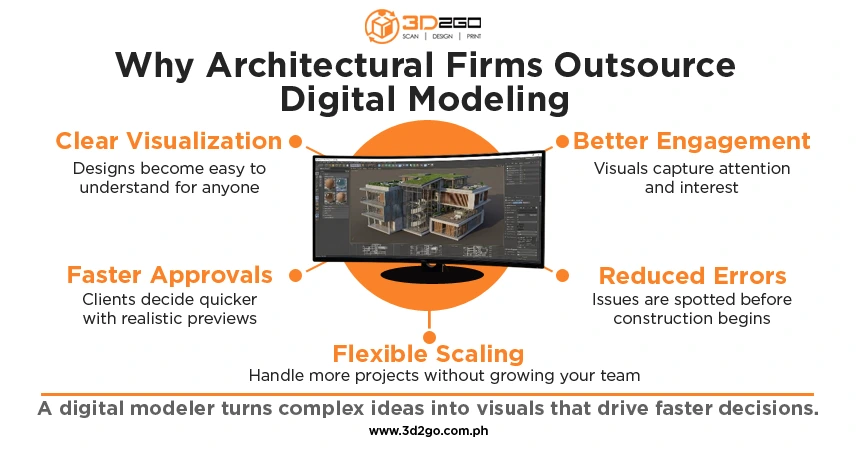
Instead of asking clients to interpret plans, digital models show them exactly what to expect. Walls, elevations, lighting, and spatial relationships become instantly visible.
This reduces one of the biggest risks in architecture: miscommunication.
When everyone sees the same thing, decisions become faster, feedback becomes clearer, and costly mistakes are avoided before construction even begins.
Why Firms Outsource to a Professional Digital Modeler
Hiring and maintaining an in-house modeling team isn’t always practical. That’s why many architectural firms choose to outsource to a digital modeler instead.
Here’s why:
- Cost Efficiency: No need for full-time salaries, training, or expensive software investments.
- Access to Expertise: Work with specialists who focus solely on modeling and visualization.
- Scalability: Easily handle multiple projects without overloading internal teams.
- Faster Turnaround: Dedicated professionals deliver high-quality outputs on time.
Outsourcing allows firms to focus on design and strategy, while the digital modeler handles technical visualization.
The Real Business Impact of Digital Modeling
Working with a digital modeler doesn’t just improve visuals; it improves outcomes.
When stakeholders can clearly see a project, they’re more confident in their decisions. That confidence translates into faster approvals and smoother workflows.
According to McKinsey, the use of digital twin technologies in urban development can improve project outcomes and ROI by 20–30%, highlighting the real financial impact of accurate digital modeling.
Beyond numbers, the benefits are felt across every stage of a project:
- Fewer revisions during design phases
- Stronger presentations for clients and investors
- Better collaboration across teams
- Reduced risk of costly construction errors
A digital modeler doesn’t just create visuals; they help protect the integrity of the project.
Where Digital Modeling Makes the Biggest Difference
Real Estate Development
In real estate, presentation is everything. A digital modeler helps developers showcase properties in a way that buyers can immediately understand and connect with.
Virtual tours and 3D visuals let potential clients experience a space before it’s built, boosting engagement and confidence.
Urban Planning
Urban projects are complex, involving infrastructure, zoning, and environmental considerations.
A digital modeler creates digital twins and simulations that allow planners to test different scenarios before implementation. This leads to better decisions and more efficient planning.
Tourism and Commercial Projects
For tourism and commercial spaces, experience is key. A digital modeler helps bring concepts to life, allowing stakeholders to see how a space will look and feel before development begins.
This improves investor buy-in and strengthens project proposals.
How Digital Modeling Works
Behind every high-quality model is a structured process that ensures accuracy and detail.
1. Concept Development
Initial ideas, sketches, and references are gathered to define the project.
2. Base Modeling
The core structure and layout are built using 3D software.
3. Detailing and Texturing
Surfaces, materials, and finer elements are added for realism.
4. Lighting and Rendering
Lighting is applied to simulate real-world conditions, then rendering is performed.
5. Final Output
The model is exported for presentations, VR, or further development.
This workflow allows the digital modeler to refine and improve the design at every stage.
Technologies Behind Modern Digital Modeling
A professional digital modeler uses a combination of tools and technologies to achieve precise results:
- CAD Software: For accurate modeling and design
- Rendering Engines: For photorealistic visuals
- 3D Scanning & Photogrammetry: For capturing real-world data
- AR/VR Integration: For immersive experiences
These tools allow architectural firms to present projects in ways that were once impossible.
Industry Trends Driving Demand
The demand for digital modeling continues to grow as industries move toward more visual and immersive solutions.
According to research, the global 3D printing market is projected to reach USD 168.93 billion by 2033, driven by the rapid adoption of technologies for modeling, prototyping, and visualization.
This growth signals a clear shift:
- Businesses want faster, clearer communication tools
- Clients expect immersive and realistic presentations
- Firms are prioritizing efficiency and scalability
A digital modeler sits at the center of this shift, enabling businesses to meet these evolving demands.
Why Outsourcing Is Becoming the Standard
More architectural firms are recognizing that outsourcing to a digital modeler isn’t just a cost-saving move; it’s a strategic advantage.
It allows them to:
- Deliver projects faster
- Maintain high-quality outputs
- Stay competitive in client presentations
- Scale operations without increasing overhead
In a fast-moving industry, flexibility and efficiency matter. Outsourcing provides both.
Turning Designs Into Reality
A digital modeler does more than create visuals; they make ideas understandable, decisions easier, and projects more efficient.
In architecture, clarity isn’t optional. It’s what determines whether a project moves forward smoothly or gets stuck in endless revisions.
By outsourcing to professionals, firms gain access to the tools, expertise, and precision needed to bring designs to life without unnecessary delays or complications.
If you’re looking to improve how your projects are presented and understood, it’s time to work with experts who specialize in making complex designs clear.
For reliable, high-quality digital modeling solutions, contact 3D2GoPH today.