

Diorama Philippines: When Physical Models Outperform Digital Presentations
March 9, 2026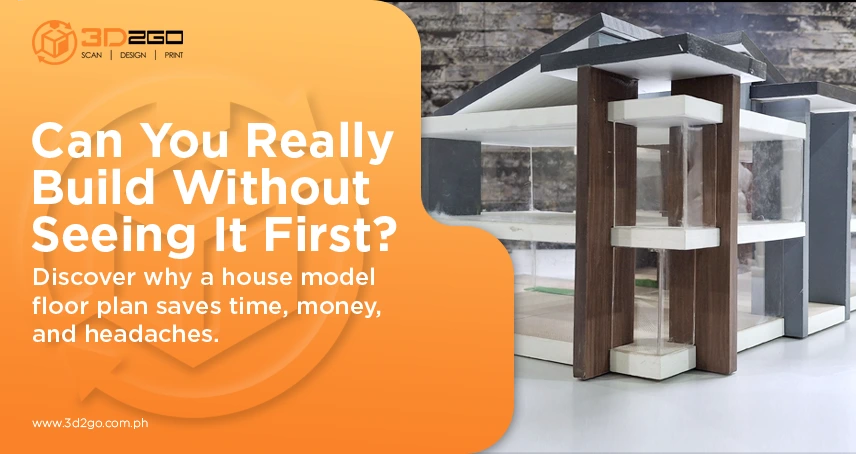
There’s a big difference between drawing your dream home and seeing it take shape right in front of you. That’s where a floor plan model becomes more than just a nicety; it becomes a strategic tool. Turning your ideas into a house model floor plan bridges the gap between imagination and reality, helping everyone from homeowners to builders understand exactly what’s being proposed.
Whether you’re designing a custom residence or presenting a concept to clients, these physical or detailed digital models give clarity that two‑dimensional drawings can’t deliver. With house model floor plan solutions from 3D2GoPH, you take abstract ideas and make them tangible, long before the first foundation is poured.
1. Spot Design Conflicts Before Construction Starts
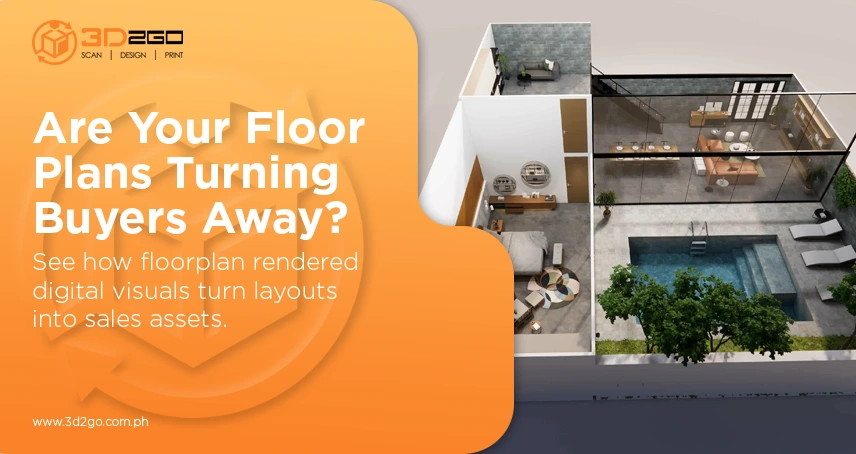
At first glance, floor plans can look simple, with lines and symbols on a page. But real life isn’t flat. What seems logical on paper may feel cramped in reality. A house model floor plan lets you walk through spaces in three dimensions, revealing design conflicts that might otherwise go unnoticed.
For instance, a kitchen island that looks fine on paper may feel cramped next to a doorway. A bedroom may appear spacious in a drawing, but feel tight when built.
2. Make Communication Clear Across Teams
Design language can be technical. Even experienced builders may interpret 2D plans differently. A house model floor plan becomes a common visual reference that everyone can point to and talk about.
Whether you’re discussing with your contractor, interior designer, or family members, models keep everyone literally on the same page. Miscommunication drops, and decisions happen faster.
This is especially useful when working with multi‑disciplinary teams who may not share the same technical vocabulary.
3. Feel the Space at Real Scale
One of the most intuitive benefits of a house model floor plan is the perception of scale. Paper drawings have limitations, especially when non‑professionals try to visualize spatial relationships.
A model lets you:
- Perceive room proportions accurately
- See how furniture fits into spaces
- Understand how circulation flows between rooms
This makes it easier to evaluate whether an open‑plan living area really feels open or if a bedroom is large enough for your needs.
4. Make Better Material and Finish Decisions
With a house model floor plan, materials, like flooring, facade finishes, and wall treatments, don’t just live in your imagination. You can see how textures combine, how shadows fall, and how color choices play off one another.
This helps prevent last‑minute changes that disrupt both the budget and timeline. Rather than wondering if a surface “will look right,” you can visualize it before any materials are ordered.
5. Speed Up Client and Stakeholder Approvals
Clients don’t always think in plans and elevations. They think in experiences and visuals. Presenting a house model floor plan can accelerate approvals by offering a natural, intuitive understanding of the project.
When stakeholders can touch and see the design at scale, questions get answered faster, revisions decrease, and confidence rises, often in fewer meetings.
This is especially powerful in real estate sales, architectural client presentations, and planning reviews.
6. Improve Construction Logistics
Beyond aesthetics and design, a house model floor plan encourages practical foresight. Builders gain an early understanding of:
- Access points for equipment
- Clearances for ducts, beams, and mechanical systems
- How materials will be installed in context
By catching potential conflicts early, contractors can plan sequencing more effectively, reducing downtime and eliminating surprises once construction begins.
7. Test Functionality and Human Experience
What can’t be measured easily on paper is experience.
How does a hallway transition into a living area? Does a bathroom feel private or exposed? Is natural light going to penetrate deep into your home?
A house model floor plan brings these experiences to life. You don’t just see space, you sense it.
This leads to better decisions about layouts that impact emotional quality of life, not just technical correctness.
8. Boost Marketing and Buyer Engagement
For developers or designers selling homes, a house model floor plan is a powerful marketing tool. Prospective buyers engage far more when they can visualize the home clearly.
Models show:
- How living spaces connect
- Where outdoor spaces sit relative to indoor areas
- How layout translates to daily life
This kind of engagement breeds excitement and connection, which translates into faster buyer decisions and stronger interest.
9. Enhance Educational and Planning Value
Students, urban planners, and design enthusiasts all benefit from house model floor plans. They act as teaching tools, helping learners understand scale, proportion, circulation, and spatial relationships far more effectively than 2D drawings.
When people handle, rotate, or examine a physical or high‑fidelity model, they internalize spatial logic, which accelerates learning.
10. Save Money Over the Life of the Project
There’s a real cost associated with revisions, delays, and miscommunication during construction. By creating a house model floor plan early, you avoid many of these pitfalls.
Yes, there’s an upfront investment. But the clarity it brings can reduce:
- Change orders
- Material waste
- Project delays
- Budget overruns
In other words, it helps you spend smarter rather than spend more.
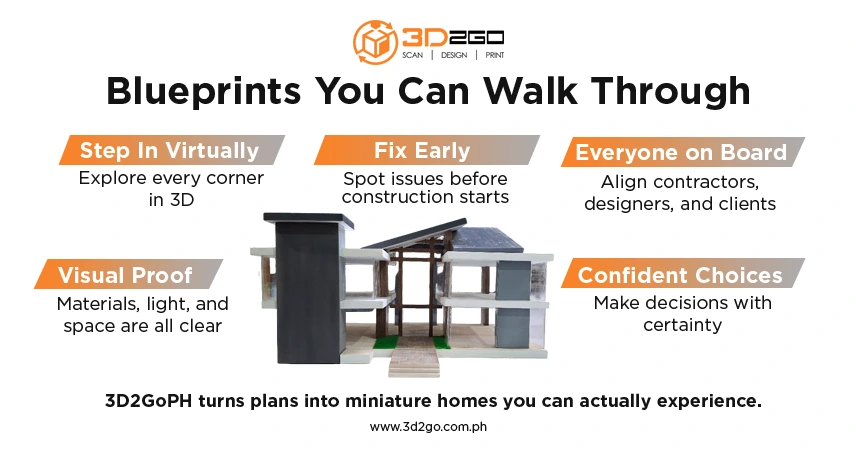
Making Better Decisions with a House Model Floor Plan
Some decisions are easy on paper. Others require experience, insight, and a sense of how people live inside a space. A house model floor plan helps answer tough questions quickly, and before they become expensive problems.
Architects and designers often talk about “design intent”, that spark of imagination behind a space. A model makes that intent visible. Build confidence in your choices. Test ideas. Debate alternatives. Do it long before a single nail is driven.
Why Work with 3D2GoPH
Turning detailed plans into a house model floor plan requires technical knowledge, craftsmanship, and an eye for detail. That’s where 3D2GoPH shines. With experience in precision modeling and a deep understanding of architectural communication, 3D2GoPH helps clients transform plans into models that inform, impress, and persuade.
Every model produced isn’t just a miniature; it’s a storytelling tool that supports planning, design validation, stakeholder alignment, and faster decision‑making.
See Your Plan Come to Life
If you’re wondering how your design feels, not just how it looks on paper, a house model floor plan is the best way to find out. It’s not just about visuals; it’s about understanding, clarity, and confidence.
Make the complex clear. Reduce guesswork. Inspire belief in your project.
Bring your vision into focus with 3D2GoPH
Because when you can see your plan in three dimensions, everything else starts to fall into place