

How 3D Scanning Industrial Machines Improve Inspection and Quality Control
February 3, 2026
See Your Area in a New Dimension with 3D Map using LIDAR Services
February 5, 2026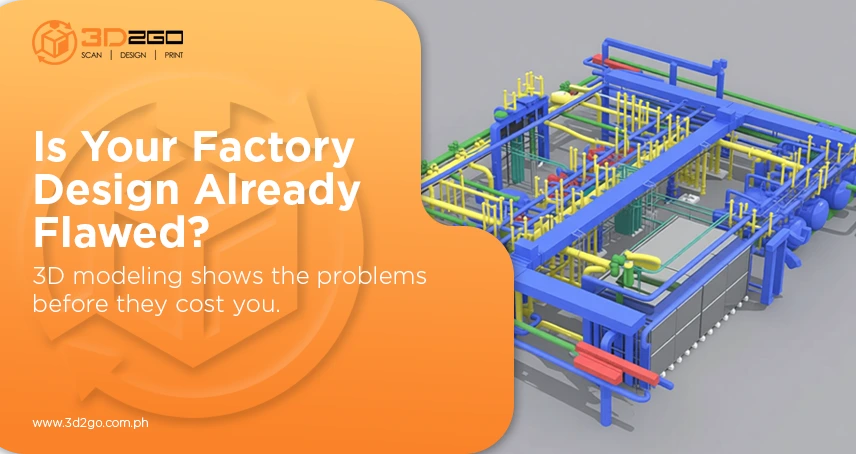
Factory design used to start with flat drawings, long meetings, and a lot of crossed fingers. You’d sketch a layout, hope the machines fit, and only discover the problems once everything was already on-site. Today, that approach feels outdated.
More factories are now turning to 3D modeling for factory use to plan smarter from the start. Instead of guessing how machines will work together in a space, teams build digital replicas and test ideas before committing to any physical setup. At the heart of this shift is the 3d model factory machine, a digital version of real equipment that brings clarity to factory planning.
This isn’t about fancy visuals. It’s about making better decisions earlier, reducing costly mistakes, and designing factories that actually work in real life.
What a 3D Model Factory Machine Really Represents
A 3d model factory machine isn’t just a 3D image of equipment. It’s a precise digital stand-in for a real machine, built with correct dimensions, proportions, and spatial requirements.
When created properly, it shows:
- How much floor space does the machine needs
- Where operators stand and move
- Clearance for maintenance and safety
- How it aligns with nearby equipment
Using 3D modeling for factory use, planners can drop these machines into a virtual factory and see how everything fits together, before anything is built or installed.
Why Traditional Factory Planning Often Falls Short
On paper, everything usually looks fine. In reality, that’s where the trouble starts.
Flat layouts can’t fully show how machines interact with people, materials, and each other. Small oversights, such as a blocked maintenance path or a tight corner, can lead to costly fixes later.
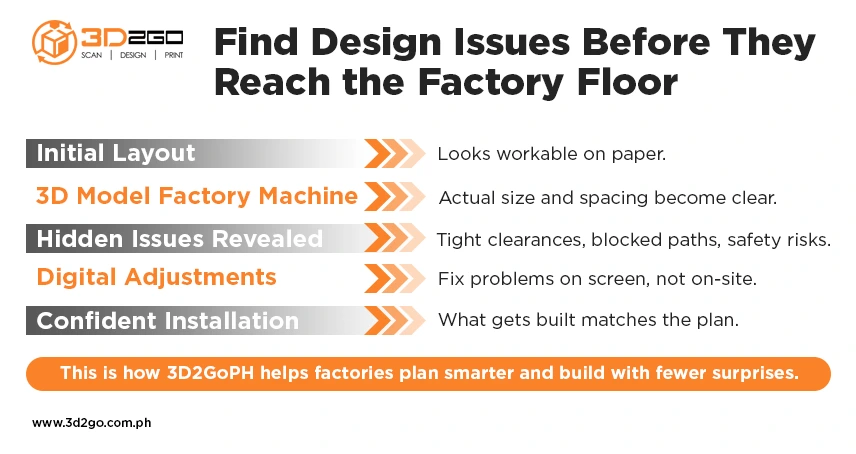
A 3d model factory machine helps close that gap. By visualizing the factory in three dimensions, teams can spot issues that would otherwise stay hidden until it’s too late.
How 3D Model Factory Machines Improve Factory Design Decisions
Clearer Space Planning From Day One
One of the biggest advantages of using a 3d model factory machine is knowing exactly how much space you’re working with. No estimates. No assumptions.
Machines are placed to scale, which makes it easier to:
- Avoid overcrowded layouts
- Plan proper walkways and safety zones
- Leave room for future expansion
This kind of clarity saves time and prevents redesigns halfway through a project.
Seeing Workflow, Not Just Layouts
Factory efficiency isn’t just about where machines sit, it’s about how everything moves.
With 3D modeling for factory use, designers can watch how materials flow from one 3d model factory machine to the next. You can see bottlenecks, unnecessary travel, and awkward handoffs long before they affect production.
That insight makes it easier to design layouts that feel logical rather than forced.
Catching Problems Early, When Fixes Are Easier
Design issues are much cheaper to fix on a screen than on a factory floor.
A well-built 3d model factory machine makes it obvious when:
- Machines overlap or clash
- Access points are blocked
- Safety clearances aren’t enough
Early clarity leads to fewer surprises and fewer costly delays.
Helping Teams Speak the Same Language
Not everyone involved in factory planning is comfortable reading technical drawings. Engineers, managers, operators, and suppliers all see things differently.
A 3D model factory machine provides a shared visual reference for everyone. Instead of lengthy explanations, teams can point to the model and say, “That’s the issue,” or “That’s what we’re fixing.”
Decisions happen faster when everyone sees the same thing.
Common Ways Factories Use 3D Model Factory Machines
Factory Layout Planning
Design teams build full layouts using multiple 3d model factory machines, making sure everything fits before construction begins.
Production Line Optimization
Machines are arranged in sequence to test flow and reduce downtime between processes.
Safety and Compliance Checks
Clearances, emergency paths, and operator zones are easier to verify in a 3D environment.
Equipment Upgrades and Expansion
Before adding new machines, planners can see exactly how a new 3d model factory machine will affect the existing layout.
Why Accuracy Makes or Breaks 3D Models
A rushed or inaccurate model can be worse than no model at all.
For a 3D model of a factory machine to be useful, it must reflect reality, not merely approximate it. That includes correct dimensions, realistic proportions, and operational space.
This is where professional 3D modeling for factory use becomes critical. Accuracy upfront prevents false confidence later.
Where 3D2GoPH Fits Into the Process
3D2GoPH focuses on creating practical, production-ready 3D models that support real factory planning, not just presentations.
By understanding how factories operate, the team builds 3d model factory machine assets that are meant to be used, adjusted, and trusted throughout the design process. The goal isn’t to impress; it’s to help teams make better decisions with lower risk.
Their approach supports planners who want clarity without overcomplication.
When Planning Feels Certain, Everything Moves Faster
Factory design doesn’t have to feel like a gamble. With the right 3d model factory machine, teams can plan with confidence, spot issues early, and avoid costly revisions down the line.
When 3D modeling for factory use is done well, it turns uncertainty into informed choices, and that’s where efficient factory design really begins.
If your team is looking to plan layouts more accurately, test ideas before committing, and reduce avoidable errors, working with experienced modelers makes a real difference.
Explore how 3D2GoPH can support your next factory project.