

Restore Mobility with a Custom-Fit Prosthetic Designed for You
February 23, 2026
Optimize Your Facility with a Professional Warehouse Scan
February 25, 2026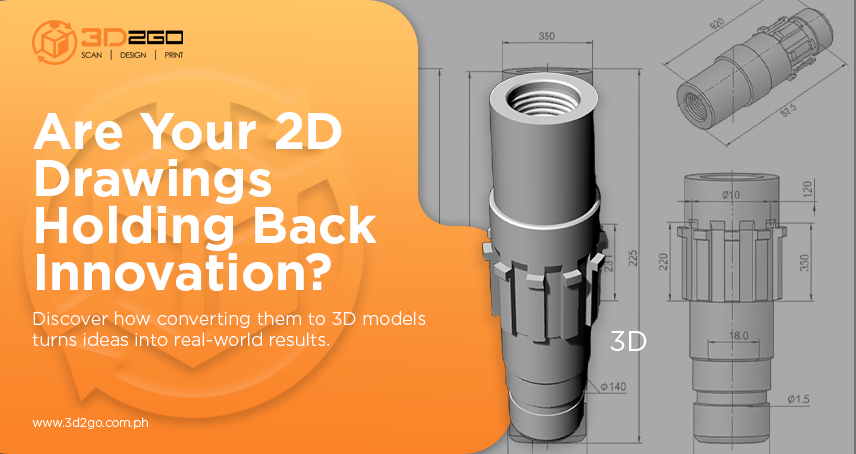
Every great product starts as an idea. Usually, that idea is sketched out on paper or captured as a flat 2D drawing. But in today’s fast-paced engineering and manufacturing world, flat designs aren’t enough. That’s where CAD drawing conversion steps in. It turns static sketches into fully interactive 3D models, giving designers, engineers, and manufacturers a clearer, more practical view of what they’re building.
When you convert 2d drawing to 3d model, you’re not just translating lines into shapes. You’re creating a living, dimensional asset that helps everyone involved understand exactly how parts fit, interact, and function, before a single piece of material is cut.
Why Moving to 3D Changes Everything
Flat drawings are great for communicating ideas, but they leave room for interpretation. A 3D model doesn’t just show what a part looks like; it shows how it behaves.
With a properly converted 3D model, teams can:
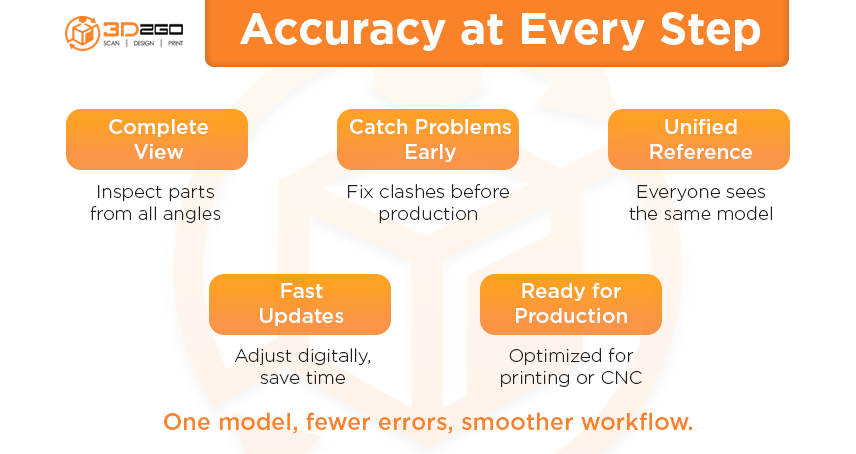
- Rotate and inspect components from any angle
- Check clearances, tolerances, and potential clashes
- Simulate real-world performance
- Communicate design intent clearly across teams
Instead of guessing, stakeholders interact with the design as it truly exists. This clarity reduces costly mistakes and speeds up decision-making.
The Business Advantage
Converting 2D drawings into 3D models helps businesses:
- Cut down on production errors
- Reduce rework and wasted materials
- Accelerate design approvals
- Improve communication across departments
It’s a small investment with measurable returns, and it lays the groundwork for more complex workflows, such as rapid prototyping and additive manufacturing.
How the Conversion Process Works
Professional conversion goes far beyond simply tracing lines. It’s a structured workflow that ensures precision, usability, and manufacturability:
- Geometry Capture
Measurements and proportions from the 2D drawing are captured digitally. - Accuracy Checks
Dimensions and tolerances are verified to match engineering requirements. - Assembly Modeling
Parts are positioned in context, showing how they interact. - Optimization for Output
Files are prepared for simulation, 3D printing, or CNC manufacturing.
When done right, a converted 3D model becomes a versatile tool for design, visualization, and production.
Better Visualization, Better Decisions
A converted 3D model doesn’t just make the design look better; it makes decision-making easier. Stakeholders can interact with the model rather than interpret lines, leading to faster approvals and fewer revisions.
Teams that consistently convert 2D drawings into 3D models experience smoother collaboration, fewer misunderstandings, and more predictable project timelines. The value is immediate: instead of imagining how parts will fit, everyone sees it clearly.
Preparing for Manufacturing
Modern production relies on precise digital input. When you convert 2d drawing to 3d model, you’re creating files that integrate directly with manufacturing tools, whether CNC machines, 3D printers, or rapid prototyping systems.
The benefits include:
- Less material waste
- Shorter lead times
- Reduced rework
- Greater confidence that parts will fit perfectly
For engineers, designers, and fabricators, the 3D model becomes a blueprint for success.
Collaboration Made Simple
Different departments often interpret flat drawings differently. Converting them into a 3D model ensures that everyone, from design to production, works from the same reference.
The result:
- Faster approvals
- Clearer feedback
- Fewer mistakes
- Streamlined communication
It’s a small change that dramatically improves efficiency.
Future-Proofing Your Designs
A 3D model isn’t just useful today, it’s an asset for tomorrow. Once created, it can support:
- Virtual simulations
- Marketing and client presentations
- Rapid prototyping and 3D printing
- CNC machining and other manufacturing processes
Teams that consistently convert 2D drawings into 3D models are building a digital library that scales with future projects, improving efficiency and reducing risk.
Choosing the Right Partner
Accuracy and technical know-how make all the difference. A professional team ensures that your converted 3D model matches engineering intent, is production-ready, and works across multiple applications.
Look for:
- Precise dimension verification
- Knowledge of manufacturing workflows
- Compatibility with multiple CAD platforms
- Fast, reliable turnaround
Expert handling ensures the model isn’t just a copy; it’s a usable, functional asset.
Turning Flat Drawings into Actionable 3D Assets
Converting 2D drawings into 3D models is more than a technical task; it’s a strategic step. Teams gain clarity, speed, and confidence while reducing costly mistakes.
3D2GoPH specializes in delivering accurate, production-ready 3D models that preserve design intent while enabling visualization, prototyping, and manufacturing.