
How a 3D Modeling Company Can Support the Commercial Growth of Businesses this 2026
January 15, 2026
The Rise of 3D Printing Low Volume Production in the Philippines’ Smart Manufacturing Era
January 19, 2026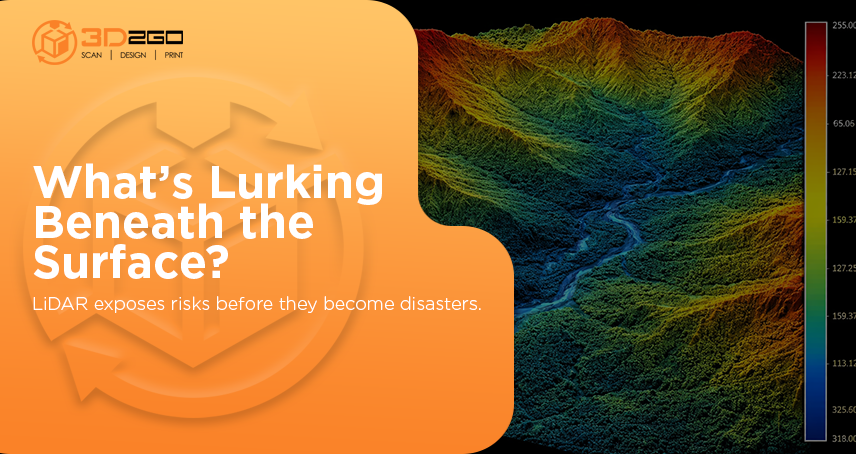
Flood risks don’t appear overnight. They build quietly, shaped by terrain, elevation, and water flow patterns that often go unnoticed until damage is already done. That’s why planners and local authorities are paying closer attention to the advantages of LiDAR for disaster preparedness and flood monitoring. Using precise laser-based mapping, LiDAR reveals how land behaves during heavy rainfall, offering insights traditional maps can’t provide. As communities seek smarter ways to prepare rather than react, the benefits of using LiDAR are increasingly hard to ignore.
LiDAR doesn’t guess. It measures. And in disaster planning, precision isn’t a bonus; it’s the difference between informed action and costly reaction.
Why Traditional Mapping Leaves Critical Gaps
Many flood plans still rely on surface-level data: contour lines, satellite images, and historical records. While useful, these tools often smooth out terrain details that directly influence flood behavior.
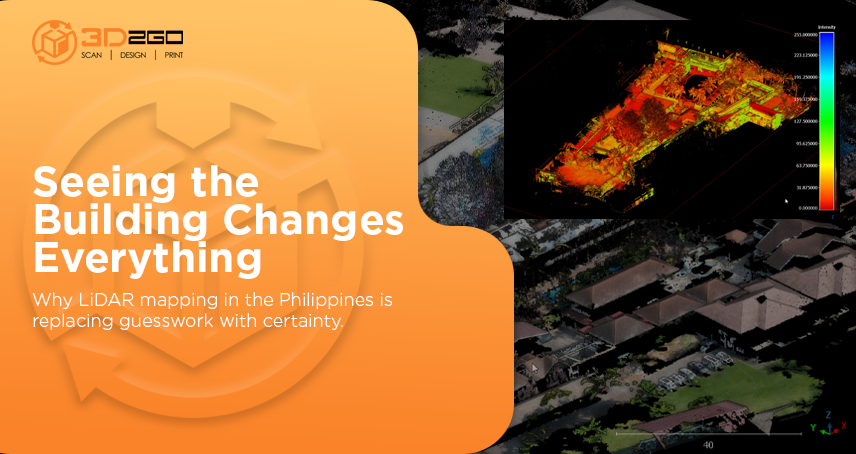
One of the most practical benefits of using LiDAR is its ability to strip away assumptions. By sending laser pulses toward the ground and measuring how they return, LiDAR captures elevation with remarkable clarity, even beneath vegetation and built-up areas.
This means planners aren’t working with approximations. They’re working with reality.
Understanding How Water Actually Moves
Floodwater doesn’t follow administrative boundaries or neat lines on a map. It follows gravity. It collects in depressions, spills through narrow channels, and accelerates where slopes tighten.
One of the strongest benefits of using LiDAR is that it reveals these natural behaviors before flooding occurs. High-resolution elevation models enable analysts to simulate water flow under different rainfall scenarios, revealing vulnerabilities that standard maps miss.
Instead of reacting to flood damage, teams can identify pressure points early, long before water reaches homes, roads, or critical facilities.
Clear Signals for Smarter Decisions
Preparedness isn’t just about knowing risk exists. It’s about knowing where to act first.
Another overlooked benefit of using LiDAR is its ability to prioritize interventions. With accurate terrain data, decision-makers can determine which areas require immediate drainage improvements, which zones need reinforced barriers, and which locations should be restricted from development altogether.
This kind of clarity prevents scattered efforts and focuses resources where they matter most.
A Clearer View for Multi-Agency Planning
Disaster response often involves multiple agencies working under pressure. When groups interpret risk differently, delays occur.
One of the quieter yet powerful benefits of using LiDAR is the shared understanding it fosters. When everyone works from the same 3D terrain model, conversations shift. Discussions become visual, not abstract. Decisions move faster as uncertainty decreases.
Instead of lengthy explanations, teams point to the data and move forward.
Monitoring Change, Not Just One-Time Risk
Landscapes evolve. Rivers shift, coastlines erode, urban areas expand. Flood risk today won’t look the same in five years.
A long-term benefit of using LiDAR is the ability to capture repeat data. By comparing scans over time, planners can track how terrain changes affect water flow. This supports continuous risk assessment rather than one-off studies that quickly become outdated.
Preparedness becomes a living process, not a static report.
Supporting Smarter Infrastructure Decisions
Roads, bridges, drainage systems, and flood defenses all depend on accurate elevation data. When designs are based on flawed inputs, failures follow.
Another key benefit of using LiDAR is its role in infrastructure planning. Engineers can design with confidence, knowing slopes, clearances, and floodplain boundaries are based on precise measurements, not generalized estimates.
This reduces redesigns, construction errors, and long-term maintenance issues.
Reliable Data for High-Impact Planning
The growing reliance on LiDAR across infrastructure and environmental planning highlights its credibility. According to Statista, demand for LiDAR technology continues to rise globally as governments and industries seek more accurate spatial data for risk assessment and development planning.
This trend reflects trust in the technology and reinforces the real-world benefits of LiDAR in disaster response applications.
From Raw Data to Meaningful Insight
LiDAR outputs are only as useful as their interpretation. Massive datasets alone don’t improve preparedness.
One of the most practical benefits of using LiDAR is the ability to process raw scans into flood maps, terrain models, and planning-ready visuals for decision-makers.
This step is often where plans succeed or stall.

Why Local Expertise Strengthens Outcomes
Technology alone doesn’t solve planning challenges. Context matters. Local terrain patterns, weather behavior, and development practices all influence how LiDAR data should be interpreted.
This is where 3D2Go PH adds value, by combining advanced LiDAR capabilities with local insight. The result is information that supports realistic planning, not generic models.
Planning With Certainty, Not Guesswork
Disaster Preparedness Test Preparation. The benefits of using LiDAR lie in removing uncertainty before those tests arrive. Accurate terrain intelligence gives planners the confidence to act early, design smarter, and protect communities more effectively.
If your organization is exploring dependable LiDAR solutions for disaster preparedness and flood monitoring, working with specialists who understand both the technology and the local landscape makes all the difference.
Connect with 3D2Go PH to explore how precise terrain data can support safer, better-informed planning.